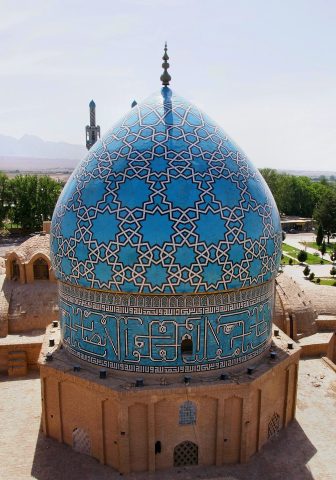
Nestled in the quiet town of Mahan, where the rugged mountains of southeastern Iran cast long shadows over the landscape, lies a place that feels almost suspended in time. Shahzadeh Garden is one of those rare spots that doesn’t need grand introductions—it simply exists, as it has for well over a century, a testament to the Persian ideal of harmony between human craft and the natural world. Unlike the more frequented historical sites of Iran, this garden remains somewhat off the beaten path, a hidden gem where the air carries the scent of earth and blooming fruit trees rather than the hum of tourist crowds.
The garden was conceived in the late 1800s, commissioned by a local governor who sought to create a retreat from the bustle of Kerman, the provincial capital. What emerged was not a display of opulence, but something far more refined—a space where every element serves a purpose beyond mere aesthetics. The layout follows the traditional Persian garden design, with a long central pool flanked by towering cypress trees and rows of fruit-bearing orchards. Water, the lifeblood of the desert, flows through narrow channels, feeding fountains and cooling the air in the scorching summers. It’s a place where the sound of running water is as much a part of the experience as the sight of the garden itself.
At the far end of the central axis stands the two-story pavilion, its facade adorned with intricate tilework that catches the sunlight in shifting hues of blue, turquoise, and gold. The wooden balconies, carved with delicate patterns, overlook the garden, offering a vantage point to take in the symmetry of the design. Inside, the rooms are simple yet elegant, with stained-glass windows casting colored light onto the floors. The pavilion wasn’t built to impress with grandeur, but to provide a quiet refuge, a place where one could sit with a cup of tea and watch the play of light and shadow on the water below.
Shahzadeh Garden is deeply tied to the history of Kerman, a region that flourished during the 19th century as a hub for silk and spice trade. Many of the gardens and estates from that era were built to showcase wealth and power, but this one feels different—less about status, more about contemplation. Perhaps that’s why it still retains a sense of intimacy, even now that it’s open to the public. There are no grand statues or ostentatious displays, just the quiet rhythm of water, the rustle of leaves, and the occasional laughter of visitors strolling along the paths.
The garden changes with the seasons, each one revealing a different facet of its character. In spring, the trees burst into bloom, their delicate flowers scenting the air. Summer brings the relief of shade, the cypress trees standing like sentinels against the relentless sun. Autumn turns the leaves to gold and amber, while winter drapes the branches in snow, creating a stark contrast with the still-flowing water in the channels. Even in the coldest months, the garden feels alive, as if the very stones and trees are breathing.
What makes Shahzadeh Garden special is its unassuming nature. It doesn’t demand admiration or force itself on the visitor. Instead, it invites you to slow down, to notice the way the light filters through the leaves or how the sound of water changes as you move from one part of the garden to another. There’s no need for explanations or guided tours—just the quiet understanding that this place has been here for generations, and it will continue long after you’ve left.
Mahan itself is a town that moves at its own pace. The streets are narrow, lined with mud-brick houses that have stood for decades, their walls bearing the marks of time. The locals are accustomed to the occasional traveler but remain warm and unhurried, happy to share a pot of tea or a story about the garden’s past. For them, Shahzadeh isn’t just a tourist attraction; it’s a part of daily life, a place where families come to escape the heat, where children play near the fountains, and where the elderly sit on benches, watching the world go by.
If you find yourself in this part of Iran, take the time to linger. The garden is best experienced without rush, with a few hours set aside to wander its paths, sit by the water, and let the surroundings sink in. There’s no need for grand gestures or dramatic revelations—just the quiet realization that some places don’t need to shout to be heard. Shahzadeh Garden is one of them. It doesn’t ask for anything, not even your attention. It’s simply there, waiting to be discovered.