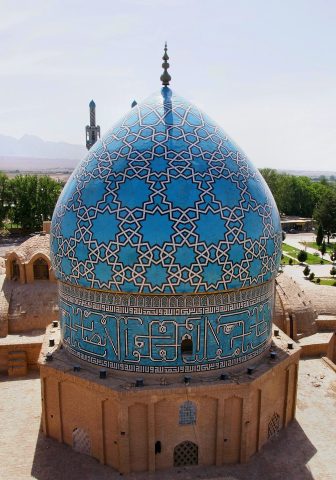
Mahan is a quiet town in southeastern Iran, home to the lush Prince’s Garden and the shrine of Sufi poet Shah Nematollah Vali. But step away from these landmarks, and you’ll find the old bazaar—a place where the hours stretch differently. No crowds, no polished tourist displays, just the quiet rhythm of a market that hasn’t changed in decades.
Shopkeepers remember their regulars. The air smells of fresh bread and spices. This is where Mahan breathes.
The bazaar’s roots go back to the Safavid era, when Mahan was a caravan stop between Kerman and the Persian Gulf. Traders once brought silks from India, spices from Arabia, and porcelain from China. Today, the echoes of that trade linger in the narrow alleys, though the pace is slower. Mornings bring locals for bread, vegetables, and cheese. By afternoon, only a few stalls remain open, selling sweets, fabrics, and pottery.
The architecture is unmistakably Iranian: narrow passageways under vaulted brick ceilings, built to keep out the desert heat. The vaults are plain, with a few geometric patterns etched into the brick. Some old wooden doors still stand, their carvings worn by time. At the center, a caravanserai—once a resting place for travelers—now holds workshops where artisans work wool, clay, and metal. In one corner, a weaver ties knots into a Kerman rug, each movement deliberate, each pattern a story.
This isn’t a museum. It’s a place where life still happens. Women in chadors haggle over herbs. Old men sip tea on low benches. Children weave between stalls, helping their parents or chasing each other in the shade. The shops sell what people need: spices, dried fruits, tools. But some things are just for Mahan—like sweets flavored with pistachio and rosewater, a taste you won’t find elsewhere.
The bazaar is more than a market. It’s where the town gathers. Near the entrance, a teahouse hums with conversation. Men play backgammon, share bread, and linger over tea. In summer, the bazaar becomes a refuge from the heat. Locals bring cushions, spread out rugs, and sit in the cool shade of the vaults, passing the hours as they have for generations.
There’s no grandeur here. Just the quiet pulse of a place that refuses to rush. Sit for a while. Watch. Listen. This is where Iran’s past feels closest.