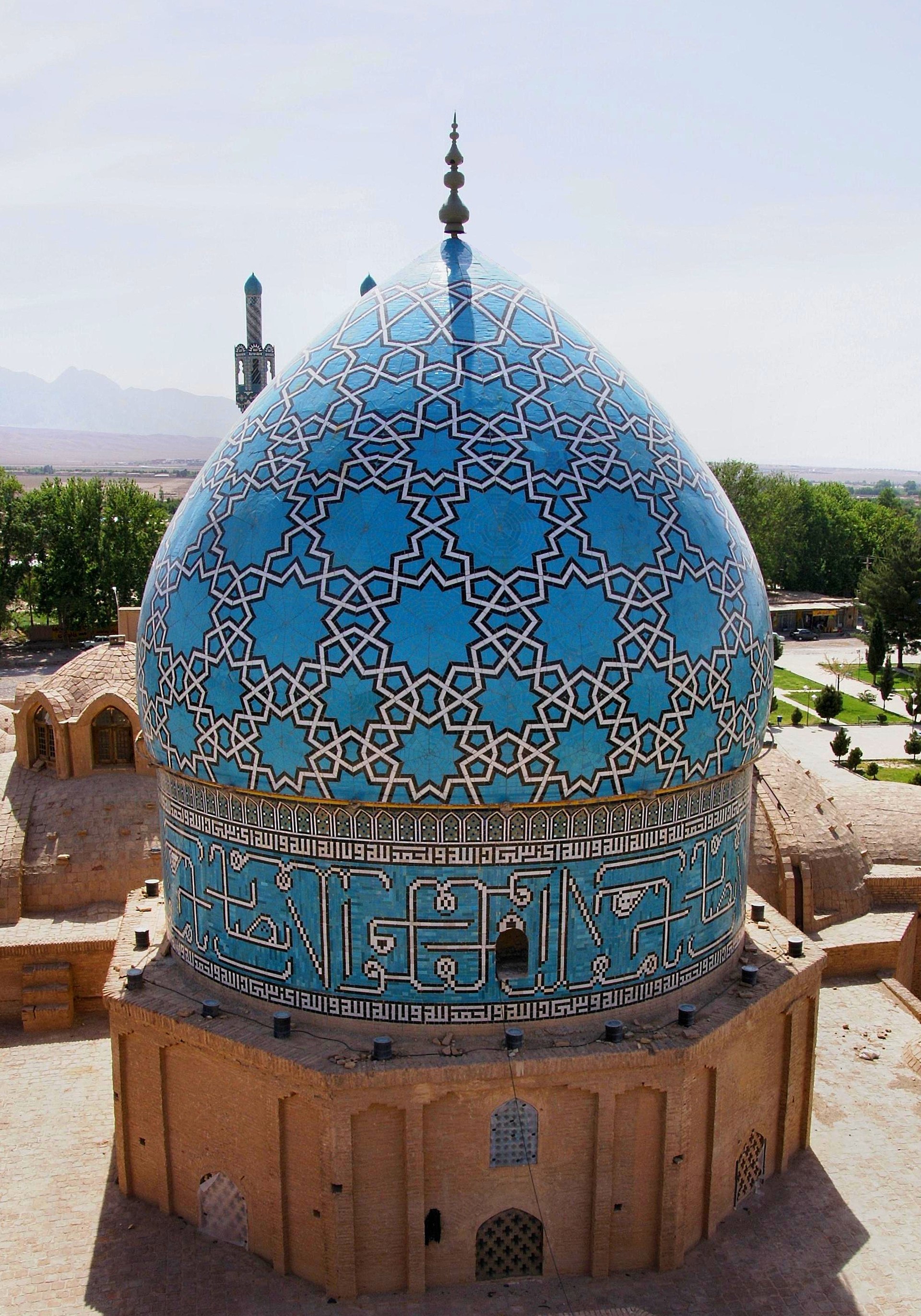
The shrine of Shah Nimatullah Vali in Mahan is one of those rare places where time seems to soften, as if the world beyond its walls moves at a different pace. Tucked away on the edge of a quiet Iranian town, it stands surrounded by low mountains and vast, sunbaked valleys that stretch endlessly under the sky. There are no crowds here, no hurried footsteps—only the occasional murmur of pilgrims or the rustle of wind through ancient trees. This is not just a monument of stone and tile; it is a living center of devotion, drawing people across centuries who seek either solace or a connection to the mystical traditions of Sufism.
Shah Nimatullah Vali was one of the most revered Sufi masters of the 14th and 15th centuries, a man whose teachings left an indelible mark on Islamic mysticism. When he died in 1431, his resting place became a site of pilgrimage almost immediately. What began as a modest tomb grew over the centuries, expanded and embellished by rulers and devotees who sought to honor his legacy. The shrine we see today is the result of countless additions, each layer reflecting the tastes and aspirations of the era that shaped it.
The architecture of the complex is a study in balance and refinement. The central dome, clad in turquoise tiles, rises above the surrounding structures like a bridge between earth and heaven. Inside, the dome is adorned with intricate stucco work and calligraphic inscriptions—verses from the Quran and poetry by Shah Nimatullah himself. The walls are covered in geometric mosaics, a hallmark of Persian art, while lattice windows filter the light, casting shifting patterns that give the space a sense of quiet depth. Every detail feels deliberate, as if designed to guide the visitor’s gaze upward, toward something beyond the material world.
Beyond the shrine lies a garden, planted centuries ago and still thriving. Tall cypress trees stand like sentinels, their reflections shimmering in shallow pools, while fruit trees offer shade from the relentless sun. The garden is more than an ornament; it is part of the ritual. Pilgrims walk its paths counterclockwise, reciting prayers and pressing their palms against the walls, as if trying to absorb the saint’s lingering presence. Under the trees, people often gather on carpets, engaged in slow conversations about faith, life, and the mysteries that lie between them.
Mahan itself has long been a place of significance. Once a vital stop on the caravan routes, the town was known for its lush gardens and abundant water, which made it a welcome respite for travelers. After Shah Nimatullah’s death, it became a spiritual hub for the region. Over the centuries, rulers from Kerman, the province that governed Mahan, took care to expand and maintain the shrine. The most transformative changes came in the 16th century, when a madrasa and mosque were added, turning the complex into a full-fledged religious sanctuary.
Even now, the shrine remains a place of active devotion. Sufi gatherings are held here, where poetry is recited and traditional music fills the air. On certain days, especially the anniversary of Shah Nimatullah’s death, the complex comes alive with pilgrims from across the country. Some come out of deep religious conviction, others to pay homage to a man whose teachings on love and tolerance still resonate. But even those who know little of Sufism often find themselves lingering, drawn in by the atmosphere of quiet reverence.
Visiting the shrine is an experience that engages the senses as much as the spirit. There are no rigid rules, only an unspoken expectation of respect. You can wander the garden, sit by the fountains, or simply watch the way light plays across the tiled walls. From time to time, the sound of chanting drifts from the mosque, a reminder that this place was built not for haste, but for contemplation. The language of the inscriptions may be unfamiliar, the philosophy of Sufism foreign, but the shrine of Shah Nimatullah Vali has a way of leaving visitors with a sense of stillness—one that lingers long after they’ve left its walls.