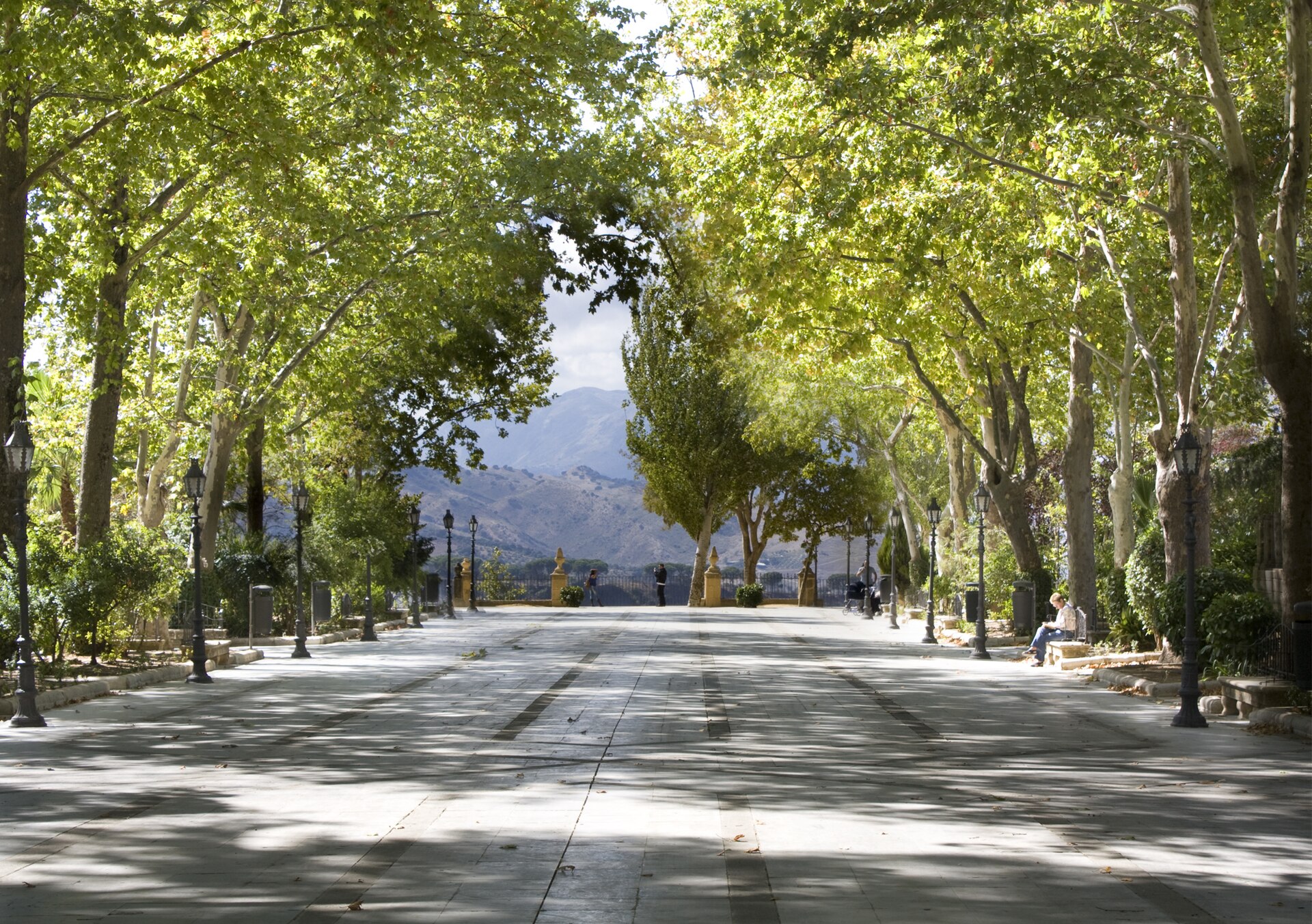
Alameda del Tajo is one of those quiet corners of Ronda where the city’s soul feels most alive. Perched at the edge of the Tajo Gorge, this garden isn’t just a patch of greenery in the heart of town—it’s a place where history, nature, and everyday life blend without effort. Unlike the crowded paths leading to Puente Nuevo, the Alameda offers something slower, something more intimate. Here, the air carries the scent of pine and rosemary, and the only sounds are the rustle of leaves, the occasional strum of a guitar, or the murmur of locals chatting on a bench. It’s the kind of place where you might spend an hour watching the light change over the mountains, or simply sit with a book, letting the hours slip by unnoticed.
The garden dates back to the early 19th century, a time when Ronda was flourishing as a cultural and commercial hub of Andalusia. The city’s leaders wanted a public space where residents could escape the bustle of daily life, and the Alameda was born from that vision. Its name reflects its origins—*Alameda* hints at the poplars that once lined its paths, while *del Tajo* ties it to the dramatic gorge below. The design followed the fashionable European trends of the era, with straight avenues, symmetrical flowerbeds, and carefully placed decorative elements. Over time, the garden evolved, but its core remained the same: a place of respite, shaped by the hands of those who lived here.
Walking through the Alameda today, you’ll notice how the garden has grown into its own kind of living archive. The trees tell a story of their own—some are native to the region, like the towering pines that have stood here for generations, while others were brought from distant places, adding unexpected touches of the exotic. Palms rise beside ancient oaks, and in spring, magnolias and azaleas burst into bloom, painting the paths in soft pinks and whites. Even in winter, when the air is crisp and the branches are bare, the garden has a quiet beauty, especially after a rare snowfall, when the trees are dusted with frost. The scent of lavender lingers year-round, a subtle reminder of the land’s enduring warmth.
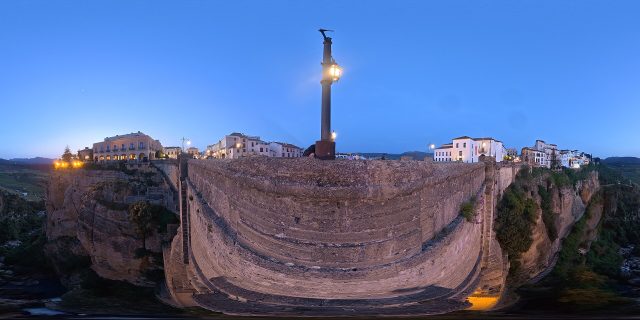
What makes the Alameda truly special, though, is its setting. The garden clings to the edge of the gorge, and from certain vantage points, the view opens up in a way that feels almost unreal. The Tajo River winds far below, a thin ribbon of water cutting through the valley, while the Sierra de Ronda stretches into the distance, its peaks sharp against the sky. On clear days, the horizon seems endless, and the scale of the landscape makes everything else feel small. It’s easy to see why artists and writers have been drawn here over the years—there’s something about the light, the space, the sheer grandeur of it that lingers in the mind long after you’ve left.
The garden isn’t just a backdrop for nature, though. It’s also a kind of open-air gallery, dotted with sculptures and monuments that pay tribute to Ronda’s past. A bronze bust of Vicente Espinel, the 16th-century poet born in the city, stands near one of the paths, his gaze fixed on the mountains he once wrote about. Nearby, a statue of Pedro Romero, the legendary bullfighter who helped shape modern corrida, serves as a reminder of the city’s deep ties to tradition. These figures aren’t just decorations—they’re part of the garden’s living history, connecting the present to the stories that have shaped Ronda over centuries.
The Alameda is also where you’ll see the city’s rhythms up close. On any given day, you might find elderly couples strolling arm in arm, children chasing pigeons across the lawns, or groups of friends sprawled on the grass with a guitar and a bottle of wine. In the evenings, the garden comes alive with the sound of laughter and conversation, especially when a local festival spills over from the nearby streets. Summer brings a welcome coolness, drawing people in from the heat of the day, while winter turns the space into a hushed retreat, where the only sounds are the crunch of frost underfoot and the distant call of birds. It’s a place where life unfolds at its own pace, unhurried and unscripted.
The architecture around the garden adds another layer to its charm. Many of the buildings bordering the Alameda are classic Andalusian, with whitewashed walls, terracotta roofs, and wrought-iron balconies that have weathered the years. Some date back to the 18th and 19th centuries, their facades still bearing the marks of time. One of the most striking is the old casino, now a cultural center, its ornate columns and intricate plasterwork hinting at the grandeur of Ronda’s past. Inside, the rooms are a mix of old and new, with high ceilings and tiled floors that echo with the footsteps of those who once gathered here for music, cards, or conversation.
What the Alameda del Tajo offers isn’t the kind of spectacle that stops you in your tracks. Instead, it’s something quieter, something that reveals itself slowly. There are no flashy attractions here, no crowds jostling for the best photo spot. What you’ll find is a place that feels lived-in, a garden that has grown alongside the city, absorbing its stories and its moods. It’s the kind of spot where you might come for a few minutes and end up staying for hours, not because there’s anything urgent to see, but because the place itself feels like a pause in time. For those who take the time to wander its paths, the Alameda becomes more than just a garden—it’s a glimpse into the soul of Ronda, a place where the past and present exist side by side, as natural as the changing of the seasons.