Ronda clings to the edge of a dramatic gorge, a town suspended between earth and sky. The Tajo canyon splits the rocky plateau, a deep cut that has shaped the city for centuries. Here, where the mountains meet the plains, history lingers—Moorish walls stand near Christian churches, narrow alleys twist toward squares where trade once thrived and decisions were made. The bridges of Ronda tell its story, and the oldest, Puente Viejo, carries the memory of a town still finding its way.
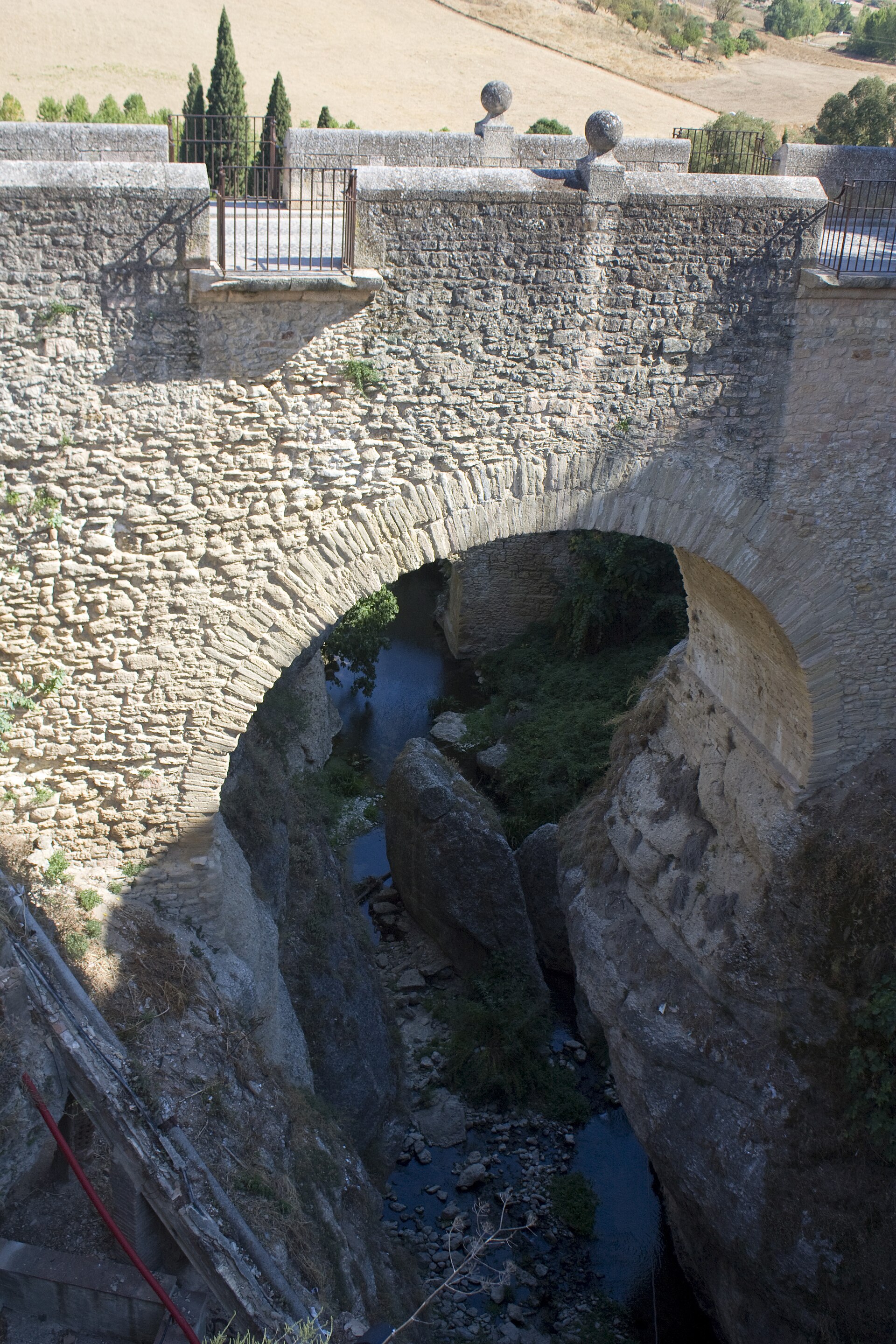
Puente Viejo spans the gorge at nearly a hundred meters, connecting Ronda’s two halves. It was built in the sixteenth century on the site of an earlier crossing, one that had stood since Moorish rule. The gorge was a vital passage then, linking Andalusia’s interior to the coast. A safe crossing wasn’t just useful—it was necessary. The bridge let Ronda endure, grow, become what it is now.
Puente Viejo isn’t ornate. Its design is simple, almost severe. Heavy stone blocks, darkened by time, form a low, single-arched span that looks modest against the cliffs. No towers, no carvings, no flourishes. Just stone, the river below, and the wind through the gorge. It doesn’t stand out, yet it belongs here, as if it grew from the land itself.
Today, the bridge is still part of Ronda’s life, though fewer people cross it now. Locals and visitors walk it, stopping to look down at the Guadalevín River far below. The water isn’t always strong—sometimes it’s barely a stream—but after rain, it roars, a reminder of the land’s power. From the bridge, you see how Ronda climbs the gorge’s sides, houses clinging to rock, streets winding between them. It’s easy to picture life here centuries ago, when leaving the city meant risk.
When Puente Viejo was built in the 1500s, Ronda was changing. The Moors were gone, but their mark remained. The city was a borderland, where cultures and faiths met. The bridge became a symbol of that shift, a reminder that the past doesn’t fade. Armies, merchants, pilgrims—all crossed it, leaving traces of their stories. It wasn’t just a path. It was proof.
Ronda grew, and Puente Viejo lost its role as the main crossing. In the eighteenth century, Puente Nuevo took over, handling the flow of people and goods. The old bridge didn’t vanish. It became something quieter—a place where history feels close. It’s not essential now, and that’s why it matters. Here, you can stand, listen to the river, and feel the weight of time.
Ronda has sights that draw crowds, but Puente Viejo lets you be alone with the city’s past. No tour groups, no rush. Just the stone underfoot, the wind in your face, the sense of standing between then and now. The bridge doesn’t announce its history. It simply is, like Ronda itself—unassuming but strong, quiet but unforgettable.
Walk to the bridge from the old town, and the streets narrow. Houses lean close, their wooden balconies and iron grilles worn by time. Then, suddenly, the gorge opens before you. Even if you expect it, the drop is startling. The town feels fragile, as if it might slip into the canyon. But it has stood for centuries, and Puente Viejo is one reason why.
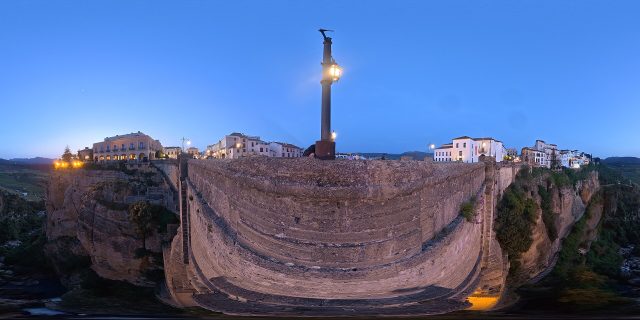
The bridge shifts with the day. Morning mist fills the gorge, and the bridge seems to float. By noon, the cliffs offer shade, and the wind carries the scent of dry grass. As evening falls, the canyon darkens, and only the river reflects the city’s lights. These moments show why Ronda has long drawn artists and dreamers—a place where time moves differently.
Puente Viejo isn’t just a bridge. It’s where history, nature, and life meet. It doesn’t compete with Puente Nuevo or the Moorish baths. It just exists, like Ronda—steady, unshaken, living at its own pace. In a world that moves too fast, that’s enough.