Perched on the edge of a dramatic gorge, Ronda feels like a city suspended between earth and sky. The deep chasm of El Tajo splits the rocky plateau in two, creating a natural divide that has shaped the town’s identity for centuries. But it’s the Puente Nuevo, the New Bridge, that draws visitors from all over the world—not just as a crossing between two halves of the city, but as a connection between eras, between the raw power of nature and the enduring ingenuity of those who dared to tame it.
The bridge’s construction was a feat of persistence. Earlier attempts to span the gorge had failed, collapsing under miscalculations, harsh weather, or lack of funds. It wasn’t until 1751 that architect José Martín de Aldehuela took on the challenge, and even then, the project stretched over three decades. When the bridge finally opened in 1793, it wasn’t just an engineering marvel of its time—it was a testament to human determination, a structure that demanded as much effort as building an entire town.
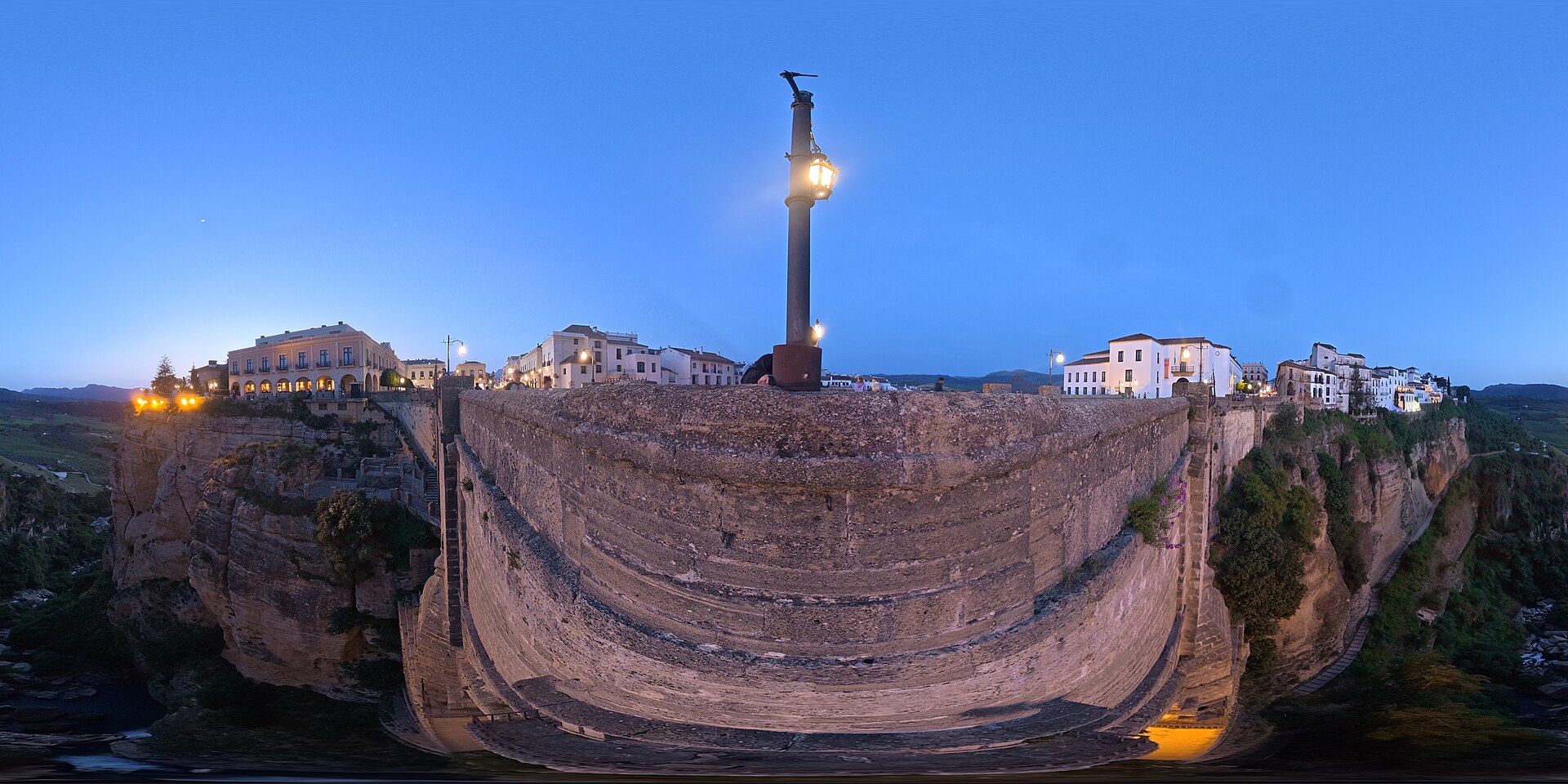
Standing nearly 120 meters above the river Guadalevín, the Puente Nuevo is as much a part of the landscape as the cliffs themselves. The golden-hued stone was quarried locally, blending seamlessly with the rugged rock faces. Three massive arches support the roadway, with the central one soaring high enough to seem like it’s holding up the sky. From the bridge, the view stretches across the gorge, where the river winds far below and the old town clings to the cliffs. On clear days, the horizon extends to the Sierra de Grazalema and even the distant Mediterranean coast.
Beyond its architectural grandeur, the bridge has witnessed centuries of history. During the Peninsular War, it became a battleground, a strategic prize in the fight for control. By the 19th century, Ronda’s dramatic setting had captured the imagination of Romantics—writers, artists, and poets who sought inspiration in its wild beauty. Ernest Hemingway is said to have found material for his stories here, drawn to the stark contrast between the town’s rugged landscape and its turbulent past. Over time, the bridge became woven into local lore, with stories of echoes carrying voices from the past on the wind.
Today, the Puente Nuevo is more than a monument—it’s a living part of Ronda. Cars and pedestrians cross it daily, couples meet on its span, and tourists pause to take photos. Elderly locals sit on benches, watching the gorge below, while beneath the bridge, a small museum offers a glimpse into its construction and history. But the real magic lies in the way it makes the past feel present. Standing on the bridge, the wind rushing through the gorge and the sunlight warming the stone, it’s impossible not to feel the weight of the centuries that have passed here.
Ronda moves to the rhythm of this bridge. In the early morning, sunlight creeps across the arches, and the city wakes slowly, as if reluctant to leave the quiet of dawn. By midday, the bridge hums with activity—children running, tourists snapping photos, the distant rush of the river far below. As evening cools the air, locals stroll across, turning the bridge into a gathering place. And at night, when the town grows still, soft lights illuminate the stone, making it seem as though time itself has paused.
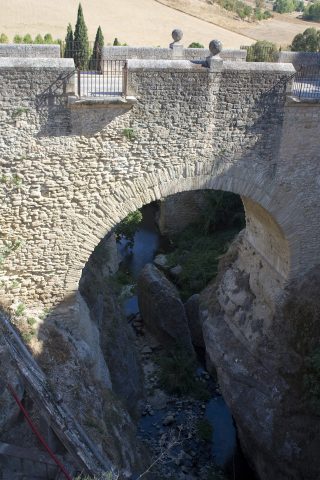
To truly understand the bridge, you have to descend into the gorge. At the base of the cliffs, old mills and caves tell their own stories, while remnants of Roman structures hint at even older layers of history. Narrow paths follow the river, offering shade and the soothing sound of water. But the most striking moment comes when you climb back up and see the Puente Nuevo again—suddenly, it feels like it’s floating above the abyss, a reminder that some things are built not just for a lifetime, but for eternity.
The bridge is more than stone and mortar; it’s a story carved into the landscape. It speaks of human resilience, of the way architecture can harmonize with nature, and of how a single place can come to symbolize an entire region. Standing on it, you don’t just see Ronda’s history—you feel it, a thread connecting the past to the present, a quiet testament to the enduring spirit of this corner of Spain.