Perched on the edge of Ronda’s gorge, the Alcazaba blends into the cliff. Built in the 13th century on older foundations, it served as a ruler’s home and a military stronghold when Ronda marked the border between Christian and Muslim lands. The walls and towers, worn by time, still stand as they did when invaders found the city nearly unassailable.
The fortress reveals its Moorish past in the horseshoe arches of its doorways. These remnants suggest courtyards and fountains that once filled the living quarters. The Alcazaba was never meant to impress with wealth. Its power came from its design—walls and towers built for watchfulness and defense. Without decoration, the space feels closer to its original purpose: soldiers on patrol, servants in the shade, rulers deciding the city’s fate.
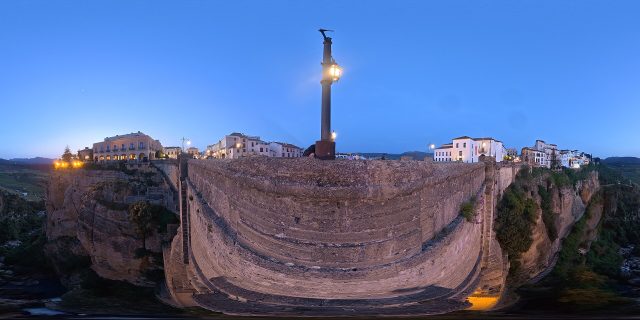
The climb to the upper terraces rewards you with a view. The El Tajo gorge divides Ronda, its cliffs dropping sharply to the river. From here, the Puente Nuevo looks fragile, a thin arch over the void. On clear days, the Guadalquivir valley stretches into the distance, its hills blurred by haze. The landscape has barely changed. You can almost see the watchmen who once scanned the horizon for approaching armies.
Ronda’s history is one of changing loyalties, and the Alcazaba was central to it. After 1492, the fortress passed to Christian hands, but its Moorish roots remained. By the 18th century, as Ronda’s importance faded, the Alcazaba decayed. Stones were taken for new buildings, and towers collapsed. Restoration began in the 20th century, piecing together what survived.
The Alcazaba is quieter than Ronda’s other sights. While crowds gather at the Puente Nuevo, the fortress lets you wander alone. You can trace the outlines of old rooms or touch the worn stone. Sometimes, concerts or exhibitions take place here. Even without them, the place feels timeless. The walls seem to hold the past and present together.
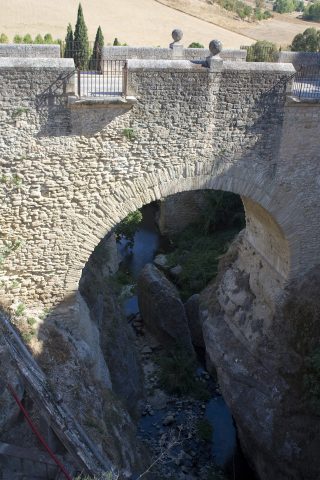
The fortress leads into Ronda’s old quarter. From its edge, narrow streets descend past whitewashed houses and plazas where locals drink coffee. Nearby, the Arab Baths and Puente Viejo offer more of Ronda’s history. From the towers, the city splits in two: the historic core on the gorge and the newer districts beyond. The contrast shows how Ronda has grown while keeping its past.
The Alcazaba isn’t like other historic sites. There are no long explanations or displays, just a few panels for context. Some might find it too plain, but that’s what makes it real. The fortress isn’t just something to look at—it’s something to explore. The rough stone and shifting light draw you in. The past isn’t just preserved here; it’s still part of the place.
What makes the Alcazaba special isn’t its size or its restored interiors. It’s the way it links past and present through small details. The way sunlight hits the arches at dawn. The scent of wild herbs rising from the gorge. The marks left by the hands that built it centuries ago. These are the things you remember.