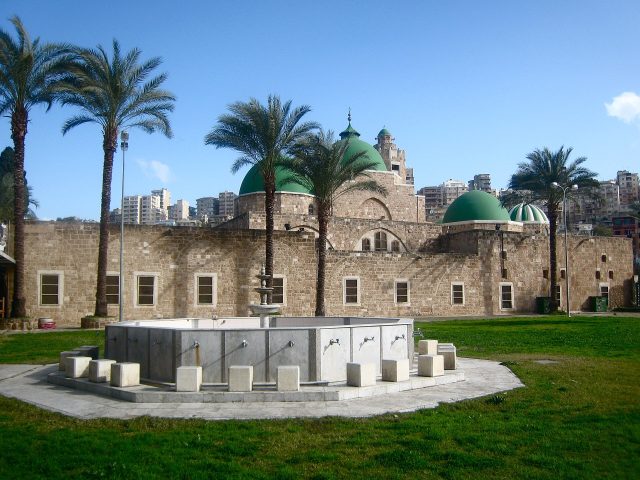
Tripoli moves at its own pace, and nowhere is that more evident than in the winding alleys of Khan al-Hayr. This isn’t just a market—it’s a place where history lingers in the worn stone arches and the scent of spices that has hung in the air for centuries. Built during the Ottoman era, Khan al-Hayr was once a caravanserai, a resting place for merchants traveling from Damascus, Aleppo, and beyond. Back then, Tripoli was a vital stop on trade routes connecting the Mediterranean to the Arabian Peninsula, and the market’s sandstone walls still carry the echoes of those journeys. Today, the same aromas of freshly baked bread, roasted coffee, and dried herbs fill the air, though the crowds are smaller, the pace slower.
The architecture here is classic Ottoman: a two-story structure built around a central courtyard, with galleries lining the upper level. The ground floor was once home to shops and storerooms, while the second offered lodging for weary travelers. High ceilings, heavy wooden doors, and intricately carved balconies give the place the feel of a living museum. The vaulted ceilings, supported by sturdy columns, aren’t just practical—they lend the space a sense of grandeur, as if the market itself is a stage for the daily dramas of trade and conversation. Though Tripoli no longer dominates regional commerce as it once did, Khan al-Hayr remains a quiet testament to the city’s past.
Unlike the polished souks of Beirut or Damascus, Khan al-Hayr hasn’t been sanitized for tourists. This is a market for locals—where people come for everyday goods, not souvenirs. In the morning, the first stalls to open are those selling fresh bread and cheese, followed by vendors with olives, spices, and dried fruits. By midday, the scent of grilled meat and simmering stews drifts through the alleys, and in the cooler evening hours, older men gather to sip tea and talk. There’s no rush here, no pressure to buy. The rhythm is dictated by the sun, the seasons, and the slow accumulation of small transactions that keep the market alive.
One of the most striking things about Khan al-Hayr is the presence of artisans who still practice trades passed down through generations. In small workshops tucked between shops, you might see a blacksmith shaping horseshoes, a cobbler stitching leather sandals, or a woodcarver etching traditional patterns into furniture. These craftsmen are among the last of their kind, their skills increasingly rare in a world of mass production. Their work is deliberate, unhurried—each piece unique, bearing the marks of its maker. If you’re lucky, you might catch one at work, though don’t expect tourist-friendly prices. Here, the value of handmade goods is measured in time and skill, not in what the market will bear.
Beyond commerce, Khan al-Hayr is a place where Tripoli’s diverse communities intersect. Sunni and Shia, Christian and Alawite—all come here to buy, sell, and chat, much as they have for centuries. The market is a microcosm of Lebanon itself, a rare space where religious and ethnic divisions fade into the background of daily life. It’s a reminder of what the country could be, if not for the political fractures of recent decades. In that sense, Khan al-Hayr is more than a historical site; it’s a living symbol of coexistence, however fragile.
Walking through the market is like stepping into a different understanding of time. There’s no strict schedule—shops open and close when their owners feel like it, and the day unfolds in layers of sound and scent. Mornings bring the shouts of vendors hawking fresh produce, afternoons the rhythmic clatter of tools in workshops, and evenings the murmur of conversation over tiny cups of coffee. The chaos has its own logic, a kind of urban music that’s been playing here for hundreds of years. If you listen closely, you can almost hear the city breathing.
Of course, Khan al-Hayr isn’t without its struggles. Some of the buildings are in need of repair, and empty stalls hint at a younger generation that’s moved away in search of opportunities elsewhere. But that’s part of what makes the market feel real—it hasn’t been frozen in time for tourists. It’s still evolving, even if that evolution is slower than many would like. There’s no forced hospitality here, no staged performances of authenticity. What you see is what you get: a place that’s survived wars, economic crises, and shifting trade routes, yet still functions as the heart of the old city.
If you find yourself in Tripoli, don’t just pass by Khan al-Hayr. Step inside, take a seat in one of the small cafés, and order something sweet. Watch the way the light filters through the arched windows, how the shadows lengthen as the day wears on. Strike up a conversation with a shopkeeper, or simply wander without a plan. This is where you’ll find the real Tripoli—not the one in guidebooks, but the one that exists in the quiet moments between transactions, in the laughter of old friends meeting by chance, in the way the past and present coexist without fanfare. It’s a place that doesn’t demand your attention, but rewards it if you’re willing to slow down.