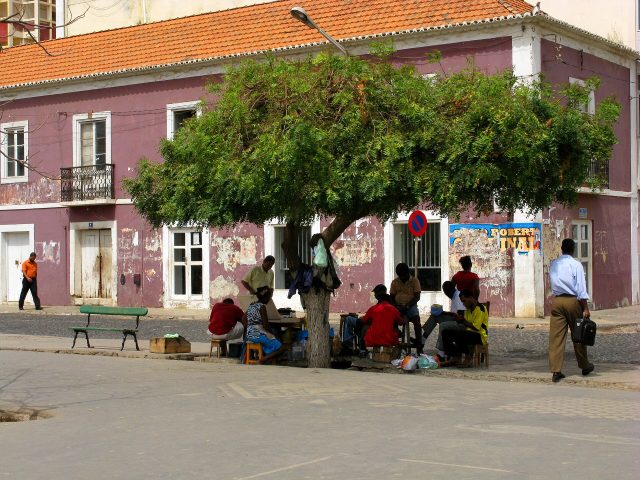
Sukupira Market isn’t just a place to buy vegetables or fish—it’s the living pulse of Praia, the capital of Cape Verde. Tucked into the heart of the city, it sprawls across a sunbaked square framed by weathered buildings with peeling paint and narrow streets where motorbikes weave between the occasional taxi. The air hums with the rhythm of the island: vendors calling out prices, children laughing, the distant crash of waves from the coast, and the sharp tang of spices mingling with salt. This isn’t a tourist attraction, though visitors do wander in. It’s where locals come for groceries, gossip, and a moment to sit on a bench and watch the world go by.
The market’s roots stretch back to when Praia was little more than a port on Santiago Island, a crossroads for goods moving across the Atlantic. During colonial times, it was a hub for trade—slaves, salt, fabrics, and rum all passed through here. After independence, Sukupira became the economic heart of the city, a place where Cape Verde’s identity stubbornly persists despite the creeping influence of globalization. There are no supermarkets here, no imported goods stacked in sterile aisles. Instead, you’ll find stalls piled with local fruit, dried fish, homemade cheese, and *cuscuz*—cornmeal cakes baked right in front of you.
The market’s architecture is unpretentious, built for function over form. There are no grand halls or polished floors, just a maze of wooden stalls, corrugated iron roofs, and narrow walkways where every inch of space is put to use. At its center, an open square serves as a loading dock in the morning and a gathering spot by evening, where musicians might play *morna* or *coladeira* as the light fades. The roofs shield against the worst of the sun, but the heat still presses in, leaving vendors and shoppers fanning themselves with newspapers or scarves. When the short but intense rainy season arrives, the market becomes a different kind of challenge—water pools in the alleys, and the scent of wet earth and greenery grows stronger.
What draws people to Sukupira isn’t just the goods, but the people. The vendors don’t just sell; they tell stories. The elderly woman selling spices might explain how her grandmother gathered them on the slopes of Fogo’s volcano, while a fisherman could recount a storm that nearly capsized his boat. Everyone knows each other here, and even a stranger quickly becomes part of the rhythm. Bargaining isn’t about squeezing out the last escudo—it’s a ritual, a way to connect, to share a joke or a piece of news. To an outsider, it might seem like haggling, but it’s really just how things are done.
Food at Sukupira is a world of its own. Unlike the restaurants that serve European dishes with an African twist, the market offers the real taste of Cape Verde. Breakfast might be *cachupa pobre*—a simple cornmeal porridge with milk and honey—eaten on the go, or a *pastel* stuffed with spicy tuna and onions. By midday, the stalls fill with steaming pots of *cachupa rica*, the country’s national dish—a hearty stew of corn, beans, and meat—or *pastéis*, fried pastries that crackle with garlic and pepper. The air is thick with the smell of grilling fish, coconut, and the sharp bite of *grogue*, the local sugarcane spirit that warms even the coolest evenings.
Beyond food, Sukupira is where Cape Verdean culture comes alive. Music is everywhere—from the tinny radios blasting *morna* to the occasional impromptu performance in the square. You can buy CDs from local artists or even traditional instruments like the *cavaquinho*, a small four-stringed guitar, or the *ferro*, a metal triangle used in folk bands. If you’re lucky, you might catch a spontaneous dance, the slow, melancholic steps of *morna* telling stories of longing and love. The market isn’t just a place to shop; it’s a stage for the island’s soul.
Yet Sukupira isn’t all vibrancy and color. It’s also a place where the struggles of life in Cape Verde are on full display. In dry years, when rains fail, fresh produce dwindles, and prices climb. Vendors grumble about competition from supermarkets popping up in newer parts of the city, and about tourists who prefer sanitized souvenir shops over the market’s chaos. But despite these pressures, Sukupira endures. It’s where Cape Verde remains unfiltered—loud, messy, and alive in a way that no polished attraction could ever replicate.
As evening falls, the market winds down. Vendors pack up their unsold goods, scrub their stalls, and the last shoppers hurry home before dark. The square empties, but Sukupira doesn’t disappear. It simply rests, ready to wake again at dawn as the heart of Praia, where the past and present collide in the most ordinary and extraordinary ways. For visitors, it’s just a market. For locals, it’s home, history, and a reminder of what makes Cape Verde what it is. That’s why, no matter how many times you go, Sukupira always pulls you back.