Quebrada isn’t the kind of beach you visit for pristine sand or turquoise waters. The sea here is restless, the sand mixed with pebbles, and the landscape carries the raw beauty of volcanic islands. It’s this lack of polish that makes it feel real.
Tucked within the city limits, a short walk from Praia’s center, the beach exists in its own world. Rocky cliffs rise sharply on one side; low hills with sparse vegetation frame the other. At low tide, dark stones covered in seaweed emerge from the water. Waves crash against the shore, sending spray onto the road running parallel. The name Quebrada—derived from the Portuguese word for ravine—suits it. The beach feels squeezed between the city and the ocean, as if nature carved out just enough space for it.
When the Portuguese established a settlement here in the 15th century, Quebrada served as a natural harbor for small vessels. The city was a key stop in the transatlantic slave trade, and the beach was where goods and people were transferred from ships to shore. Later, as Praia grew into Cape Verde’s administrative hub, the beach lost its commercial role but remained a place where locals came for fresh fish and cool breezes.
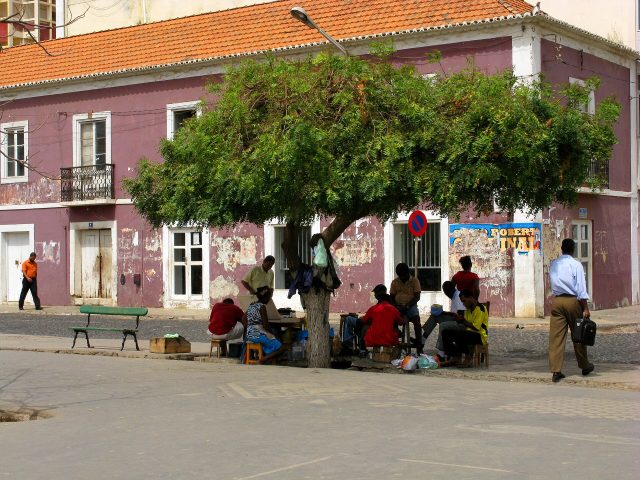
The houses facing the sea are built in a colonial style—high ceilings, shuttered windows, balconies overlooking the water. Many are weathered, their facades in need of repair. Along the shore runs a promenade where locals gather in the evenings. There are no luxury hotels, just a handful of modest cafés where you can sip coffee or beer while watching the waves.
Quebrada isn’t for a typical beach holiday. The sea is often rough, the seabed rocky, and swimming is best left to those who know the currents. In the mornings, fishermen haul their boats ashore, heavy with the day’s catch. Children play football on the sand. Elders sit on benches, chatting. On weekends, families come to picnic or sit by the water.
Visit at dusk. The sun dips toward the horizon, the sky turns orange and violet, and the sea darkens. Fires flicker on the beach, filling the air with the scent of grilled fish. Sometimes, local musicians play morna—the traditional music of Cape Verde, slow and melancholic. If you’re lucky, you might hear a cavaquinho, a small guitar whose music carries the soul of the island.
Quebrada is where the city meets the ocean without fanfare. No tourist traps, no souvenir stalls. Just the sea, the rocks, the wind, and the people for whom this beach is part of everyday life. It’s not for those seeking a polished version of exoticism, but for those who want to see Cape Verde as it is.
In winter, the trade winds sweep across the islands, and the sea becomes wild. Waves surge high. In summer, when the winds ease, the water near the shore warms, and swimming becomes possible—though still not without caution. No matter the season, Quebrada remains a place where you can feel the Atlantic’s untamed presence.
If you’re in Praia, don’t rush to the picture-perfect beaches. Walk to Quebrada, sit on a bench by the water, and watch as the city and the ocean go about their lives. Maybe then you’ll understand why Cape Verde is called an archipelago of contrasts—where the capital and the wild coast exist side by side, and history lingers in every stone and wave.