Hajnówka isn’t the kind of place you’ll find on most tourist itineraries, and that’s precisely what makes it special. There are no crowds jostling for space, no souvenir stalls hawking trinkets, no guides shouting over each other to offer the same tour for the tenth time that day. Instead, the town moves at its own unhurried pace, its quiet streets and unassuming rhythm giving the impression that time itself slows down here, just enough to let you catch your breath. At its heart lies the Market Square, or Rynek as locals call it—a place where the threads of daily life in Hajnówka quietly converge.
Unlike the grand plazas of Kraków or Warsaw, with their imposing facades and centuries-old monuments, Hajnówka’s Market Square is modest in scale and appearance. There are no palaces, no towering cathedrals, no architectural showpieces demanding attention. What you’ll find instead are rows of two- and three-story buildings, most of them constructed in the early to mid-20th century, when the town began to grow in earnest. The architecture is typical of small Polish towns from that era: neat but unpretentious, with tall windows and the occasional flourish of Art Nouveau detailing or stucco ornamentation. The effect is one of warmth and familiarity, as if you’ve stepped into a place where life has been lived comfortably, without fuss, for generations.
The square’s history is closely tied to that of Hajnówka itself. The town started as a small settlement in the 16th century, but it wasn’t until the 19th century that it began to take shape as a proper community. The turning point came when the railway arrived, linking Białystok with Grodno and turning Hajnówka into a key transport hub. Sawmills, workshops, and small factories sprang up, and the town became a center for trade in timber, grain, and other goods. The Market Square was where deals were struck, news was exchanged, and the pulse of commerce kept the town alive from dawn till dusk. In those days, the square was a bustling place, the kind of spot where you could feel the energy of a town on the rise.
Today, the Market Square still serves as a gathering place, though its role has softened with time. On weekday mornings, it’s a quiet corner of the town, with a handful of small shops and cafés where locals stop for coffee and fresh pastries. The pace is slow, almost sleepy—just the occasional pedestrian hurrying past, a car rolling by, or a cyclist weaving through the square. But on weekends and during festivals, the atmosphere shifts. Stalls appear, selling local honey, mushrooms, homemade cheeses, and cured meats. Artisans sometimes set up shop, offering wooden crafts or pottery. For a few hours, the square comes alive again, echoing the days when trade was its lifeblood.
At the center of it all stands the town hall, a building that may not be architecturally striking but serves as a symbol of local governance. Built in the mid-20th century, it’s a straightforward, functional structure, its clean lines and lack of ornamentation reflecting the practical spirit of the town. The space around it often hosts events—a stage goes up in summer for open-air concerts, while in winter, an ice rink draws families and friends out for skating or a cup of mulled wine. The square becomes a stage for the town’s small but vibrant community life, a place where people come together for shared moments.
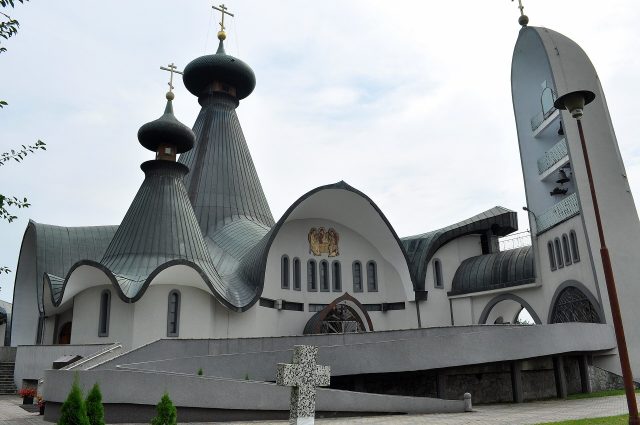
Just a short walk from the square, there are a few spots worth exploring if you find yourself in Hajnówka. The Church of St. Dmitry, for instance, is a small but charming early 20th-century building, its interior adorned with frescoes and icons by local artists. Nearby, a park offers a quiet retreat under the shade of old trees, a perfect place to sit and watch the world go by. If you venture a little farther, you’ll reach the Lesna River, which winds through the town, adding a touch of natural beauty to the urban landscape.
Hajnówka and its Market Square offer a glimpse of Poland as it exists away from the well-trodden paths. There’s no need to rush here, no pressure to keep up with a crowd. You can sit on a bench and watch the town wake up, duck into a café for a slice of local cake, or wander the side streets, where the only sound is the occasional chime of a church bell. It’s a place that doesn’t try to impress, and that’s exactly why it lingers in the memory—a quiet corner of the world where life unfolds at its own gentle pace.
For travelers who prefer to explore without a checklist, Hajnówka can be a pleasant surprise. A day or two spent here might include a visit to a local museum, a walk along the river, or simply soaking in the atmosphere of a town that feels lived-in and authentic. The Market Square is the perfect starting point. It won’t dazzle you with grand history or monumental architecture, but that’s not the point. What it offers instead is something rarer: a sense of place, a feeling of stepping into a rhythm that’s been steady and unchanging for decades. In a world that often feels too fast, that’s a kind of quiet magic.