Białowieża Forest
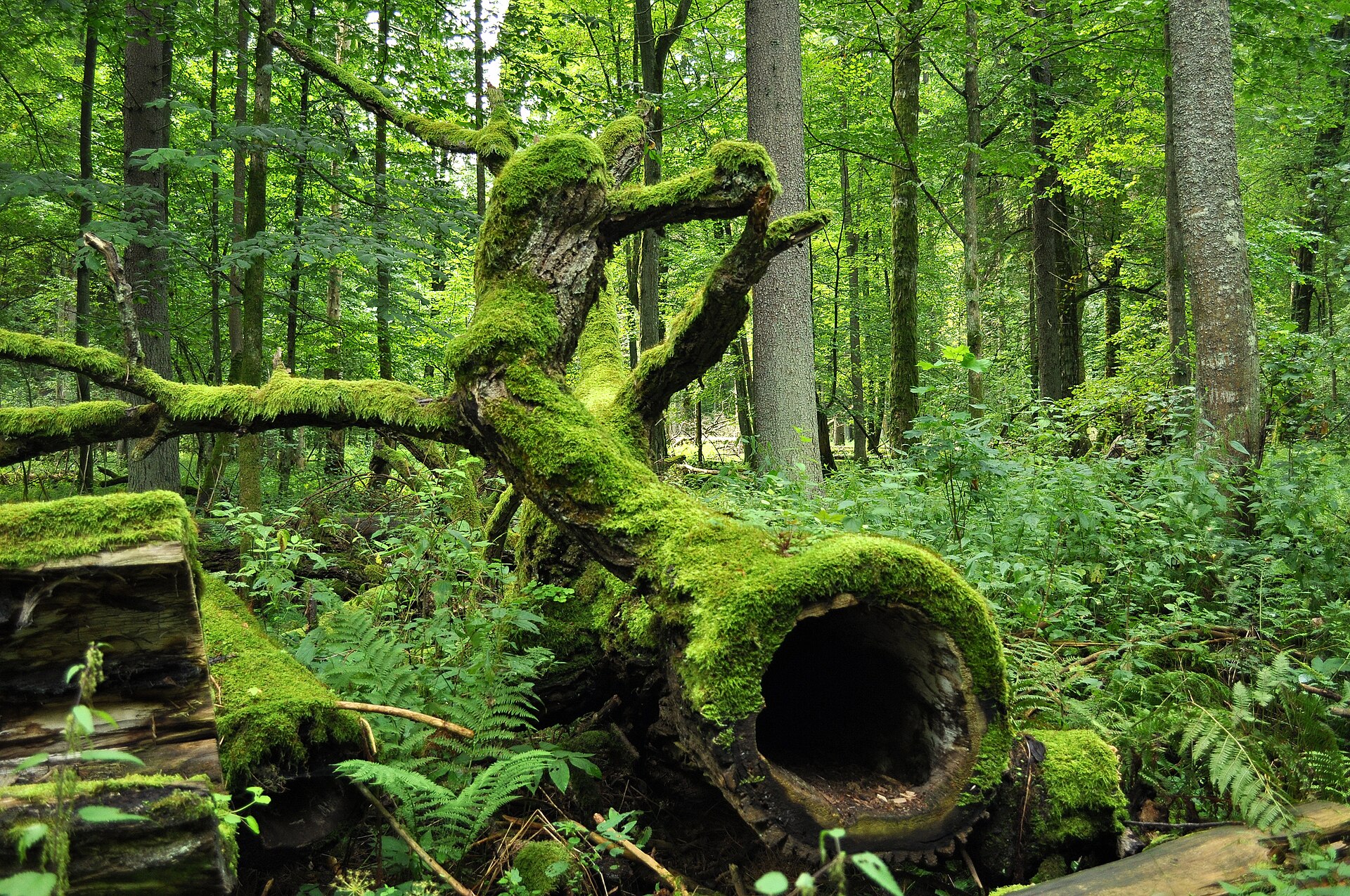
This is one of the last places in Europe where nature still dictates its own rules. The ancient woodland straddles the border between Poland and Belarus, surviving centuries largely untouched. Oak trees here are five hundred years old, their gnarled branches tangled with spruce and hornbeam. Below them, wetlands covered in moss and fern thrive in dappled light. The forest moves to its own rhythm—walk its paths, and you might hear only the rustle of leaves or the distant call of a woodpecker.
The history of Białowieża is as layered as the forest itself. Lithuanian grand dukes and Polish kings hunted here in the Middle Ages. Later, under Russian rule, it became an imperial estate, with Tsar Nicholas II among those who hunted in these woods. In 1932, the Polish side was designated a national park. After World War II, a protected zone was established on the Belarusian side. The forest endures because people decided to let it.
The forest is home to the European bison, the continent’s heaviest land mammal. By the early 20th century, these animals had nearly vanished, with only a few left in captivity. Conservation efforts brought them back—hundreds now roam here. You might also see red deer, wild boar, lynx, wolves, black storks, or white-tailed eagles.
The village of Białowieża has a small nature museum. It shows the history of the woodland, its animals, and the work done to protect them. Nearby, an enclosure lets visitors see bison and deer up close. On the border with Belarus, a few 19th-century buildings remain from an imperial hunting lodge. They were once used by Russian nobility.
The village itself is quiet. Visitors can stay in guesthouses, eat local food, or buy wooden crafts and amber jewelry. But the real reason to come is just beyond its edges. Trails lead deep into the forest, where a four-hundred-year-old oak stands. Its trunk is so wide that three people linking arms could barely encircle it.
The forest changes with the seasons. Morning mist curls over wetlands. Afternoon light shifts through the canopy. By evening, the only sounds are the snap of a twig or the distant hoot of an owl. Rain makes the bark glisten and turns paths into shallow streams. Winter brings silence, snow dusting the trees, animal tracks crossing the clearings.
Walking through Białowieża feels different. The forest doesn’t exist for us. It endures, indifferent. Yet it offers something rare—a chance to step outside modern life and remember how small we are. It doesn’t give answers, but it invites you to listen to the silence, to watch for a bison moving through the trees, or to feel the weight of centuries pressing gently against your shoulders.