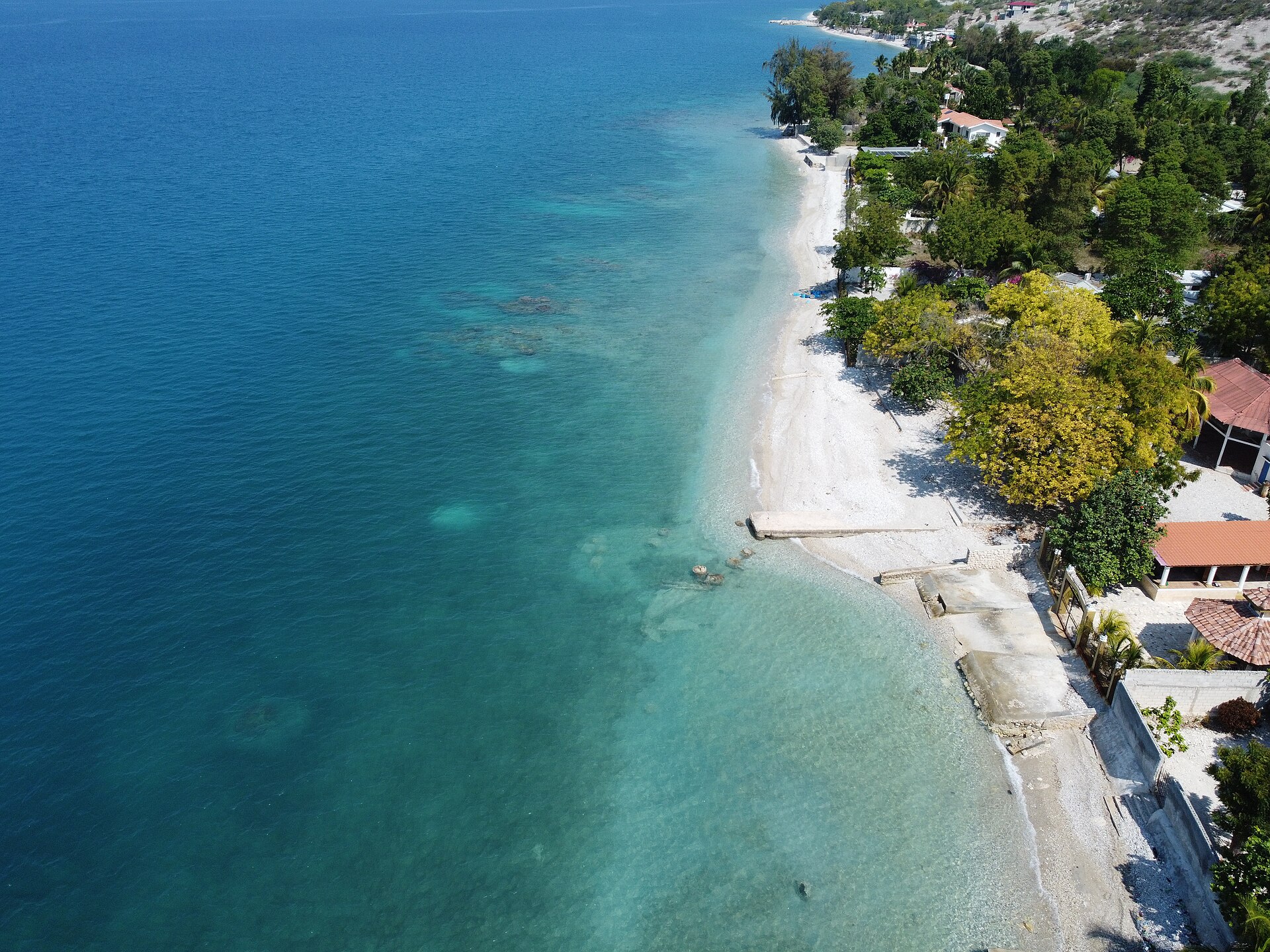
Montrouis Market is where Haiti reveals itself without pretense. There are no souvenir stalls for tourists, and foreigners rarely wander in unless they’ve come for groceries or lost their way. It’s not designed for outsiders; it’s where daily life unfolds in its most unfiltered form.
The market sits in Montrouis, a coastal town between Port-au-Prince and Gonaïves. It’s a living crossroads of tradition, necessity, and history. Before sunrise, farmers from nearby villages arrive with bananas, mangoes, avocados, sweet potatoes, and corn. By six in the morning, the market hums with activity. Vendors arrange their goods on the ground or wooden tables under tarpaulins. Without refrigeration, fish, meat, and dairy sell out quickly in the heat.
Shacks and stalls are built from plywood, corrugated metal, and cardboard. During the rainy season, roofs leak and the ground turns to mud, but trading never stops. At the center, older structures—likely colonial-era remnants—shelter spice sellers, fabric merchants, and those selling household goods.
There’s no order here. Bargaining is part of the culture, a negotiation where both sides know the rules. Vendors call out, some joking, others watching the crowd. The air smells of ripe fruit, fried fish, spices, and smoked meat. Sometimes, méringue or kompa music drifts through.
This is the social heart of Montrouis. Neighbors greet each other, exchange news. Women in headscarves balance baskets on their heads. Children dart between stalls, helping parents or playing in the gaps. Men gather in small groups, passing bottles of clairin, the local moonshine, in plastic containers. Clairin is served at celebrations and funerals.
For many families, the market is a lifeline. Their survival depends on daily earnings. Prices change with the seasons. The trade is passed down through generations—children learn to spot the best produce, attract customers, stretch a profit. If sales are slow one day, the next might bring hunger.
The chaos has its own logic. Fruits and vegetables cluster near the entrance, meat and fish in cooler corners, handmade crafts in the back. You’ll find fresh produce, medicinal herbs, homemade sandals, and secondhand clothes from the U.S. The real treasures are Haitian spices—peppers, garlic, and shallots sold in bunches or by the handful. No local dish is complete without them.
This place isn’t convenient or polished. The smells, the sounds, the people—it’s all raw. If you’re in Montrouis, spend an hour here. You won’t just see Haiti; you’ll feel its pulse.