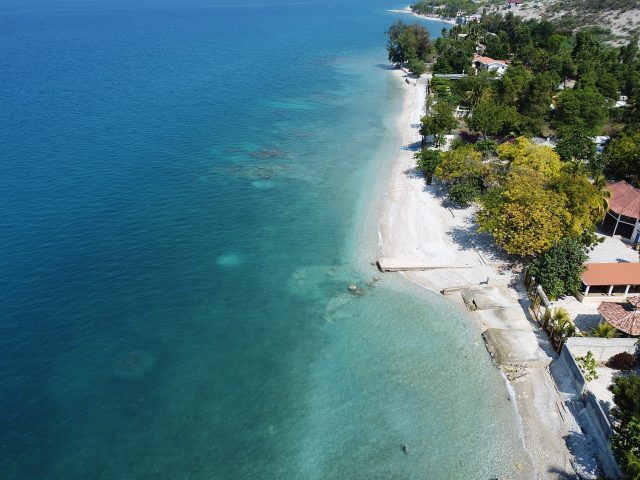
Saint Joseph’s Church sits on a gentle rise above Montrouge. From here, the town unfolds slowly—faded facades, the sea breeze, the rhythm of a place untouched by tourist maps.
The church is small but well-proportioned. Whitewashed walls, worn by sun and salt, catch the light. The low bell tower marks the skyline without demanding attention. Inside, wooden pews line the nave. A few statues stand near the altar. The air is still, as if the building has long since found its own quiet pace.
Montrouge was once a port for merchants and sailors moving goods between Europe and the Americas. In the 19th century, as Haiti shaped its independence, the church became part of the town’s daily life. It was more than a place of worship—it was a steady point in a shifting political landscape. Built when the country was shedding its colonial past, Saint Joseph’s offered continuity.
Today, the church remains active. Sundays bring families for mass, occasional baptisms, or weddings. On weekdays, the doors stay open, though few enter. Sometimes, elderly women sit in silence. There are no crowds, no ceremonies—just the quiet persistence of faith.
No souvenir stalls stand outside. No signs guide visitors. Montrouge isn’t a destination for those seeking landmarks. The few travelers who arrive usually come for something else—the sound of waves, the salt in the air, a moment of stillness. Saint Joseph’s gives exactly that. It doesn’t try to impress. It simply exists, as much a part of the town as the rustle of palm trees.
Step inside on a hot afternoon. The cool interior offers relief. Light filters through high windows, casting patterns on the stone floor. The air moves differently here—slower, softer. If you’re lucky, you might hear singing. Not a choir, but parishioners, their voices rising in unison, raw and unpolished. It’s the kind of sound that doesn’t need an audience.
Saint Joseph’s won’t tell you stories of grand events or famous figures. It won’t overwhelm you with ornate details. But that’s why it matters. It’s a place for quiet reflection, a pause in the day. In a world where landmarks are often packaged for consumption, places like this are rare. They don’t ask for admiration. They offer a space to breathe.
The church has witnessed joy and sorrow, always as a silent observer. There’s nothing forced about it. Just the play of light through the windows, the steady passage of time, and the quiet certainty that some things endure. For those who notice, it feels less like a tourist stop and more like a place that was always there, waiting to be found.