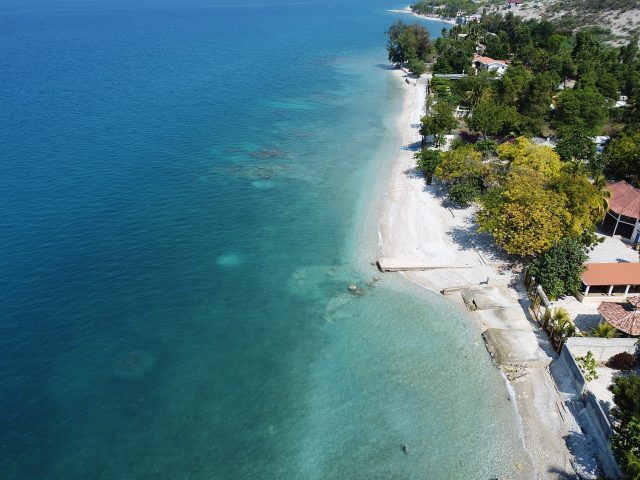
Montrouis is one of those rare places where the Caribbean still feels like the Caribbean—not a polished resort destination, but a quiet stretch of coast where life moves to the rhythm of the waves and the slow pulse of the tropics. This small town on Haiti’s western shore doesn’t draw crowds or offer the kind of amenities that turn beaches into amusement parks. Instead, it offers something far more valuable: the chance to experience Haiti as it truly is, away from headlines and stereotypes. The beach here is long and unhurried, a ribbon of sand lapped by turquoise water, where the only urgency comes from the tide rolling in and out.
The sand is pale, almost white, though not as blinding as the powdery shores of more famous islands. It’s soft underfoot, warm in the sun, but not immaculate—bits of seaweed, fragments of fishing nets, and the occasional driftwood remind you that this isn’t just a postcard scene. The sea is clearest in the early morning, before the wind stirs up the shallows, and the water stays shallow for a long way out, making it easy to wade in without worrying about sudden drops. Further from shore, the depth increases, but the gentle slope means you can always find a spot where the water barely reaches your knees.
Montrouis hasn’t always been this quiet. During the colonial era, it was part of a thriving trade network, a stopover for ships carrying sugar, coffee, and cotton. The port was a key transit point, and the town buzzed with activity. Over time, its importance faded, and today, only fragments of that past remain: crumbling stone buildings in the town center, the skeletal remains of old warehouses near the docks, and the stories of older residents who remember when Montrouis was a livelier place. The beach, though, has changed little. There are no high-rise hotels, no beachfront bars blasting music, just the same stretch of sand where people have come for generations to fish, swim, or simply watch the horizon.
The day on the beach starts early. By sunrise, fishermen are already preparing their boats, mending nets, and pushing off into the calm morning water. Their work is woven into the landscape—boats dragged onto the sand, coils of rope, baskets of the day’s catch. By mid-morning, they return, and the shore comes alive with vendors selling fresh fish, lobsters, and octopus. If you’re lucky, you can buy seafood straight from the boat, still warm from the sea, and have it cooked right there on a small grill, seasoned with local spices and lime. The scent of grilled fish mingles with the salt air, a simple but unforgettable smell.
By noon, the beach is nearly empty. The heat drives most people into the shade, and only the bravest—usually local children or the occasional visitor—venture into the water. The sea feels warmer then, almost like bathwater, but the sun is relentless, making it hard to stay out in the open for long. As the afternoon fades, life returns to the shore. Families gather, teenagers play soccer in the sand, and older men sit on folding chairs, watching the sunset. Sometimes, someone lights a small fire, and the smell of roasting plantains or corn drifts along the beach.
There’s little in the way of grand architecture here. Aside from a few old colonial buildings in the town center, Montrouis is a collection of modest homes built from whatever materials were available—wood, corrugated metal, concrete. Many houses stand on stilts near the water, raised to avoid flooding during high tide. Some have small verandas facing the sea, where people sit in the evenings, watching the waves. At night, when kerosene lamps or dim electric lights flicker on, the town takes on a quiet charm. The reflections of the lights dance on the water, making it seem as if the whole place is floating just above the sea.
This isn’t the kind of beach you visit for entertainment or guided tours. There are no museums, no beachfront clubs, no organized activities. Montrouis is for those who want to slow down—who want to listen to the waves, watch fishermen repair their nets, see children build sandcastles, or simply sit as the sun dips below the horizon, painting the sky in shades of pink and gold. Time feels different here, as if it’s moving at its own pace, unhurried and unforced. That sense of stillness is what makes the place special.
Haiti is a country of contrasts, and Montrouis is no exception. Infrastructure is basic, roads can be rough, and power outages are common. But that rawness is part of what makes the town feel real. There’s no pretense here, no attempt to cater to tourists, no forced comfort. Instead, there’s life as it’s lived—messy, beautiful, and unfiltered. The beach is at the heart of it all, a place where the sea meets the land and people meet the natural world without barriers. It’s not perfect, but that’s exactly why it feels authentic. In a world where so many places are polished to a shine, Montrouis remains refreshingly, stubbornly itself.