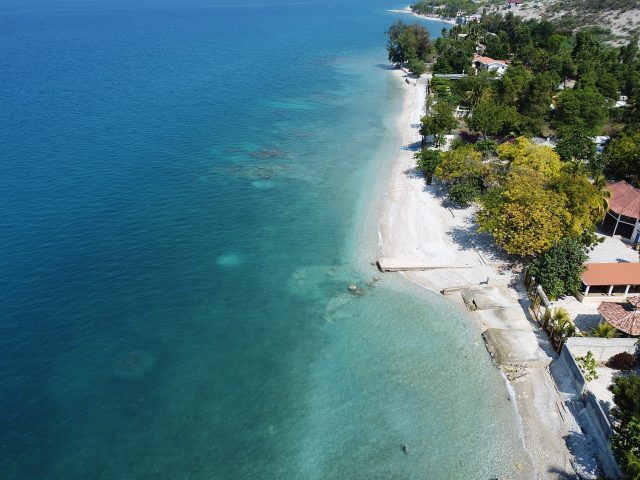
Perched along Haiti’s coastline near the quiet town of Montrouis, the Ogier-Fombrun Museum feels like a place where time has settled into a slower rhythm. There are no crowds here, no tour buses lining the road, no souvenir stands competing for attention. Instead, the museum offers something far rarer: a sense of stillness, a chance to step into the layers of history that have shaped this island, and a quiet invitation to listen.
The building itself is a relic of Haiti’s colonial past, once part of a sugar plantation established in the late 18th century. Its architecture carries the weight of those years—tall ceilings that seem to breathe, thick wooden beams worn smooth by time, and wide verandas that frame views of the sea. Inside, the rooms are arranged much as they might have been centuries ago, with antique furniture, faded portraits, and everyday objects that hint at the lives of those who once lived here. The house has witnessed the rise and fall of empires, the birth of a nation, and the quiet resilience of the people who called it home.
The museum takes its name from the Ogier-Fombrun family, whose influence stretches across Haiti’s political and cultural history. Louis Ogier-Fombrun, a diplomat and later a collector, played a key role in preserving the artifacts that now fill these rooms. His vision was to create a space that honored not just the colonial era, but the broader story of Haiti—its struggles, its creativity, and its enduring spirit. The collection includes rare documents, photographs, and personal items belonging to figures who shaped the island’s destiny, each piece offering a fragment of a larger narrative.
One of the most compelling sections of the museum is dedicated to the Haitian Revolution, a defining moment in the country’s history. Here, visitors can see the weapons carried by revolutionaries, maps of pivotal battles, and letters written by those who fought for freedom. These artifacts are more than historical curiosities; they serve as a reminder of the cost of independence and the fragility of the world that followed. The revolution wasn’t just a local uprising—it was the first successful slave revolt in the Americas, a turning point that sent ripples across the globe.
Beyond the historical exhibits, the museum also showcases the vibrant artistry of Haiti. The island’s creative tradition is impossible to ignore—bold colors, intricate patterns, and a deep connection to both African roots and Caribbean influences. The collection includes paintings, sculptures, and textiles by local artists, some working in traditional styles, others pushing boundaries with contemporary techniques. Each piece carries a piece of Haiti’s soul, whether it’s a vivid painting of market life or a delicate piece of handwoven fabric.
The museum isn’t just a place to observe; it’s a place to experience. There are no rigid schedules or guided tours that rush you from one room to the next. Instead, visitors can wander at their own pace, stepping out onto the veranda to watch the waves roll in or strolling through the small garden where native plants grow. The air is thick with the scent of salt and earth, and the only sounds are the distant crash of the ocean and the rustle of palm leaves in the breeze.
Montrouis itself is a town that moves to its own rhythm. There are no high-rise hotels or bustling nightlife here—just a handful of quiet cafés serving fresh seafood and local dishes, and beaches where the sand is dark and the crowds are nonexistent. The museum sits slightly off the beaten path, away from the usual tourist circuits, which only adds to its charm. It’s the kind of place where you might spend an afternoon without ever checking the time, where the past and present coexist without fanfare.
A visit to the Ogier-Fombrun Museum is less about ticking off a sightseeing list and more about slowing down. There’s no pressure to see everything at once, no need to rush. You can linger in the rooms that interest you most, or simply sit on the veranda with a book, letting the history of the place seep in. For those who travel to understand rather than just to see, this museum offers something rare: a chance to connect with Haiti in a way that feels authentic, unhurried, and deeply human.