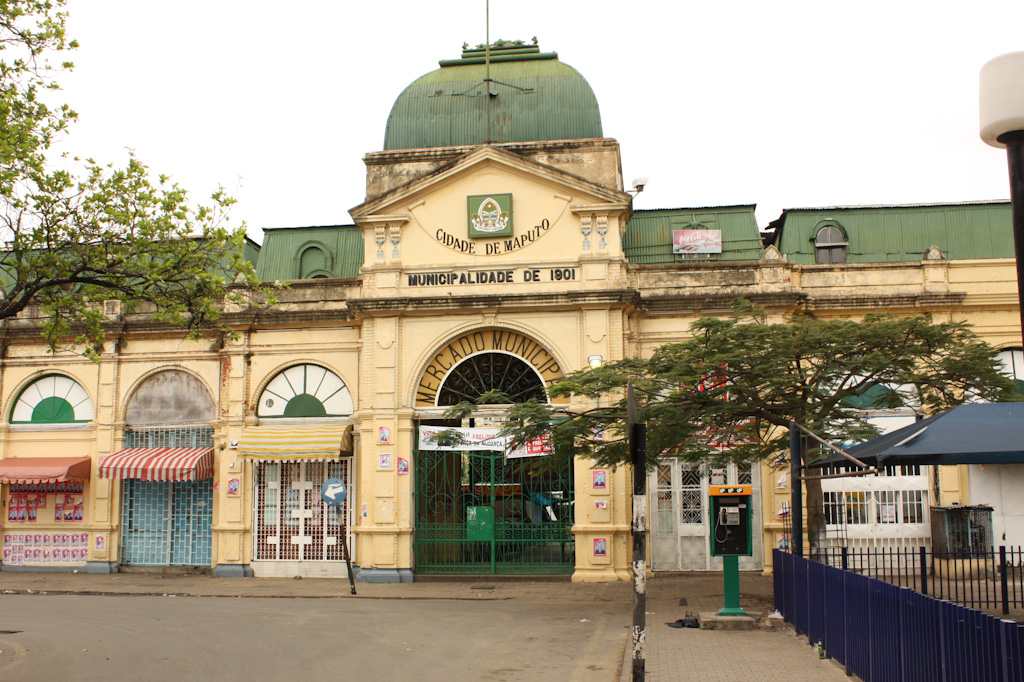
Maputo’s Mercado Central is one of those places where the city’s pulse feels strongest. Tucked into the heart of the downtown area, it has been a fixture of daily life for over a century, evolving from a simple trading post into a sprawling hub of commerce, culture, and community. The building itself is a relic of colonial architecture, its iron framework and high ceilings a nod to the late 19th-century design that once defined much of the city’s public spaces. Though the structure has been patched and repurposed over the decades, it still carries the weight of history—visible in the worn wooden stalls, the faded paint, and the way light filters through the arched windows, casting long shadows over the bustle below.
Walking into the market is like stepping into a cross-section of Maputo itself. The air is thick with the scent of spices, grilled fish, and fresh produce, mingling with the sharper tang of dried chilies and the earthy aroma of cassava. Vendors call out prices in Portuguese and local languages, their voices rising above the clatter of metal bowls and the hum of generators. The market isn’t just a place to buy goods; it’s where the city’s rhythms are set. Early mornings belong to the fishermen unloading their catch, their stalls glistening with sardines, prawns, and the occasional octopus. By midday, the focus shifts to the fruit and vegetable sellers, their pyramids of mangoes, bananas, and cashews adding splashes of color to the scene.
Beyond the food, the market is a treasure trove of everyday Mozambican life. Tailors sit at old sewing machines, stitching together capulanas—the vibrant, patterned fabrics worn by women across the country. Nearby, artisans sell hand-carved wooden sculptures, their smooth surfaces polished by years of handling. There are stalls piled high with secondhand clothes, their labels long faded, and others offering everything from plastic sandals to knockoff sunglasses. The market doesn’t cater to tourists; it exists for the people who live here, and that authenticity is part of its charm. You won’t find neatly packaged souvenirs or air-conditioned boutiques, just the raw, unfiltered energy of a place that has always been about necessity and exchange.
The history of Mercado Central is intertwined with Maputo’s own. When the city was still known as Lourenço Marques, the market was one of the first places where Portuguese settlers, African laborers, and Indian traders came together under one roof. Over time, it became a symbol of the city’s resilience. During the civil war, when supplies were scarce and the economy collapsed, the market remained open, a lifeline for those who relied on it. Even today, it’s a place where the past and present collide. The old colonial building, with its iron girders and tiled floors, stands in contrast to the improvised stalls and the constant hum of activity. It’s a reminder that while Maputo has changed, some things—like the need for a central gathering place—have stayed the same.
For visitors, the market offers more than just a shopping experience. It’s a chance to observe the small details that define daily life in Mozambique. Watch how a woman haggles over the price of tomatoes, her hands gesturing emphatically as the vendor shakes his head. Notice the way children dart between stalls, their laughter cutting through the noise. Or how an elderly man sits quietly in the corner, repairing a pair of shoes with practiced ease. These moments aren’t staged; they’re the real fabric of the city. And while the market can feel overwhelming at first—its narrow aisles crowded, its sounds and smells intense—it’s also deeply human. There’s a sense of shared purpose here, a recognition that everyone, from the vendor to the customer, is part of something larger.
The market’s layout is organic, almost chaotic, but there’s a logic to it if you pay attention. The fishmongers cluster near the entrance, their stalls arranged in a way that makes sense for the flow of customers. The spice sellers occupy a corner where the air is thick with the scent of piri-piri, cinnamon, and bay leaves. The fabric section is a maze of color, with bolts of cloth stacked high and draped over tables. It’s easy to get lost, but that’s part of the fun. Wandering through the market is like flipping through the pages of a living, breathing guidebook to Mozambique. You’ll stumble upon things you didn’t know you were looking for—a handwoven basket, a bag of cashew nuts, a conversation with a vendor who’s been coming here for decades.
One of the most striking things about Mercado Central is how it reflects the country’s broader story. Mozambique has always been a place of trade, its coastline a gateway for merchants from Africa, Asia, and Europe. The market embodies that legacy, a microcosm of the exchanges that have shaped the nation. Here, you’ll find ingredients that tell the story of Mozambique’s cuisine—coconuts from the north, cassava from the interior, and the fiery piri-piri peppers that have become synonymous with the country’s food. You’ll also see the influence of the Indian Ocean trade in the spices, the fabrics, and even the language, with words borrowed from Arabic, Hindi, and Portuguese blending seamlessly.
Of course, the market isn’t without its challenges. Like many public spaces in Maputo, it struggles with overcrowding, sanitation, and the wear and tear of constant use. Some stalls are little more than makeshift tables covered in tarps, and the building itself shows signs of age. But these imperfections are part of what makes Mercado Central feel real. It’s not a polished tourist attraction; it’s a working market that has adapted to the needs of the people who rely on it. There’s a sense of pride here, too—vendors take care of their stalls, sweeping the floors and arranging their goods with care. Even in the midst of chaos, there’s an order to it, a rhythm that keeps everything moving.
For those willing to dive in, the market offers a glimpse into the soul of Maputo. It’s a place where the city’s past and present coexist, where tradition meets modernity, and where the act of buying a mango or a length of fabric becomes a small but meaningful connection to the people who call this place home. You might leave with a bag of spices or a handmade souvenir, but the real takeaway is the experience—the sights, the sounds, the way the market makes you feel like you’ve touched something essential about the city. It’s not always easy to navigate, and it’s certainly not for those who prefer their travel experiences sanitized. But for anyone who wants to understand Maputo beyond the guidebooks, Mercado Central is a place that lingers in the memory long after you’ve left.