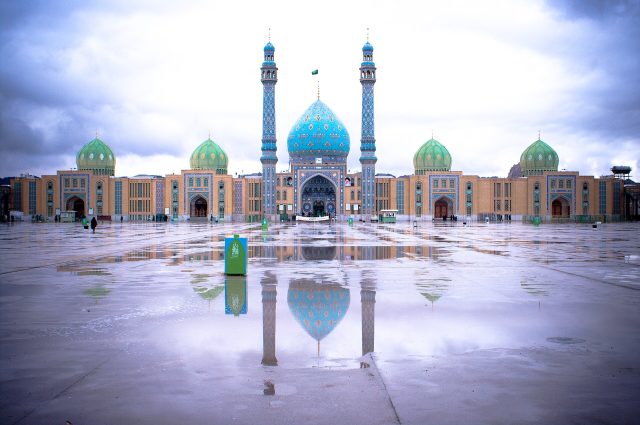
Qom’s bazaar is one of those places where the city reveals itself in ways you don’t expect. Though Qom is one of Iran’s most important religious centers, its market carries none of the hurried energy of a big city. Instead, it moves at its own pace, a living space where history, culture, and daily life have been woven together over centuries. The wooden stalls creak under the weight of time, spices linger in the air, and conversations unfold slowly, as if no one is in a rush to leave.
The architecture here follows the classic design of Iranian bazaars, with narrow passageways covered by high vaulted ceilings that shield visitors from the sun and keep the air cool. Light filters through small openings in the roof, casting shifting patterns on the stone walls. Along the galleries, shops display handwoven carpets, dried fruits, and local sweets. But what stands out most are the stalls selling religious items—prayer beads, embroidered cloths for shrines, and books in Farsi and Arabic. These aren’t just goods; they’re part of the city’s spiritual rhythm.
The bazaar sits close to the shrine of Fatima Masumeh, one of Shi’a Islam’s most revered sites, and many who come to pray also stop here to buy gifts or souvenirs. For pilgrims, the market is more than a place to shop—it’s a bridge between the sacred and the everyday. Shopkeepers recognize regular customers, and transactions often feel like conversations between old friends. There’s no aggressive haggling, just the quiet understanding that comes with familiarity. Sometimes, a deal ends with a shared cup of tea.
Mornings bring the bazaar to life. Farmers arrive with fresh produce, bakers lay out stacks of lavash, and spice merchants arrange their colorful piles. By midday, the pace slows as the heat sets in. Shops close for a few hours, and in the shade, older men gather to smoke hookah and talk. The market stirs again in the evening, when lanterns glow, the scent of grilled meat fills the air, and people come not just to buy, but to linger. The bazaar isn’t just a marketplace; it’s where the city gathers.
Craftsmen work in small workshops tucked behind the main alleys, passing down skills that have been in their families for generations. Here, copper is hammered into pots, fabrics are embroidered with gold thread, and ceramics are painted with intricate patterns unique to Qom. Many of the items you’ll find here can’t be bought anywhere else in Iran. When you purchase something from one of these artisans, you’re not just taking home an object—you’re carrying a piece of the city’s history with you.
There’s nothing staged or touristy about Qom’s bazaar. The smells, the sounds, the people—it’s all real. Even if you don’t plan to buy anything, wandering through its labyrinthine alleys is worth the time. You’ll see how the light changes as the day goes on, how shopkeepers call out to each other, how children dart between stalls. The market doesn’t try to impress; it simply exists, as it has for generations.
Like many traditional bazaars, this one faces the pressure of modern life. New shopping centers have sprung up in Qom, and younger residents often prefer their air-conditioned halls to the old market’s winding paths. But the bazaar hasn’t lost its place in the city. It remains a draw for those who want to experience Iran beyond its holy sites, to see the country as it’s lived day to day.
There’s no grand spectacle here, no carefully curated experience. What you’ll find instead is something far more valuable: authenticity. If you ever find yourself in Qom, take the time to visit. You won’t just see the city—you’ll feel its pulse.