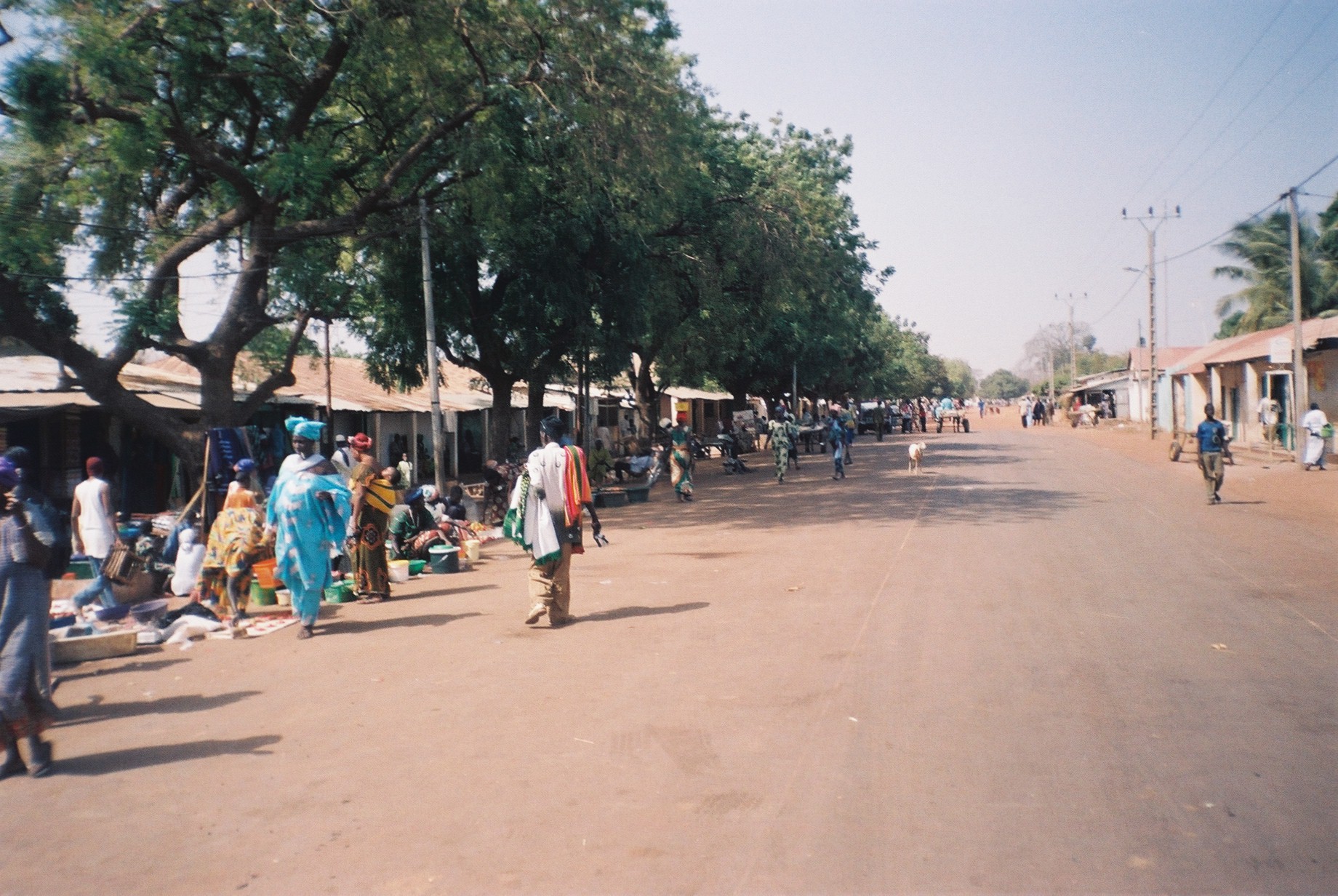
Farafenni Market is where Gambia reveals itself in its most unfiltered form—lively, a little chaotic, and entirely authentic. Unlike the polished souvenir stalls of the capital or the beachside bazaars catering to tourists, this place thrives on the rhythm of everyday life. The air hums with the calls of vendors, the scent of spices, and the occasional rumble of motorcycles weaving through the crowd. Bright fabrics drape over makeshift racks, and the narrow aisles teem with activity. Situated at the crossroads of the town, where roads lead toward the river and deeper into the country, the market isn’t just a place to trade—it’s where deals are struck, old friends reunite, and news travels faster than anywhere else.
Farafenni itself is a small but vital town in northern Gambia, perched on the banks of a river that, while still narrow here, carries the weight of connection. It marks a boundary between the quiet rural life of the interior and the busier trade routes that pulse through the region. The market has stood here for generations, its roots stretching back to colonial times when farmers from surrounding villages would gather to sell their harvests or barter for essentials. Over the decades, it expanded beyond just produce, absorbing everything from handmade crafts to household goods—whatever people might need in their daily lives.
The market’s architecture is as practical as it gets. There are no grand arches or ornate facades, just corrugated iron roofs sheltering tightly packed stalls and narrow pathways lined with sacks and baskets. Space is used efficiently: goods spill onto the ground, hang from hooks, or sit stacked on low tables. During the rainy season, the ground turns muddy, and in the heat, the air beneath the roofs grows thick, but the market never pauses. For locals, it’s more than a place to shop—it’s a barometer of the town’s well-being. When the market is busy, life is good.
What makes Farafenni Market special is its atmosphere. There are no aggressive touts here, no one pressuring you to buy something you don’t want. Vendors are absorbed in their work—weighing peanuts, haggling over fish, or simply sitting in the shade, watching the world go by. Shoppers move at their own pace, stopping not just to buy but to chat. A conversation at a vegetable stall might stretch on for ages, or you could duck into one of the tiny eateries serving spiced lamb soup, the kind of dish that warms you from the inside out.
The variety of goods is staggering. One corner overflows with seasonal fruits—mangoes, papayas, bananas—while another holds sacks of rice, peanuts, and corn, staples of Gambian cooking. There are rows of dried fish, their pungent aroma cutting through the other scents, and stalls draped in vibrant fabrics used for traditional clothing. Spices take up their own section, not just the usual pepper and cinnamon but exotic blends used in local dishes. Handmade crafts appear too—wooden masks, woven baskets, and jewelry made from seeds and shells.
For visitors, the market offers a glimpse of Gambia without the gloss. There are no luxury resorts or crowded beaches here, just the unvarnished flow of daily life. Spend a few hours wandering, and you’ll see people bargaining, laughing, arguing, children darting between stalls, and elders sitting on benches, reflecting on the day. Not everyone is used to foreigners, but if you approach with curiosity and respect, the experience becomes richer than any purchase. Sometimes, the best thing to do is stand back and listen—to the rhythm of the place, the cadence of voices, the sounds of a town that lives at its own pace.
The market opens at dawn and stays active until dusk, though the busiest time is early morning when fresh produce arrives. By midday, the heat slows things down, but the stalls never fully close. As evening approaches and the temperature drops, the market fills again. Some come for last-minute shopping, others just to stroll in the cooler air. The light softens as the sun dips behind the rooftops, casting long shadows, and the scent of cooking food drifts through the lanes.
Farafenni isn’t the kind of place that makes it into most travel guides, and that’s precisely why it’s worth visiting. There are no tourist crowds, no scripted itineraries, no sense of being herded along a predetermined path. The market is the town’s heartbeat, and if you want to understand how people in Gambia really live, this is where you’ll find it. It might not be the most picturesque stop on a journey, but it’s one of the most real.