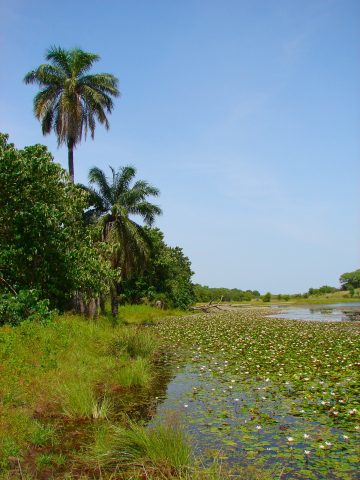
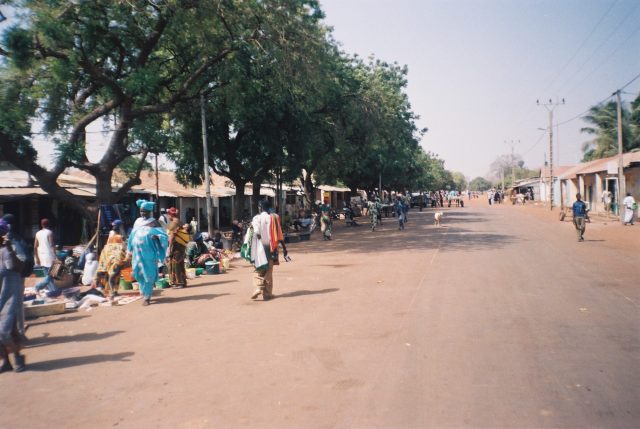
Farafenni sits quietly in the heart of The Gambia, a town where time moves to the rhythm of the river and the shifting seasons. There are no crowded tourist trails here, no souvenir stalls or guided tours—just a place where life unfolds at its own pace, much as it has for centuries. The streets still carry echoes of the old trade routes, when caravans laden with salt and gold passed through on their way to the coast. In a town like this, a mosque isn’t just a place of worship; it’s a gathering point where daily life and tradition intertwine. The Farafenni Mosque, one of the oldest in the region, stands at a crossroads where paths lead toward the river and deeper into the country. Its walls have witnessed generations come and go, the haggling of traders in the nearby market, and the quiet conversations of elders resting in the shade of mango trees.
The mosque’s architecture is unassuming yet striking in its simplicity. There are no grand marble columns or ornate domes—just a building shaped by the hands of local craftsmen using whatever materials were at hand. The walls, made of clay and coated with a mix of sand and lime, glow golden in the late afternoon sun. A corrugated iron roof shields the interior from the rains, while the slender minaret rises just high enough to be seen above the single-story homes, a quiet reminder that faith here is woven into the fabric of life, not set apart from it. Inside, there’s no opulence—just a dirt floor, wooden beams overhead, and a few rugs laid out for prayer. It’s modest, but that’s precisely what makes it feel welcoming. There’s nothing here to distance you from the people who come to pray, nothing to suggest that this place is anything other than a part of their everyday world.
The mosque’s history is inseparable from that of Farafenni itself. The town began as a trading post, a stopover for merchants moving between the interior of West Africa and the Atlantic coast. In the Middle Ages, traders from the empires of Mali and Songhai passed through, followed later by Europeans seeking ivory and enslaved people. Islam arrived with Berber and Arab merchants, and mosques sprang up along these routes as places of rest and reflection. Farafenni, perched on the banks of the Gambia River, was a natural place to pause, and the local mosque likely took shape over time, rebuilt and repaired as needed, absorbing the influences of different eras. No one knows exactly when it was first built, but the elders say it has stood here for centuries, surviving droughts, floods, and the rise and fall of rulers.
Today, the mosque is still very much alive, not a relic but a living space. On Fridays, its courtyard fills with people—men in traditional boubous, women in vibrant fabrics—gathering for midday prayers. Children play near the entrance, elders exchange news, and traveling merchants take shelter from the midday heat. During Ramadan, the atmosphere shifts; the town slows down during the day, and as the sun sets, the mosque comes alive with the sounds of prayer and the scent of meals being prepared for iftar. There’s a sense of unity in those moments, something that transcends language or background.
The mosque is at the center of a bustling world that exists just beyond its walls. Nearby, the market sprawls with stalls selling everything from fresh river fish to fabrics imported from Dakar. Vendors call out to customers, children dart between the displays, and old men sit on wooden benches, watching the scene unfold. The mosque seems to stand guard over this chaos, a quiet presence reminding everyone that beneath the noise and movement, there’s room for stillness. In the hottest hours of the day, when the sun is directly overhead, the area around the mosque grows quiet—only the rustle of mango leaves and the murmur of prayer from inside break the silence.
For travelers who find themselves in Farafenni, the mosque can be an unexpected discovery. There are no crowds of tourists snapping photos, no one trying to sell you a guided tour. You can simply sit on the steps outside, watching the town go about its business, or step inside if you’re invited. The locals are generally welcoming to those who show respect for their customs. Taking off your shoes before entering and behaving modestly is enough to make you feel like a part of the place, if only for a little while. It’s a chance to experience something real, a corner of the world where time moves differently.
Farafenni and its mosque aren’t for those seeking the kind of exoticism you find on postcards. There are no grand palaces or ancient ruins steeped in legend. But that’s where its charm lies—in its unpretentiousness. The mosque is like a mirror reflecting the soul of the town: humble yet resilient, living in harmony with the land and its traditions. It’s a reminder that faith and daily life don’t have to exist in separate spheres; they can complement each other, each giving meaning to the other. If you ever find yourself in The Gambia, it’s worth stepping off the well-trodden path. You might just find something here that no guidebook could ever capture.