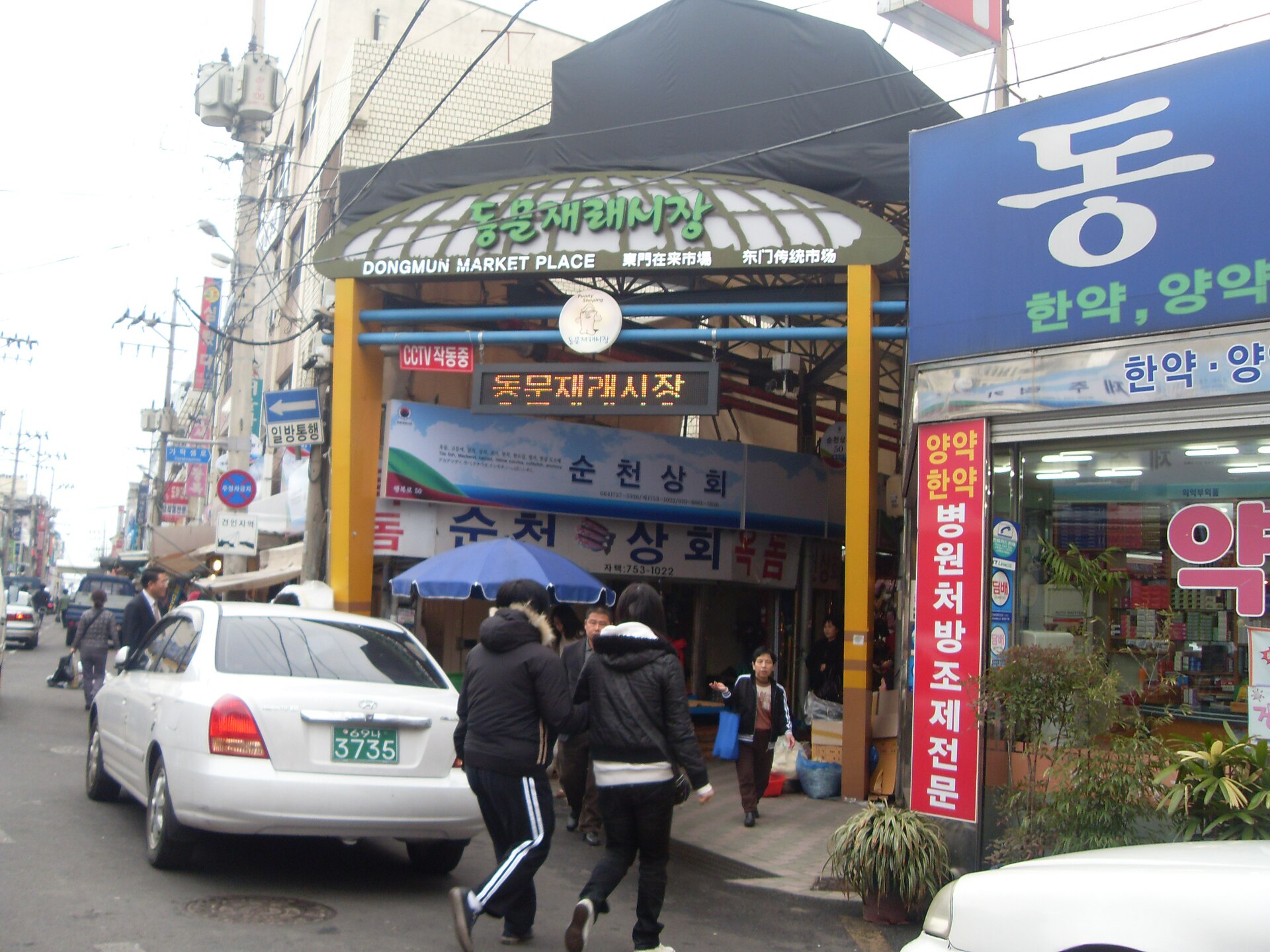
Dongmun Market is one of those places in Jeju where time seems to slow down, revealing the island’s daily rhythms in their most unfiltered form. Unlike the polished tourist spots that dot the coastline, this market thrives on the simple, unpretentious exchange of goods that have been grown, caught, or crafted on the island. It’s a place where locals outnumber visitors, where the air is thick with the scent of grilled meat and saltwater fish, and where every stall tells a story of Jeju’s relationship with the land and sea.
The market’s origins trace back to the mid-20th century, a time when Jeju was rebuilding after the Korean War. What began as a modest gathering of farmers and fishermen bartering their goods gradually expanded into a covered marketplace, becoming the island’s commercial heart. Over the decades, Dongmun has grown into Jeju’s largest and oldest market, yet it has managed to retain the spirit of those early days. Here, trade isn’t just about transactions—it’s a way of life, a tradition passed down through generations, and a thread that connects the island’s communities.
Walking through Dongmun, you notice how little has changed in its basic design. The narrow aisles, the low ceilings with their flickering fluorescent lights, the tiled walls—all of it feels deliberately utilitarian. Some sections have been updated in recent years, but the market’s core remains unchanged. There are no grand walkways or designer displays, just row upon row of stalls where practicality trumps aesthetics. For many, this lack of polish is precisely what makes Dongmun special. It’s a place where the focus is on the goods themselves, not the presentation, and where the atmosphere feels lived-in rather than staged.
The seafood section is one of the market’s biggest draws. Jeju’s waters yield an astonishing variety of fish, shellfish, and sea plants, and the stalls here reflect that abundance. You’ll find familiar names like mackerel and flounder alongside local delicacies such as sea urchin, abalone, and seaweed harvested from the island’s shores. One of the most distinctive offerings is the black pork, a specialty of Jeju. These pigs, raised only on the island, produce meat that’s richer and more flavorful than standard pork. Vendors grill it on the spot, filling the air with its smoky aroma, and it’s not uncommon to see people gathered around a stall, plates in hand, waiting for their order.
Beyond seafood, Dongmun is a showcase for Jeju’s agricultural bounty. The island is famous for its mandarins, grown on the slopes of Hallasan, and during harvest season, the market is awash in bright orange fruit. But the produce doesn’t stop there. You’ll find vegetables unique to the island, like the large, sweet radishes that grow in the volcanic soil, as well as herbs, honey, and even wild greens foraged from the mountain’s lower reaches. Many vendors take pride in their goods, offering samples or explaining how best to prepare them. It’s not unusual to leave with a bag of mandarins and a recipe for a local dish scribbled on a scrap of paper.
Dongmun isn’t just about food, though. The market is also a place to find handmade crafts that reflect Jeju’s culture and natural resources. Basalt, a volcanic rock abundant on the island, is carved into everything from kitchenware to decorative items. Pottery adorned with traditional Jeju motifs sits alongside textiles embroidered with patterns inspired by the island’s landscapes. There are also stalls selling medicinal herbs, dried and bundled for use in traditional Korean remedies. For locals, these goods are more than souvenirs—they’re a connection to the island’s history and a way to support the artisans who keep these traditions alive.
The market’s character shifts throughout the day. Early mornings belong to the locals, particularly older residents who come to stock up on fresh ingredients for the day’s meals. By midday, the aisles fill with tourists, some snapping photos of the more unusual items, others sampling street food or browsing the craft stalls. As evening falls, the market takes on a different energy. The crowds thin, but the place doesn’t empty. Instead, it becomes a gathering spot for those looking for a quick, hearty meal—perhaps a bowl of hot soup or a plate of grilled pork, washed down with a cold beer. In these hours, Dongmun feels less like a marketplace and more like a communal dining room, where strangers become temporary neighbors over shared tables.
What makes Dongmun worth visiting isn’t just the chance to buy local products or try authentic food. It’s the opportunity to see Jeju as the islanders do—a place shaped by its geography, its seasons, and the daily routines of those who call it home. There are no guided tours here, no scripted performances. Instead, there’s the quiet hum of conversation, the clatter of dishes, the occasional laughter of a vendor haggling with a regular customer. You could spend an hour wandering the stalls or lose half a day to the rhythm of the place, sampling bites of food you’ve never tried before and listening to the stories of the people who make Dongmun what it is.
In the end, the market’s greatest appeal lies in its authenticity. It’s not a place designed for outsiders, though it welcomes them. It’s a place that exists first and foremost for the people of Jeju, a living piece of the island’s identity. For anyone willing to step off the beaten path, Dongmun offers a glimpse into the everyday life of Jeju—one that’s far removed from the postcard-perfect beaches and resorts. Here, the island reveals itself not through grand gestures, but through small, ordinary moments: a vendor wrapping up a bundle of herbs, a customer pausing to chat with a neighbor, the steady ebb and flow of people who rely on this market not just for goods, but for connection.