Darajani Market is the kind of place where Zanzibar’s past and present collide in the most ordinary, yet unforgettable way. Tucked away in the heart of Stone Town, just a short walk from the old Arab Fort, it has been the island’s main trading hub for well over a century. The market doesn’t try to impress with grand architecture or polished tourist appeal—it simply exists, as it always has, as the beating heart of daily life. Here, the air is thick with the scent of spices, the chatter of vendors haggling in Swahili, and the occasional bleat of a goat being led through the narrow alleys. If you want to understand what makes Zanzibar tick, this is where you start.
The market’s origins trace back to the late 19th century, when Zanzibar was still the capital of the Sultanate of Oman and a key player in the Indian Ocean trade. Back then, it was known as the "Market of the Arabs," a place where merchants from across East Africa, the Middle East, and even as far as India and Persia would converge to trade everything from ivory and slaves to spices and textiles. The name Darajani itself comes from the Swahili word *daraja*, meaning "bridge," a nod to the nearby creek that once separated Stone Town from the rest of the island. Over time, the market expanded, absorbing the energy of the city around it, and today it remains one of the few places where the island’s layered history is still visible in the way people move, trade, and interact.
Walking through Darajani is like stepping into a living museum of Zanzibari culture. The market is divided into sections, each with its own rhythm and character. The spice stalls are perhaps the most famous, piled high with pyramids of cloves, cinnamon, cardamom, and vanilla—Zanzibar’s "spice islands" reputation isn’t just a marketing gimmick. Vendors will often invite you to smell or taste, pressing a handful of fresh turmeric or a split vanilla pod into your palm. Nearby, the fish market is a world of its own, where the day’s catch—tuna, kingfish, octopus—is laid out on tables or still flopping on the wet concrete. The air here is saltier, louder, and more chaotic, with fishermen shouting over the din and women in brightly patterned *kangas* bargaining for the best cuts.
Then there’s the meat section, which can be a sensory shock for the uninitiated. Goat, beef, and chicken hang from hooks or are chopped on wooden blocks, while flies buzz lazily in the heat. It’s not for the squeamish, but it’s a reminder of how deeply connected the market is to the island’s rural roots. Many of the animals sold here come from the mainland or Zanzibar’s own villages, brought in by farmers who still rely on Darajani as their primary outlet. The fruit and vegetable section, by contrast, is a riot of color—mangoes, pineapples, passionfruit, and the strange, spiky *durian* all jostle for space alongside sacks of rice, beans, and cassava. The produce is often local, grown in the fertile soil of the island’s interior, and the prices reflect that: a handful of limes or a bunch of bananas can be bought for the equivalent of a few cents.
Beyond the goods, what makes Darajani special is the way it functions as a social space. This isn’t just a place to buy and sell—it’s where people come to gossip, argue, share news, and catch up on the day’s events. Old men sit on wooden stools, sipping sweet tea from chipped glasses, while women in headscarves weave through the crowds with baskets balanced on their heads. Children dart between the stalls, running errands for their parents or sneaking a piece of sugarcane to chew on. The market is a microcosm of Zanzibar itself: diverse, resilient, and unapologetically real. It’s not uncommon to see a group of tourists snapping photos one moment, only to be swept up in the flow of locals going about their business the next.
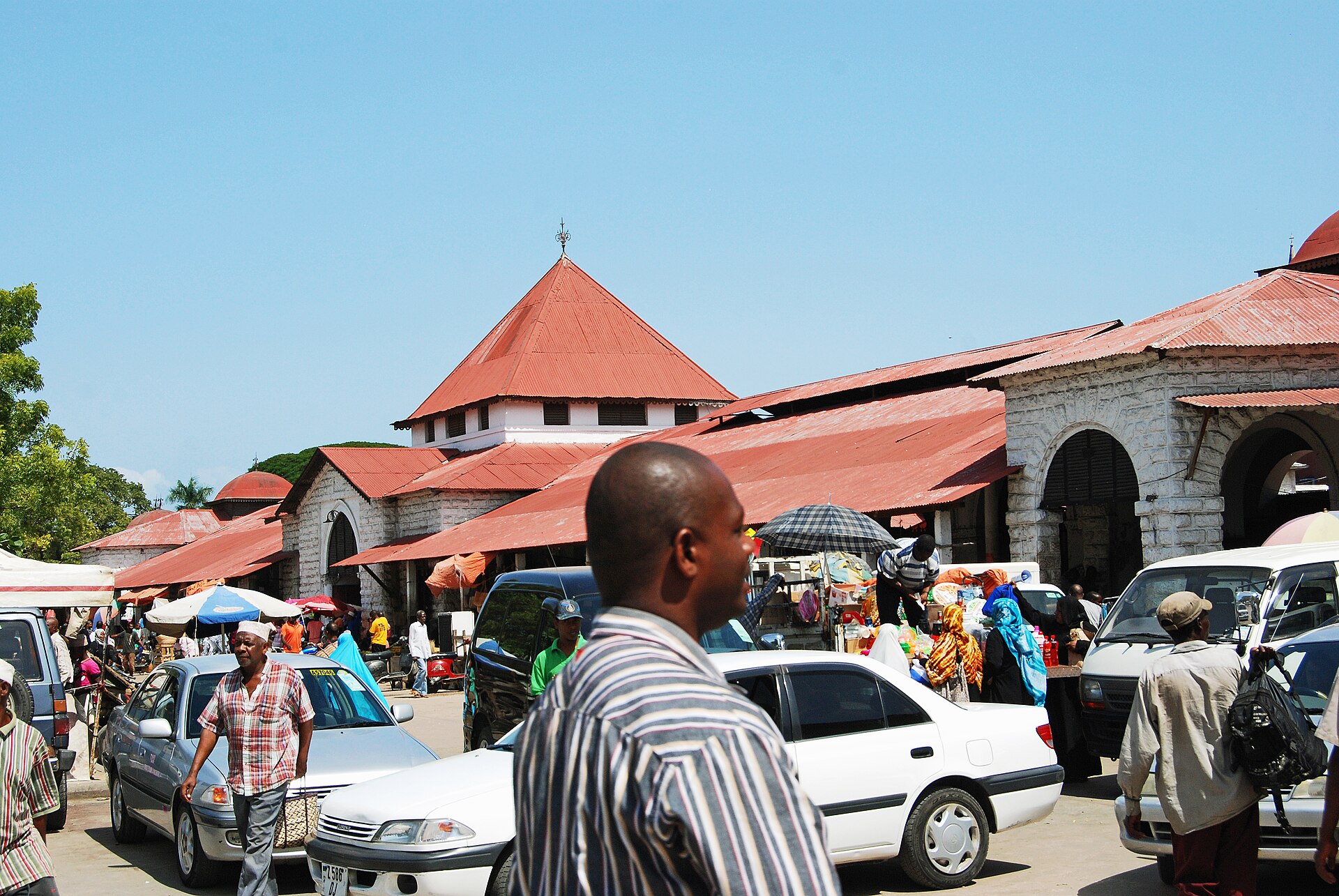
The architecture of Darajani is as unassuming as its purpose. The main market building is a low-slung, whitewashed structure with a corrugated iron roof, its walls lined with small shops and stalls. The design is practical rather than grand, built to withstand the island’s heat and humidity while providing shade for the goods and people inside. Outside, the surrounding streets are a maze of narrow alleys and open-air stalls, where vendors sell everything from secondhand clothes to homemade coconut oil. The buildings here are a mix of Swahili, Arab, and Indian influences, their wooden balconies and carved doors hinting at the island’s cosmopolitan past. Even the way the market spills out onto the streets—with vendors setting up impromptu stalls on the pavement—feels like a natural extension of Stone Town’s labyrinthine layout.
For all its chaos, Darajani has a rhythm that’s easy to fall into. The market is busiest in the early morning, when fishermen bring in their catch and farmers arrive with fresh produce. By midday, the crowds thin out as the heat becomes oppressive, and the market takes on a slower, more languid pace. In the late afternoon, it comes alive again, with locals stopping by after work to pick up ingredients for dinner. If you visit during Ramadan, the atmosphere shifts entirely—the market is quieter during the day, but as sunset approaches, the stalls fill with people buying dates, samosas, and *mandazi* (sweet fried dough) to break their fast. It’s a reminder that Darajani isn’t just a place of commerce; it’s a place of community, where the ebb and flow of daily life is on full display.
There’s no grand entrance or tourist-friendly signage at Darajani, and that’s part of its charm. It doesn’t exist to cater to outsiders, though it’s welcoming enough if you approach it with curiosity rather than expectation. The best way to experience it is to wander without a plan, letting the sights, sounds, and smells guide you. Stop to chat with a spice vendor, sample a piece of fresh coconut, or watch a butcher expertly carve a side of beef. If you’re lucky, you might stumble upon a group of women singing as they sort through piles of cloves, or a storyteller holding court in a corner, his voice rising above the market’s hum. These moments aren’t staged—they’re just part of the fabric of the place.
Darajani Market isn’t the kind of attraction that makes it onto glossy travel brochures, and that’s precisely why it’s worth visiting. It’s not about Instagram-worthy moments or ticking off a bucket list; it’s about stepping into the real Zanzibar, the one that exists beyond the beaches and resorts. Here, the island’s history isn’t confined to museums or guided tours—it’s alive in the way people trade, the languages they speak, and the stories they tell. Whether you’re a first-time visitor or someone who’s been coming to Zanzibar for years, Darajani offers something rare: a glimpse into the soul of the place. And that’s something no amount of polished tourism can replicate.