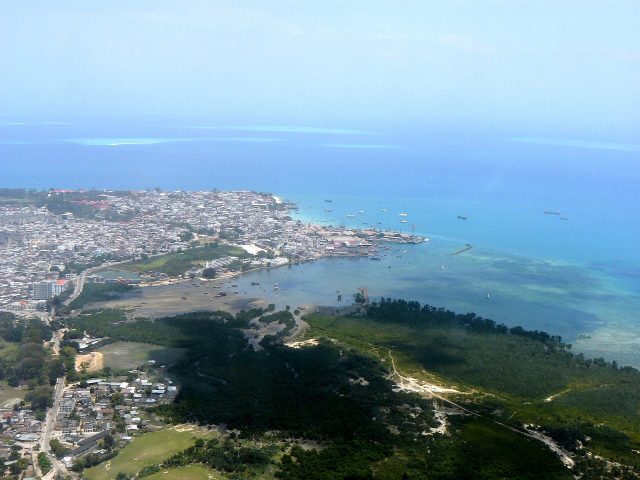
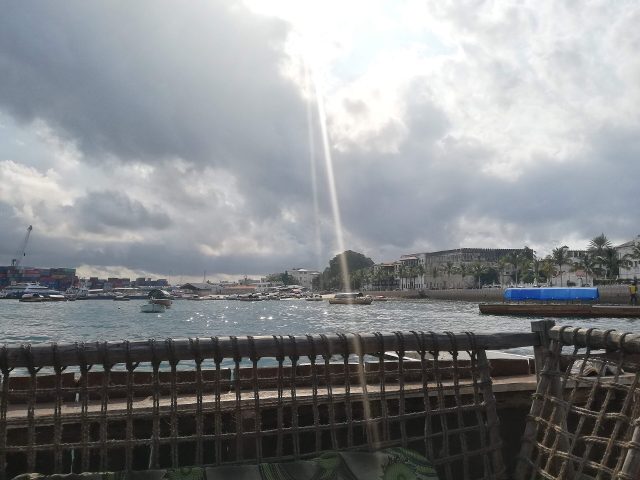
Forodhani Gardens is one of those rare places where the pulse of Zanzibar feels most alive. By day, it’s a quiet stretch of waterfront, where palm trees sway gently over stone pathways and the Indian Ocean laps against the seawall. The air carries the salt of the sea, and the only sounds are the occasional footsteps of locals passing through or the distant hum of a dhow’s engine as it glides into the harbor. But as the sun dips below the horizon, the gardens transform. What was once a sleepy corner of Stone Town becomes the island’s beating heart, a place where the rhythms of daily life unfold in full color.
This small square has always been a crossroads. Centuries ago, when Zanzibar was the center of the spice trade, Forodhani was where merchants from Oman, India, and Persia would gather after their ships docked. They came to trade cloves, ivory, and slaves, to haggle over prices, and to share news from distant ports. The echoes of those days linger in the architecture that surrounds the gardens—whitewashed buildings with intricately carved wooden balconies and heavy doors studded with brass. These are the same structures that once housed wealthy traders, their cool courtyards hidden behind thick walls to escape the midday heat. Today, Stone Town is a UNESCO World Heritage site, and walking through Forodhani feels like stepping into a living museum, where the past isn’t just preserved but still very much alive.
The real magic happens at dusk, when the evening market takes over. What starts as a few scattered stalls quickly grows into a vibrant maze of smoke, sizzling grills, and the sharp tang of spices. Vendors call out in Swahili, Arabic, and English, urging passersby to try their wares. The food here is cooked right in front of you—octopus grilled over charcoal, fish wrapped in banana leaves and steamed with coconut milk, or the island’s famous pilau, a fragrant rice dish spiced with cardamom and cloves. There are no menus, no fancy plating, just the raw, unfiltered flavors of Zanzibar. The seafood is especially fresh, pulled from the ocean just hours before and tossed onto the grill with nothing more than a sprinkle of salt and chili.
But Forodhani isn’t just about eating. It’s a place where the island’s social life spills out into the open. Children kick soccer balls across the sand while fishermen mend their nets nearby, their hands moving with practiced ease. Couples stroll along the seawall, and groups of friends gather on the low stone benches, sharing plates of food and bottles of soda. Sometimes, if you’re lucky, you’ll hear music—an impromptu performance of taarab, the island’s traditional blend of African, Arab, and Indian sounds, or the rhythmic beat of ngoma drums. The atmosphere is effortless, as if everyone here has all the time in the world.
For many travelers, Forodhani is the first real taste of Zanzibar. It’s where the island’s layers begin to unfold—not through guided tours or glossy brochures, but through the small, unscripted moments. A vendor might hand you a sample of urojo, a tangy soup with fried cassava and chili, or a local might strike up a conversation about the best places to snorkel. There’s no pressure, no hard sell, just the easy camaraderie of a place where people have been gathering for generations. The crowd is a mix of backpackers, families, and Zanzibaris from all walks of life, and the languages spoken here—Swahili, English, Arabic, Hindi—reflect the island’s long history as a melting pot.
What makes Forodhani special is its lack of pretense. There are no luxury hotels or high-end restaurants here, just the simple, unfiltered essence of the island. It’s a place where history isn’t confined to textbooks but woven into the fabric of everyday life. The old buildings, the fishing boats bobbing in the harbor, the way the light catches the whitewashed walls at sunset—all of it feels like a glimpse into a world that has remained largely unchanged for centuries. Even the name itself, Forodhani, hints at its past; it comes from the Swahili word for "customs," a nod to the days when this was where goods were unloaded and taxes were paid.
Yet for all its history, Forodhani doesn’t feel like a relic. It’s a place that belongs to the present, where the old and the new coexist without fuss. You might see a group of teenagers scrolling through their phones while their grandparents sit nearby, reminiscing about the way things used to be. The market stalls sell everything from fresh coconut water to plastic toys, and the food ranges from traditional Zanzibari dishes to quick, modern snacks. It’s this blend of the familiar and the foreign that gives Forodhani its unique character—a place where the past isn’t romanticized but simply lived.
There’s something almost theatrical about the way the gardens come alive at night. The flickering lanterns, the steam rising from the grills, the way the crowd ebbs and flows like the tide—it all feels like a performance where everyone, locals and visitors alike, plays a part. You could spend an entire evening here, moving from one stall to the next, sampling a little of everything, or you could just find a spot by the water and watch the scene unfold. Either way, you’ll leave with more than just a full stomach. You’ll leave with a sense of having touched something real, something that exists beyond the postcard-perfect images of Zanzibar.
In the end, Forodhani Gardens is less a destination than a feeling. It’s the warmth of the evening air, the laughter of strangers, the way the scent of grilled seafood mingles with the salt of the sea. It’s a place where time slows down, where the worries of the outside world feel distant, and where the only thing that matters is the moment. Whether you come for the food, the atmosphere, or just the chance to sit by the water and watch the world go by, Forodhani has a way of making you feel like you’ve found a little corner of Zanzibar that’s all your own.