Photo: Paul Brockmeyer from Chicago, USA, CC BY 2.0
Stone Town
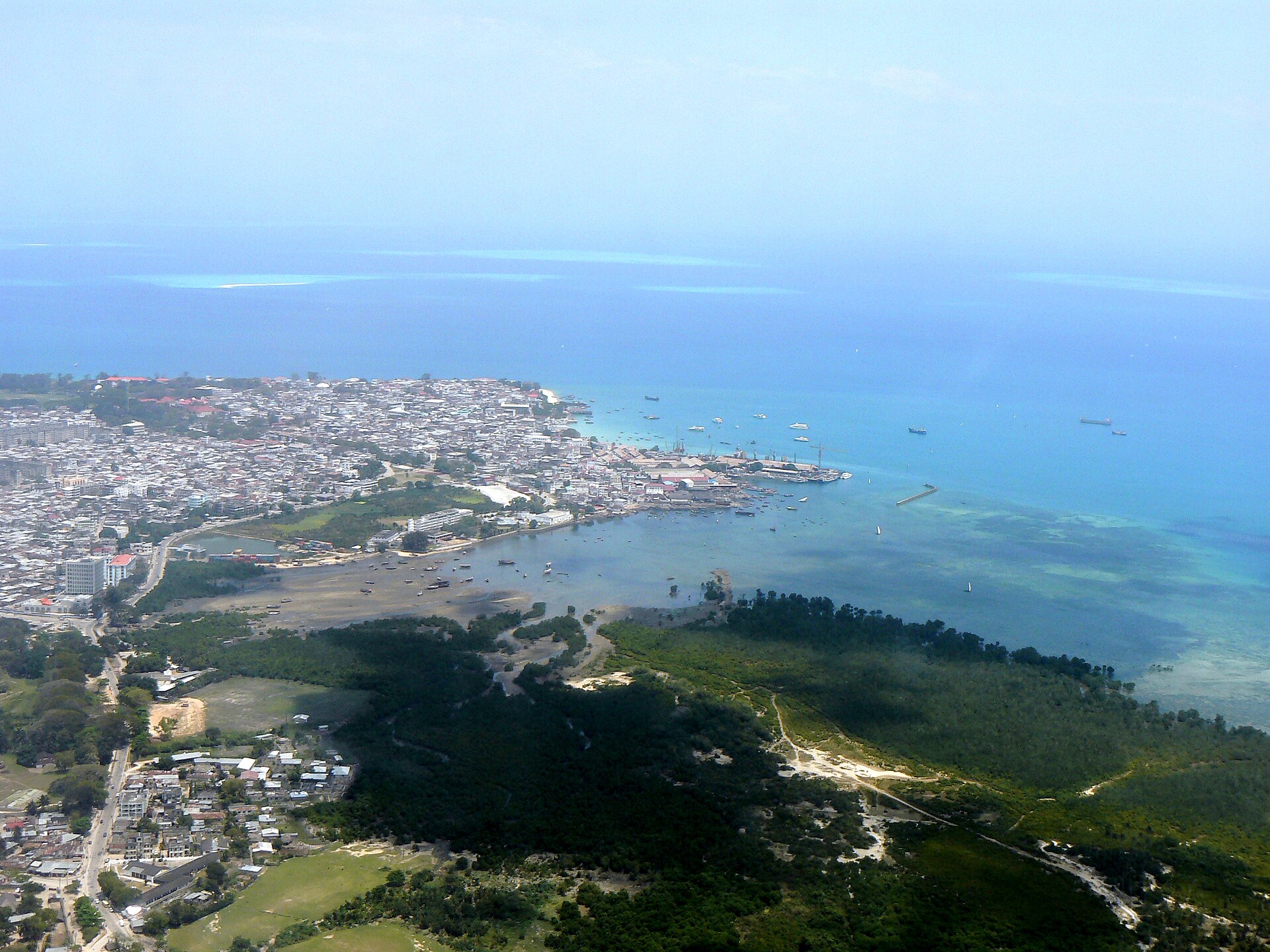
out of 5 0 ratingsStone Town is the old quarter of Zanzibar City, a place where the Indian Ocean’s salt-tinged breeze carries whispers of centuries past. The labyrinth of narrow alleys, carved coral stone buildings, and intricately carved wooden doors tells a story of trade, conquest, and cultural fusion. This is where Arab dhows once unloaded spices, ivory, and slaves, where Omani sultans ruled from palaces overlooking the harbor, and where African, Arab, Indian, and European influences blended into something entirely its own. Walking through Stone Town feels like stepping into a living museum, though one that breathes with the rhythms of daily life—fishermen mending nets, women in brightly patterned kangas haggling at the market, the call to prayer echoing from minarets at dusk.
The architecture here is a testament to Zanzibar’s layered history. The buildings, many dating back to the 19th century, are constructed from coral rag, a porous limestone that gives the town its distinctive golden hue. The most striking features are the elaborately carved doors, each one a work of art. Some bear Arabic inscriptions or geometric patterns, while others display Indian motifs like lotus flowers or chains, symbols of prosperity and protection. The doors were more than decoration—they reflected the wealth and status of their owners, with the grandest ones belonging to merchants who grew rich from the spice trade. Over time, many of these buildings fell into disrepair, but restoration efforts have preserved much of their original charm, though some crumbling facades still hint at the passage of time.
At the heart of Stone Town is the Old Fort, a squat, weathered structure built by Omani Arabs in the late 17th century. Originally a defensive stronghold against Portuguese invaders, it later served as a prison, a railway depot, and even a tennis club under British rule. Today, its thick coral walls enclose a cultural center where visitors can watch traditional taarab music performances or browse stalls selling local crafts. The fort’s courtyard is a quiet spot to escape the midday heat, with a few old cannons still pointing toward the sea as if guarding against long-forgotten threats. Nearby, the House of Wonders, once the sultan’s ceremonial palace, stands as the tallest building in Stone Town. Its name comes from the fact that it was the first in Zanzibar to have electricity and an elevator, though both have long since stopped working. The building’s grand verandas and cast-iron balconies overlook the harbor, offering a glimpse into the opulence of Zanzibar’s golden age.
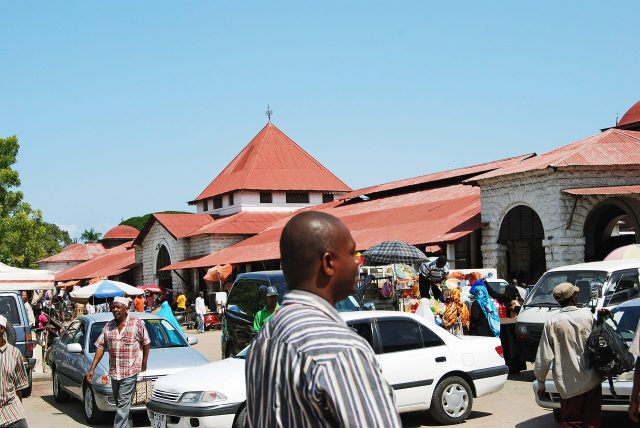
The streets of Stone Town are a maze of alleys so narrow that sunlight barely reaches the ground in places. This was no accident—the layout was designed to keep the interiors of homes cool and to confuse potential invaders. Today, the alleys are alive with activity. Vendors sell everything from fresh mangoes and cloves to handwoven baskets and silver jewelry, their stalls spilling onto the cobblestones. The scent of spices—cloves, cinnamon, cardamom—lingers in the air, a reminder of Zanzibar’s nickname, the Spice Island. At the Darajani Market, the sensory overload is complete: piles of tropical fruit, heaps of fish just pulled from the ocean, and the sharp tang of fresh coconut milk. The market is where locals shop, and the energy is far removed from the polished tourist stalls elsewhere in town.
Stone Town’s history is inseparable from the darker chapters of the slave trade. In the 19th century, Zanzibar was one of the last major slave markets in the world, and the Anglican Cathedral now stands on the site of the old slave market. The cathedral’s altar is said to mark the spot where the whipping post once stood, and in the basement, a series of chambers with heavy chains serves as a stark memorial. The conditions were brutal—slaves were packed into tiny cells with little air or light, and many died before they could be sold. The cathedral itself is a mix of Gothic and Swahili architectural styles, its stained-glass windows casting colored light onto the stone floors. Nearby, the former slave chambers have been preserved as a museum, offering a sobering counterpoint to the town’s otherwise vibrant atmosphere.
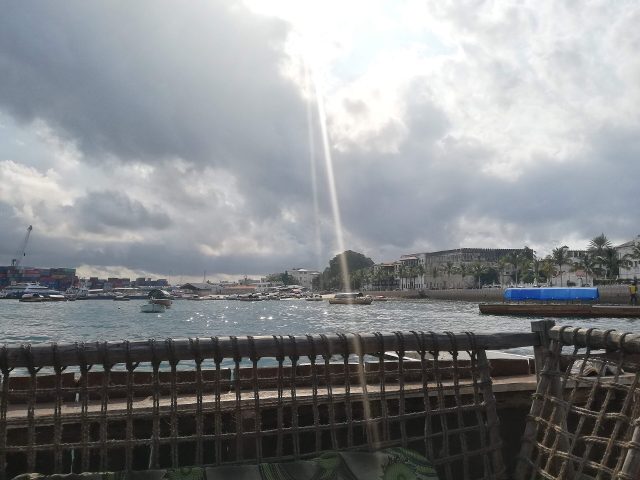
Beyond its historical landmarks, Stone Town is a place where life unfolds in small, everyday moments. In the evenings, the seafront comes alive with families strolling along Forodhani Gardens, where food vendors grill fresh seafood, octopus, and Zanzibar’s famous pizza—a crispy, spiced dough filled with meat, vegetables, or cheese. The gardens are a gathering place, where children play soccer under the flickering streetlights and old men sit on benches, watching the dhows bob in the harbor. The sound of laughter and the sizzle of grills mix with the distant hum of Swahili pop music drifting from a nearby bar. It’s a scene that feels timeless, as if the town has always been this way—a place where the past and present coexist without fuss.
The people of Stone Town are as much a part of its character as the buildings. Many families have lived here for generations, their ancestors having arrived as traders, sailors, or slaves. The town’s cultural diversity is reflected in its cuisine, its music, and even its language. Swahili, the lingua franca of East Africa, is spoken here with a distinct Zanzibari accent, peppered with Arabic and Indian loanwords. The island’s long history of trade has left its mark on the food as well. A typical meal might include biryani, a fragrant rice dish brought by Indian merchants, or urojo, a tangy soup with roots in Zanzibar’s African communities. Coffee is often spiced with cardamom, a tradition borrowed from the Arabs, while the ubiquitous Zanzibar mix—a street snack of fried cassava, potatoes, and chili—shows the influence of Indian samosas.
Despite its small size, Stone Town has played an outsized role in the region’s history. It was from here that explorers like David Livingstone and Henry Morton Stanley set off on their expeditions into the African interior. The town was also a hub for the anti-colonial struggle, with figures like the revolutionary leader Abdulrahman Mohamed Babu shaping the politics of post-independence Tanzania. Today, Stone Town is a UNESCO World Heritage Site, recognized for its unique cultural heritage. Yet it remains a living, breathing place, not just a relic of the past. The challenges of modern life are evident—some buildings are crumbling, the streets flood during heavy rains, and the cost of living has pushed many residents to the outskirts. But the town’s resilience is part of its charm. It has survived empires, revolutions, and the slow march of time, and it continues to adapt without losing its soul.
For visitors, Stone Town is a place that rewards wandering. There’s no grand plan to follow, no must-see checklist—just the pleasure of getting lost in its alleys, stumbling upon a hidden courtyard, or pausing to watch a craftsman carve a door by hand. The town moves at its own pace, unhurried and unpretentious. It doesn’t try to impress; it simply is. And that, perhaps, is its greatest allure. In a world where so many places feel polished for tourists, Stone Town remains stubbornly, authentically itself—a place where history isn’t just remembered, but lived.
Day around this place
Where else to go on the same day
Building the day…
Where it is
-6.16667, 39.20000