Stone Town is a maze of narrow alleys where every turn reveals another layer of history, and among its bustling quarters, Darajani Market holds a place all its own. It isn’t just a place to buy and sell—it’s a living organism where tradition, culture, and daily life intertwine. The market is never quiet. The calls of vendors, the laughter of shoppers, the clink of metal scales, and the scent of spices blend into a rhythm that sets the pace for the entire city.
Darajani Market took shape in the mid-19th century, when Zanzibar was the heart of trade in the Indian Ocean. Back then, goods from across the world converged here: ivory from Africa, spices from the Moluccas, fabrics from India, even Chinese porcelain. The market became the pulse of this commercial empire, where deals were struck that shaped not just the island’s fate but entire regions. Today, it still plays that role, though on a smaller scale, remaining a vital hub of local commerce.
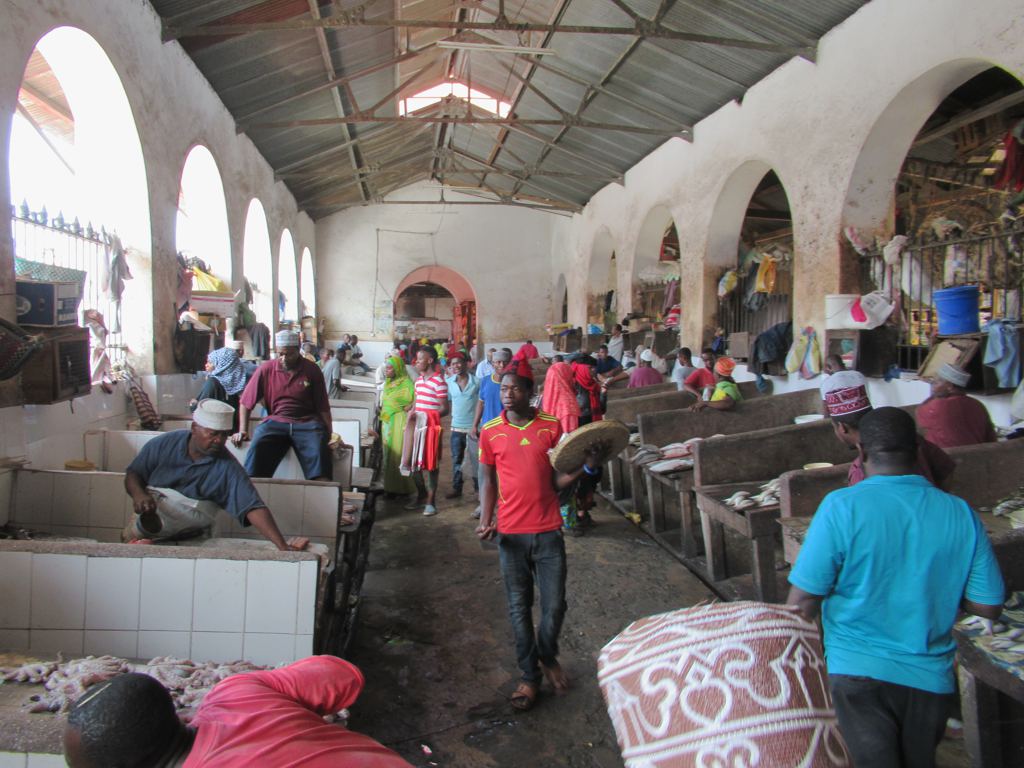
The architecture of Darajani reflects the same blend of Arab, Indian, and African influences that defines Stone Town. The main building, constructed from coral stone, has high ceilings and arched passageways, a reminder of the days when trade flourished under the watch of sultans. Inside, the market is divided into sections, each with its own energy. One area overflows with fish fresh from the ocean, another with mounds of vegetables and fruit brought from the mainland or grown on local farms. Then there are the spice stalls—cloves, cinnamon, vanilla, cardamom—piled high, their aromas the same ones that once made Zanzibar famous across the world.
Mornings at Darajani start early. Before dawn, farmers, fishermen, and wholesalers arrive to claim the best spots and offer their goods before the rush. By six, the market is in full swing: women in bright kangas haggle over bundles of greens, chefs from nearby restaurants stock up for the day, and tourists, still half-asleep, try to make sense of the chaos. By noon, the heat drives everyone into the shade, and the market quiets for a few hours, only to come alive again in the evening.
For locals, Darajani is more than just a place to buy food. It’s a social center where friends meet, news is exchanged, and gossip spreads. Here, you can catch up on the latest political rumors, hear stories about neighbors, or simply sit with a cup of coffee, watching the hustle unfold. For many Zanzibaris, a trip to the market is a ritual, a part of daily life that feels essential. Even those who’ve moved away to other parts of the island or the mainland make sure to stop by when they return to Stone Town, as if to reconnect with home.
Tourists often feel overwhelmed by the sheer sensory overload of Darajani. It’s easy to pick up a souvenir—a carved wooden figurine, shell jewelry, local fabric, or a bag of spices. But the real draw is the atmosphere. The market doesn’t perform for visitors; it exists on its own terms. You could spend hours wandering the aisles, listening to conversations in Swahili, watching vendors skillfully weigh goods on old-fashioned scales, or sampling unfamiliar fruits offered for free.
In recent years, Darajani has faced the pressures of modernity. Supermarkets on the outskirts of town have drawn away some shoppers, and younger generations are less likely to take up trading as a profession, opting for office jobs instead. Yet the market resists change. It remains a place where time moves to its own rhythm, where deals are sealed with a handshake, and trust matters more than contracts. That’s why Darajani hasn’t become a living museum—it still breathes, evolves, and adapts alongside the city.
Visiting the market is like stepping into the essence of Zanzibar. There are no pretenses, no tourist traps, just raw, unfiltered life with all its smells, sounds, and colors. You might come for groceries, souvenirs, or just the experience, but Darajani leaves an impression. Because it’s more than a market—it’s the heart of Stone Town, where history and the present collide.