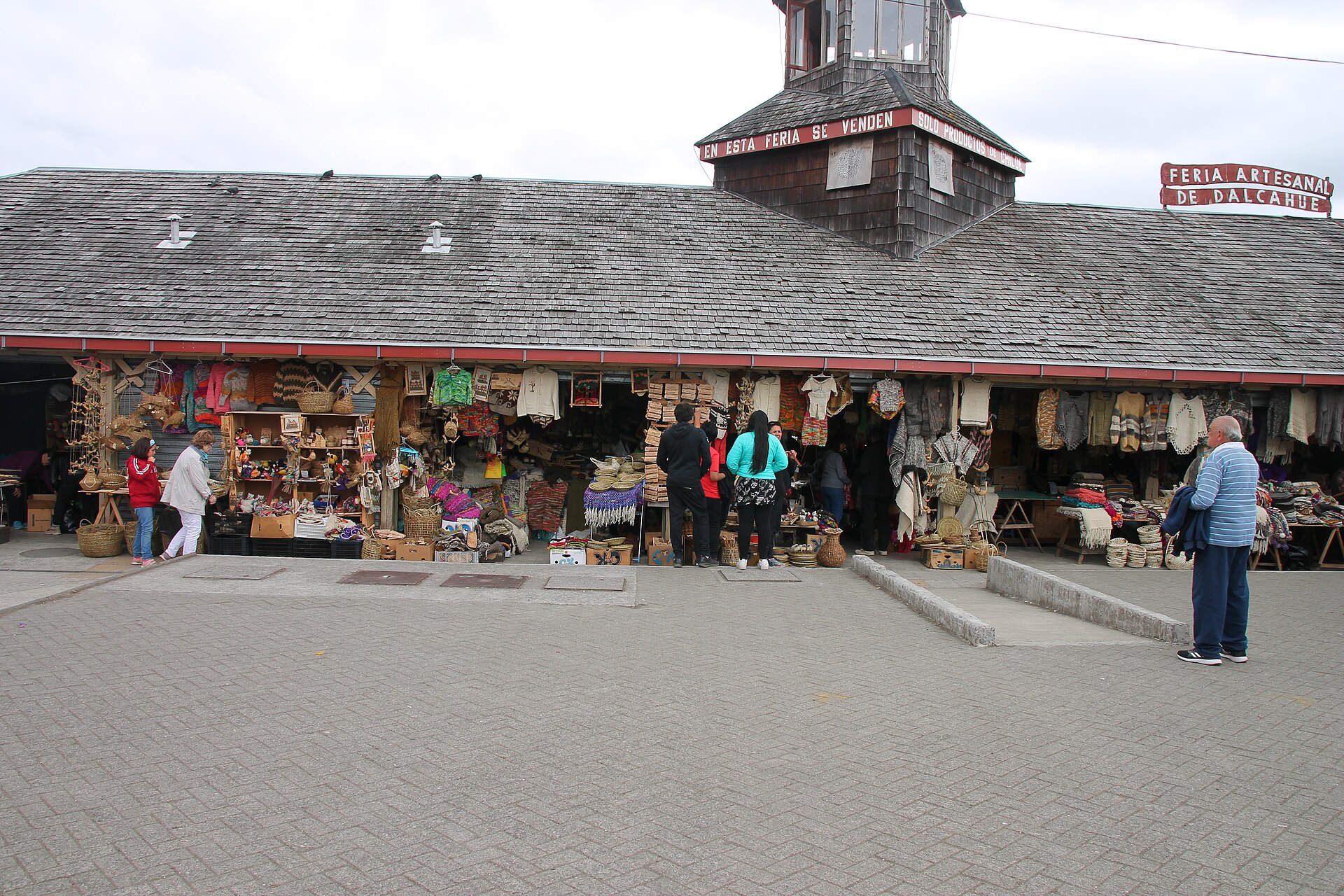
Dalcahue Market is one of those rare places where life moves at its own unhurried pace. Tucked away on Chiloé Island in southern Chile, this isn’t the kind of market that overwhelms you with noise or aggressive sales pitches. Instead, it feels like stepping into a rhythm that’s been the same for generations—where the scent of grilled fish mingles with the salt air, and the sound of waves lapping against the shore is never far away. The market isn’t just a place to buy things; it’s where the island’s daily life unfolds, blending tradition with the quiet routines of the people who call this place home.
The market’s wooden stalls, sheltered under corrugated metal roofs, stand close together, their surfaces worn smooth by years of use. On damp days, when the wind carries mist in from the sea, the roofs glisten with moisture, and the air feels thick with the weight of the island’s climate. Inside, the atmosphere is warmer—warmed by the heat of grills, the smoke of wood-fired ovens, and the murmur of voices. There’s no pretension here, no attempt to impress. What you see is what you get: a place that exists because it has to, because the people of Chiloé have always gathered here to trade, to eat, and to talk.
Seafood is the heart of the market, and Chiloé is famous for it. The stalls are piled high with the day’s catch: mussels the size of your palm, glistening oysters, spiny sea urchins, crabs with their legs tucked in, and fish so fresh they still seem to carry the memory of the ocean. The mussels here are particularly prized, harvested by hand from the cold waters around the island, while the *locos*—a type of abalone—are a delicacy, their tender meat a favorite among locals. The vendors, many of whom are fishermen themselves, know their products intimately. They’ll tell you how to cook them, which spices to use, or how long to steam the mussels so they open just right. There’s no hard sell, no pressure—just the quiet confidence of people who know their trade and take pride in it.
But the market isn’t just about seafood. Wander toward the back, and you’ll find stalls selling the island’s other treasures. Chiloé is known for its potatoes, and here you’ll see varieties you won’t find anywhere else—some small and knobby, others with skins so dark they’re almost purple. There’s honey, thick and golden, made from the nectar of wildflowers that grow in the island’s damp meadows. Cheese, too, often homemade, with a sharp tang that cuts through the saltiness of the seafood. Herbs and dried flowers hang in bunches, their scents mingling with the briny air. Everything is laid out simply, without fuss, as if the products have naturally found their way to these wooden tables.
Then there are the artisans. Their stalls are filled with items that aren’t just souvenirs but things people actually use. Wooden spoons, carved from local timber, their surfaces smooth from years of stirring stews. Knitted socks, thick and warm, perfect for the island’s chilly evenings. Bags woven from sheep’s wool, sturdy enough to carry groceries or firewood. Some of the craftspeople work right there at the market, their hands moving with practiced ease. You might watch as a block of wood slowly takes the shape of a bird or a boat, or see a loom clacking away as a pattern emerges from strands of wool. Each piece carries the imprint of its maker, not just in its design but in the way it feels—warm, lived-in, real.
The market is also a place where stories are told. In the mornings, fishermen stop by after a night at sea, their faces lined with salt and wind. Locals come to buy their groceries, stopping to chat with neighbors or share news. By midday, a few tourists might wander in, but they never outnumber the regulars. It’s easy to get drawn into conversations here—about the weather, about the best fishing spots, or about the time a storm nearly swept a boat onto the rocks. Sometimes, someone will bring a guitar and start playing one of the old *chilote* songs, the kind that tell of lost loves, shipwrecks, or the hard beauty of life on the island. The music blends with the sounds of the market, creating a soundtrack that feels both timeless and deeply rooted in this place.
What makes Dalcahue Market special is its refusal to perform for outsiders. There’s no attempt to sanitize or romanticize the experience. The market is messy, a little chaotic, and utterly alive. It’s a place where the island’s connection to the sea is tangible—where the fish on the stalls were swimming just hours before, where the wood in the crafts comes from the same forests that line the coast, where the stories told over cups of coffee are the same ones that have been passed down for generations. It’s not a museum or a tourist attraction; it’s a living, breathing part of Chiloé’s identity.
If you find yourself in Dalcahue, take your time. Stop at a stall selling mussels and let the vendor recommend how to cook them. Try a piece of smoked fish, its flesh flaking apart at the touch of a fork. Ask about the weather—it’s a safe topic, one that everyone here has an opinion on. Or just stand back and watch: the way the light filters through the gaps in the roof, the way the smoke curls up from the grills, the way the people move through the market with the easy familiarity of those who know this place like the back of their hand. That’s where you’ll find the real Chiloé—not in grand gestures or polished facades, but in the quiet, everyday moments that make this island what it is.