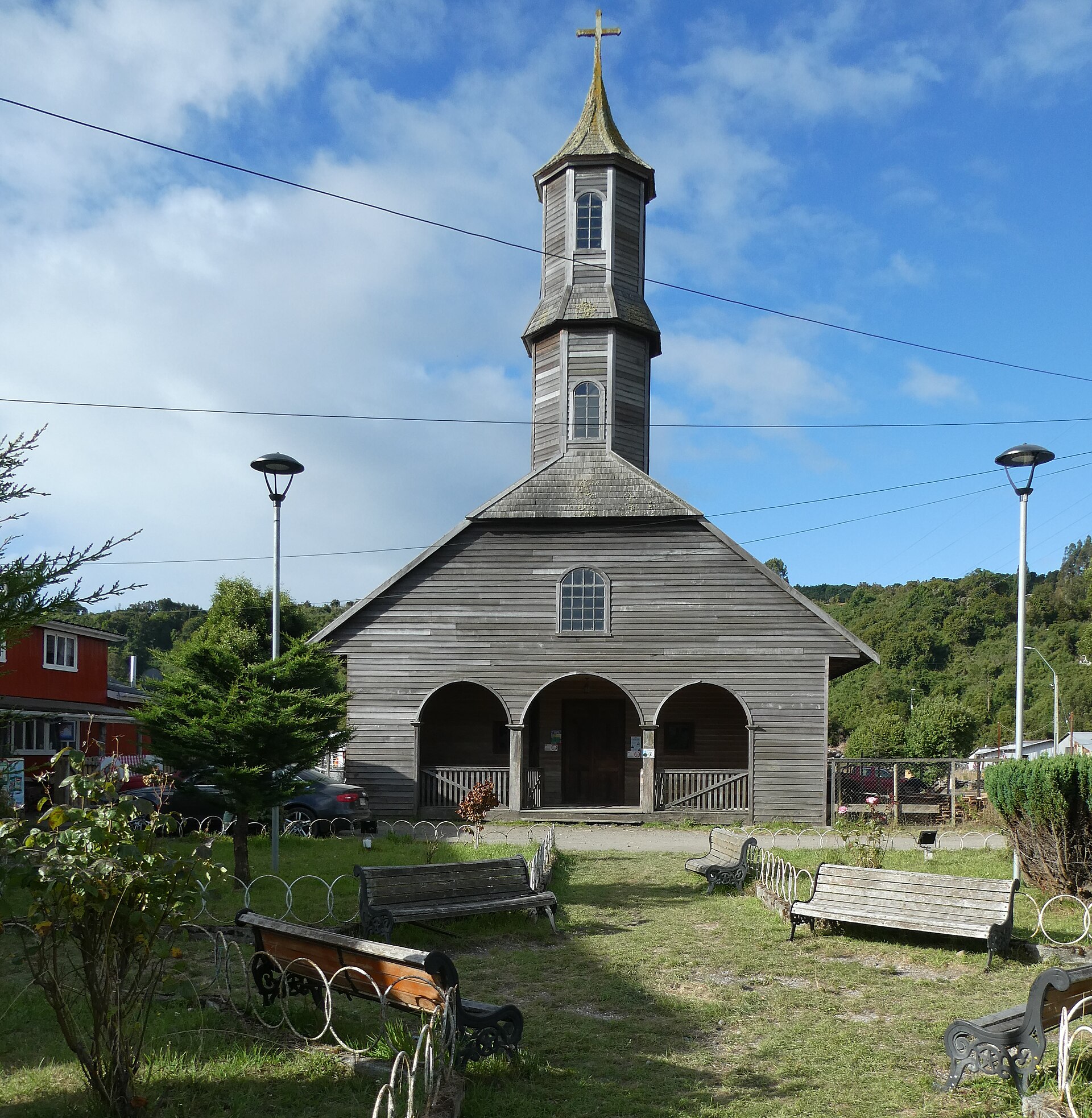
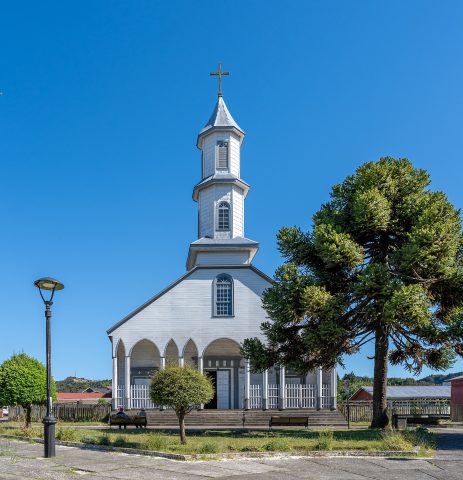
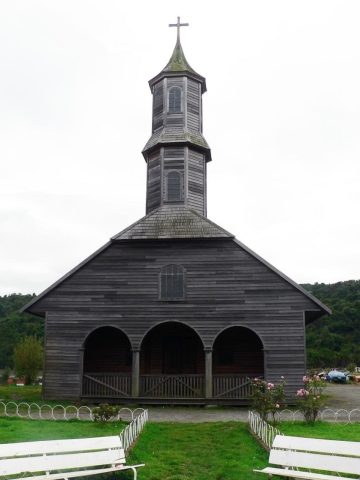
The Church of San Juan Bautista stands quietly on the main square of Dalcahue, a small port town on Chiloé Island. Around it, low wooden houses line narrow streets where the pace of life slows to a gentle rhythm. This is a place where the sea breeze carries the scent of salt and damp earth, and the only sounds are the distant calls of gulls and the occasional creak of a fishing boat.
Built in the early 20th century, the church is part of a much older tradition. Chiloé has always been a world apart—an archipelago cut off from the mainland, where a unique architectural style took root. The wooden churches of Chiloé, including San Juan Bautista, are recognized as UNESCO World Heritage sites. They were constructed without nails, relying instead on the skill of local carpenters who fitted timber together with intricate joints and pegs. This method not only withstood the island’s harsh winds and humidity but also gave the buildings a resilience that has lasted generations.
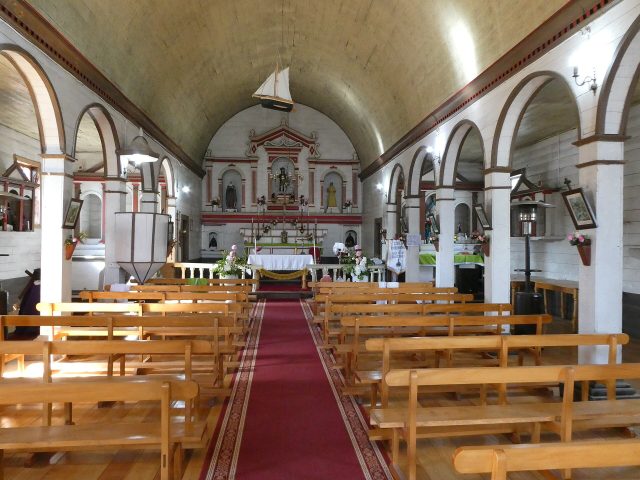
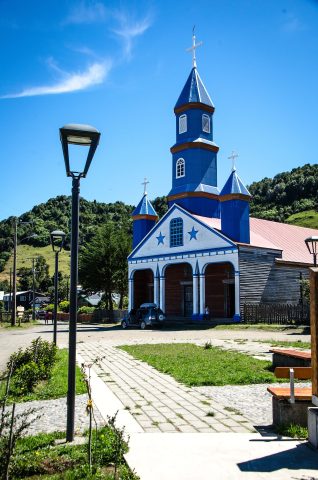
From the outside, the church is unassuming. Two white towers flank a modest facade, topped by a simple cross. Inside, wooden pews face a carved altar, and tall windows filter soft light across the space. The air carries the faint scent of wax from candles, and on feast days, the voices of the congregation fill the nave in song. For the people of Dalcahue, this is more than a place of worship—it’s a gathering point, a sanctuary where the community comes together.
Dalcahue has long been a town shaped by the sea. In the 19th century, Chiloé was a strategic outpost, and the church served as both a spiritual and social hub. Fishermen would stop here before setting sail, families brought their children for baptism, and couples exchanged vows beneath its roof. Even today, the church remains a constant in the town’s life, a place where milestones are marked and memories are made.
The best time to visit is during one of the local festivals. In January, the Fiesta de San Juan transforms the square into a celebration of music, dance, and tradition. The scent of *curanto*—a hearty dish of seafood, meat, and vegetables slow-cooked in an earthen pit—fills the air, and the church becomes part of the festivities. On these days, faith and folklore blend seamlessly, reminding visitors that Chiloé’s culture is as much about the living as it is about the past.
The architecture of San Juan Bautista tells a story of survival. The thick wooden walls, sturdy roof, and simple design were built to endure the island’s unpredictable weather. Over time, the timber has darkened, but its strength remains. Every beam and joint carries the craftsmanship of those who built it and the generations who have sought comfort within its walls.
Inside, the church holds relics of its history—old icons, wooden statues of saints, and a small collection of religious artifacts. But what lingers most is the atmosphere. It’s easy to imagine life here a century ago: the quiet routines of fishermen, the slow passing of seasons, the way the community relied on one another. The church was, and still is, a place of refuge, a steady presence in a landscape shaped by the sea.
Dalcahue moves at its own pace. Fishermen mend their nets by the shore, children kick balls across the square, and elders share stories in the afternoon sun. The Church of San Juan Bautista stands at the heart of it all, a silent witness to the town’s rhythms. It’s a reminder that some places exist outside of time, where the past isn’t just remembered—it’s still alive.