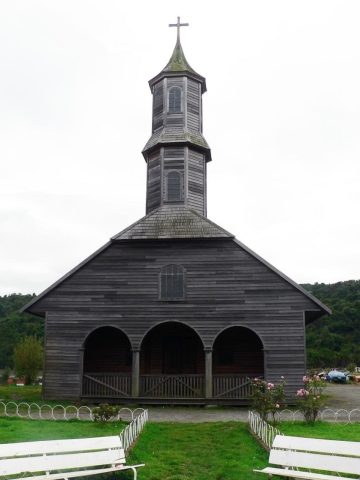
The Church of Our Lady of Sorrows in Dalcahue is one of those rare places where time seems to stand still. Nestled on Chiloé Island, it embodies more than just architectural beauty—it carries the spirit of a past where Spanish colonial traditions merged with the indigenous Huilliche culture, giving rise to something entirely unique. This isn’t merely a historical monument; it’s a living testament to how faith and craftsmanship shaped an entire region, leaving behind structures that feel as much a part of the landscape as the forests and sea around them.
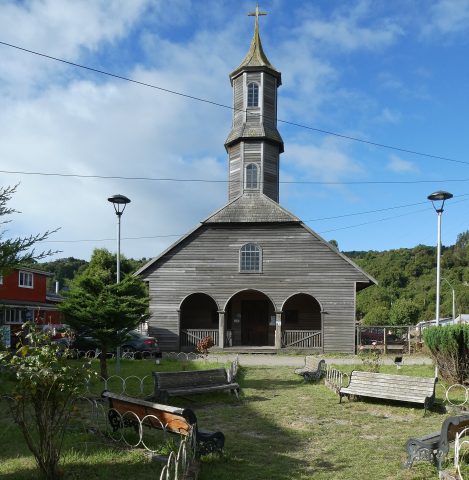
Built in the mid-19th century, the church belongs to the remarkable tradition of Chilote wooden churches, a phenomenon found nowhere else in Latin America. What makes these buildings extraordinary is their construction—no nails were used, only wood, fitted together with meticulous joinery passed down through generations. The result is a style of architecture that has withstood earthquakes, relentless humidity, and the test of time, becoming a symbol of resilience and skill. The Church of Our Lady of Sorrows, like its counterparts, is a quiet marvel of engineering, its very existence a tribute to the hands that built it.
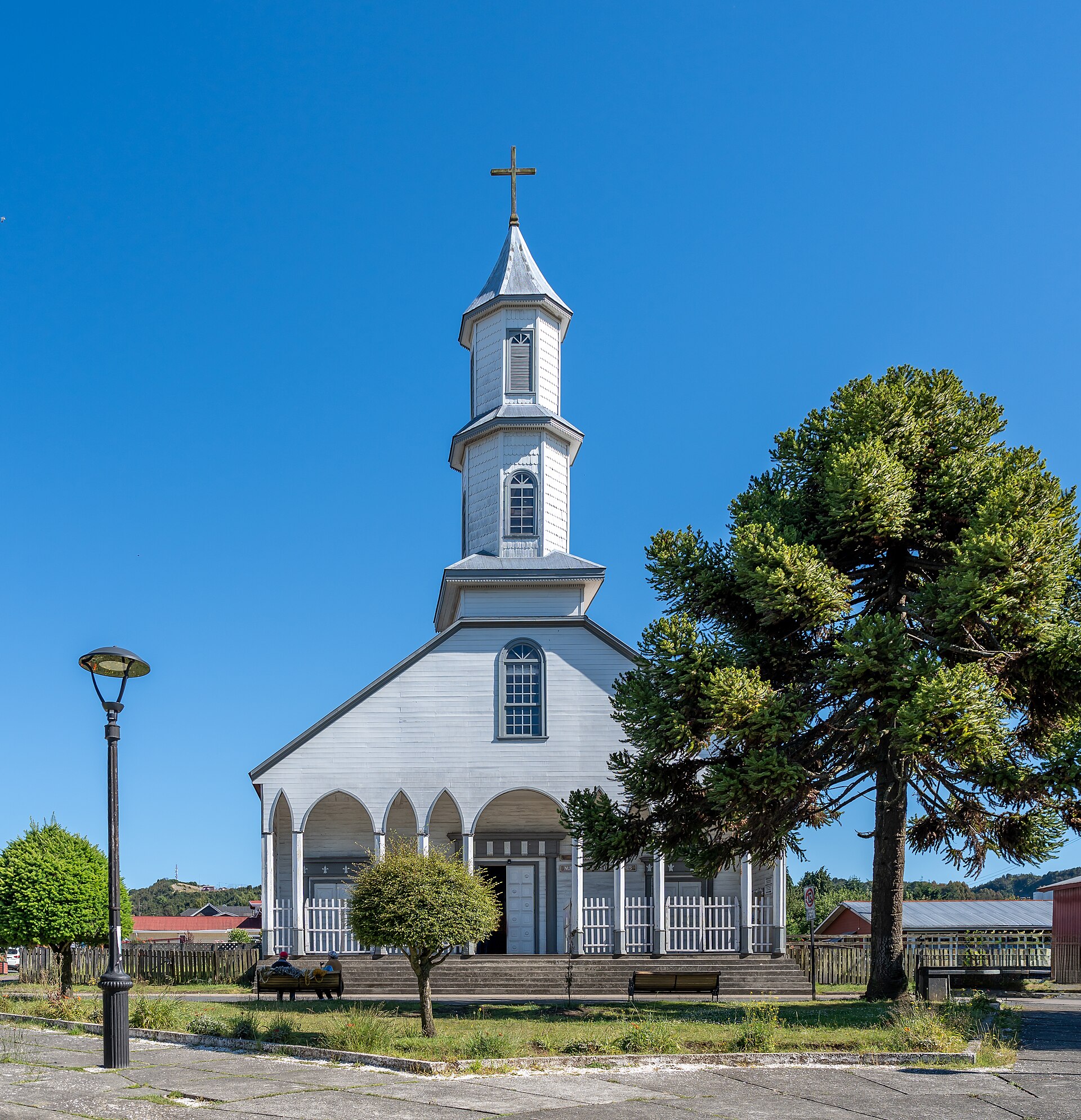
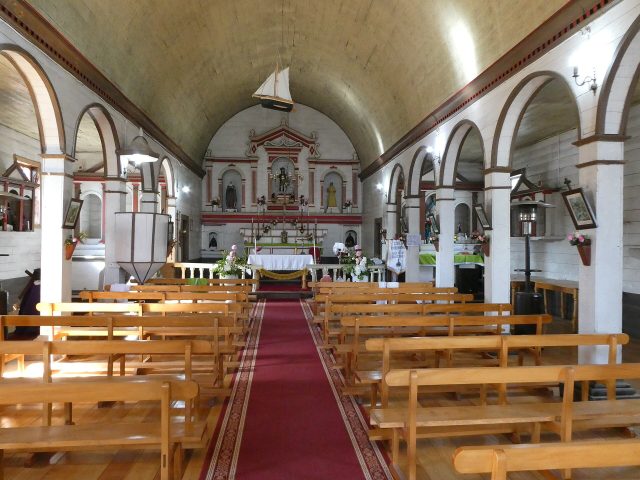
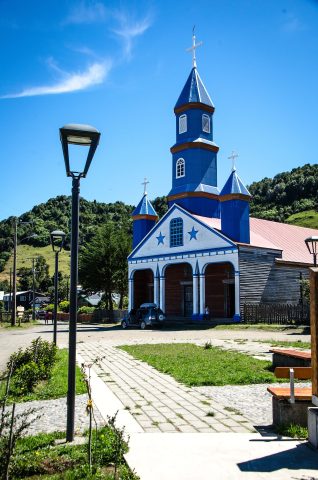
From the outside, the church is unassuming yet striking. Its two towers flank a central arched entrance, while the pale blue wooden planks of its facade give it a soft, almost ethereal presence. Inside, the space unfolds in three naves, much like a traditional basilica, but here, everything—columns, beams, even the altar—is crafted from wood. The light filters through small windows, casting a gentle glow over the intricate carvings, lending the interior a dreamlike quality. It’s a place where simplicity and devotion coexist, where every detail feels intentional, as if the builders knew their work would outlast them.
Dalcahue itself is a small town stretched along a bay, and the church is woven into its daily life. Unlike many historical sites that become mere tourist attractions, this one remains a place of worship, hosting services, festivals, and processions, especially during religious holidays. The locals don’t treat it as a relic but as a part of their everyday world, which is why the atmosphere inside and around it feels so warm and lived-in. There’s no sense of detachment here—just the quiet hum of a community that has kept its traditions alive for generations.
Chiloé Island is famous for its wooden churches, and the Church of Our Lady of Sorrows is one of sixteen designated as UNESCO World Heritage sites. Yet unlike the more visited churches in Castro or Chonchi, this one retains a sense of intimacy. There are no crowds, just the rustling of trees and the distant sound of waves. Perhaps that’s why it leaves such a lasting impression—it feels like a place where time moves differently, where the past isn’t just preserved but still very much alive.
These churches are more than architectural wonders; they’re cultural landmarks. On Chiloé, Catholicism intertwined with indigenous beliefs, creating a unique spiritual landscape. During festivals like San Juan in June, the island comes alive with fairs, dances, and rituals that blend Christian and pre-Columbian traditions. The Church of Our Lady of Sorrows, though modest in size, plays its part in these celebrations, drawing both the faithful and the curious. It’s a reminder of how faith can adapt, absorb, and endure, even in the most remote corners of the world.
Getting to Dalcahue is straightforward—it’s just a half-hour drive from Castro, Chiloé’s capital. The road winds along the coast, past fishing villages and hills blanketed in evergreen forests. The town itself is small, with low-slung houses and cozy cafés where you can try local dishes like *chorrillana*, a hearty mix of seafood, onions, and peppers. The church sits near the docks, its pale blue facade standing out against the often-gray skies, a familiar sight for those arriving by boat.
If you find yourself here, take your time. Sit on a bench outside the church and watch the boats bobbing in the bay, or stroll along the waterfront. Dalcahue isn’t a place for rushing—it’s a place for slowing down, for soaking in the quiet rhythm of life that hasn’t changed much in a century. The Church of Our Lady of Sorrows, with its weathered wood and gentle presence, serves as a quiet reminder that beauty often lies in the unassuming, the overlooked, the places where history and daily life intersect without fanfare.