Chalai Market in Thiruvananthapuram isn’t the kind of place that puts on a show for visitors. It’s where the city reveals itself as it truly is—unfiltered, unpolished, and alive with the pulse of daily life. There are no neatly arranged stalls or guided tours here, just the raw, unscripted energy of a marketplace that has grown organically over centuries. It’s less a destination and more a living organism, shaped by the rhythms of trade, conversation, and the small, necessary routines that keep a community moving.
The market’s origins stretch back to a time when Thiruvananthapuram was not yet the capital of Kerala but a key trading hub in southern India. What began as a natural gathering point for merchants, farmers, and artisans evolved into the city’s commercial heart. Over generations, it became a place where people from different castes, religions, and backgrounds converged—not just to buy and sell, but to exchange stories, barter, and negotiate the terms of their lives. Even now, with modern supermarkets and shopping malls dotting the city, Chalai remains a place where authenticity hasn’t been diluted. People come here as much for the experience as for the goods.
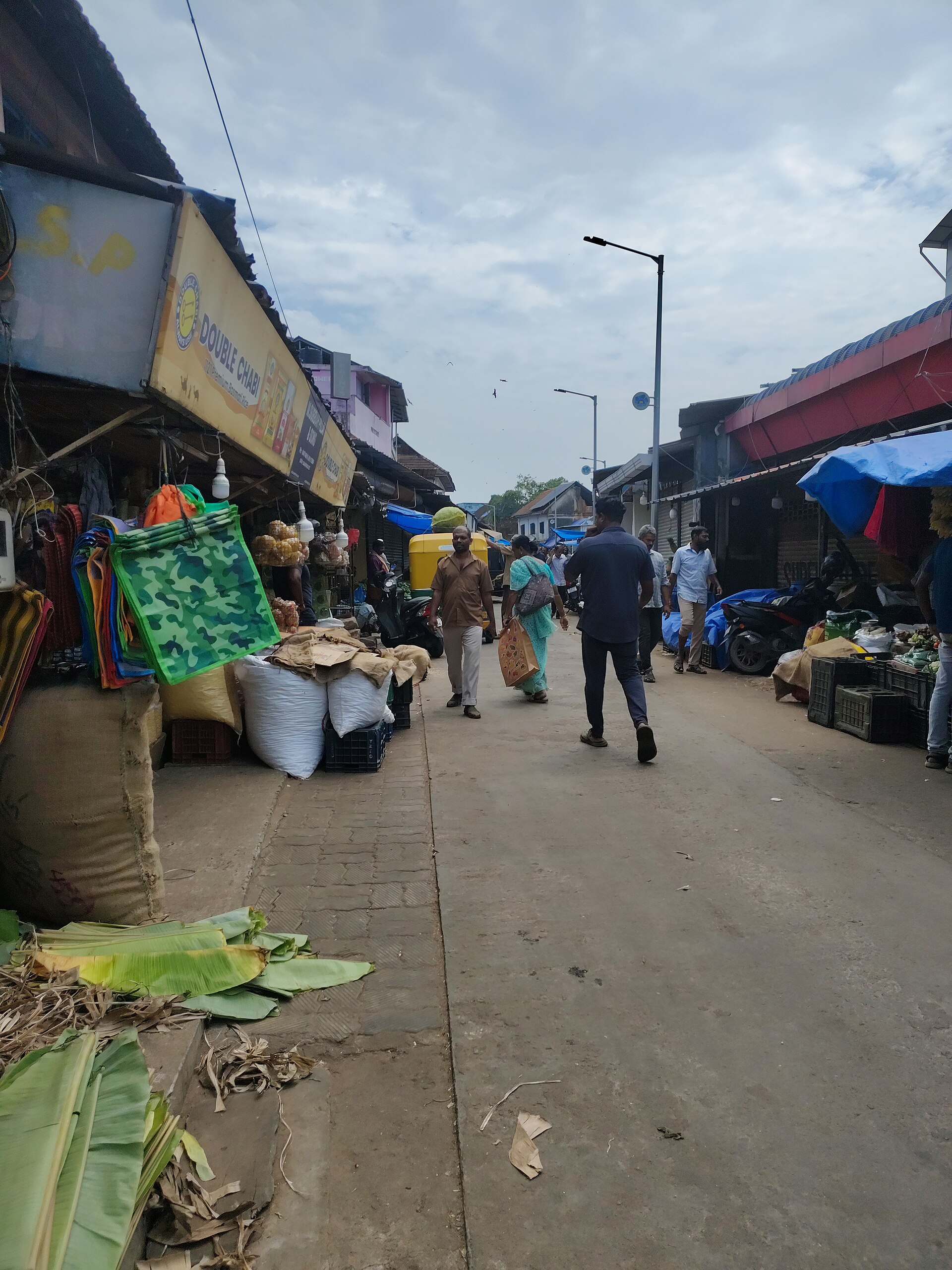
The architecture of Chalai tells its own story, one that doesn’t need words. The narrow lanes are lined with two- and three-story buildings, their facades worn by time and weather. Some bear the marks of traditional Kerala design—wooden balconies with intricate carvings, louvered shutters that once kept out the monsoon rains. Others reflect the colonial era, with high ceilings and arched doorways that hint at a different time. Above the stalls, corrugated metal sheets provide shade, rattling under the weight of rain in the wet season and offering scant relief from the midday sun. The streets themselves are uneven, patched with generations of repairs, and when the rains come, they turn into temporary streams, carrying away the dust and the remnants of the day’s trade.
Spices are the soul of Chalai. The air is thick with the scent of black pepper, cardamom, cloves, cinnamon, and turmeric—staples of Kerala’s cuisine. Vendors sit cross-legged behind their wares, weighing out portions on old brass scales while customers haggle with practiced ease. The bargaining isn’t rushed; it’s part of the ritual, a slow dance of offers and counteroffers, punctuated by the occasional laugh or shake of the head. Nearby, sacks of dried fruits and nuts—cashews, almonds, dates—are emptied into paper cones, the vendors scooping them out with bare hands. The spices aren’t just commodities here; they’re a sensory experience, one that lingers long after you’ve left the market.
But Chalai is more than just a spice market. It’s a microcosm of the city’s needs and desires, where you can find almost anything if you know where to look. One lane might be devoted to gold and silver jewelry, the next to cheap plastic household goods or knockoff electronics. There are stalls selling handwoven cotton saris alongside racks of mass-produced clothes, and tiny shops where traditional ayurvedic remedies are sold in glass bottles, their labels handwritten in Malayalam. In quieter corners, craftsmen work with their hands—repairing watches, engraving metal, or weaving baskets from palm leaves. The market doesn’t just sell things; it preserves skills and trades that might otherwise disappear.
The day at Chalai starts before dawn. By the time the sun rises, farmers from the surrounding villages have already arrived, unloading crates of vegetables, fruits, and fresh greens. By six, the market is in full swing—vendors arranging their goods, early shoppers picking through the produce, and street food stalls firing up for the first customers of the day. By mid-morning, the heat becomes oppressive, and the pace slows. Some traders retreat into the shade, sipping tea or chewing betel leaves, waiting for the worst of the heat to pass. But as evening approaches, the market comes alive again. Lanterns flicker to life, generators hum in the background, and the bargaining resumes, continuing well into the night.
What makes Chalai special isn’t just the goods on offer but the way people use the space. It’s a place where life unfolds in public—where old men sit on doorsteps discussing politics, children dart between stalls playing games, and women in bright saris carefully inspect vegetables, their fingers brushing over the produce. A motor rickshaw might edge its way through the crowd, its driver leaning on the horn, or a cow might wander past, indifferent to the chaos around it. There’s no rush here, no sense of urgency. The market moves at its own pace, the same one it has for decades.
For first-time visitors, Chalai can feel overwhelming. The narrow alleys, the press of bodies, the cacophony of voices and smells—it’s easy to feel disoriented. But that’s part of its charm. There are no tourist traps here, no staged performances of local culture. What you see is what you get: the unvarnished reality of a marketplace that has existed for generations. If you want to understand Kerala beyond the postcards and guidebooks, this is where you should come. Arrive early, buy a cup of tea from a street vendor, and watch as the market wakes up. The best way to experience Chalai isn’t to shop—it’s to observe, to let the rhythm of the place wash over you, and to accept it on its own terms.