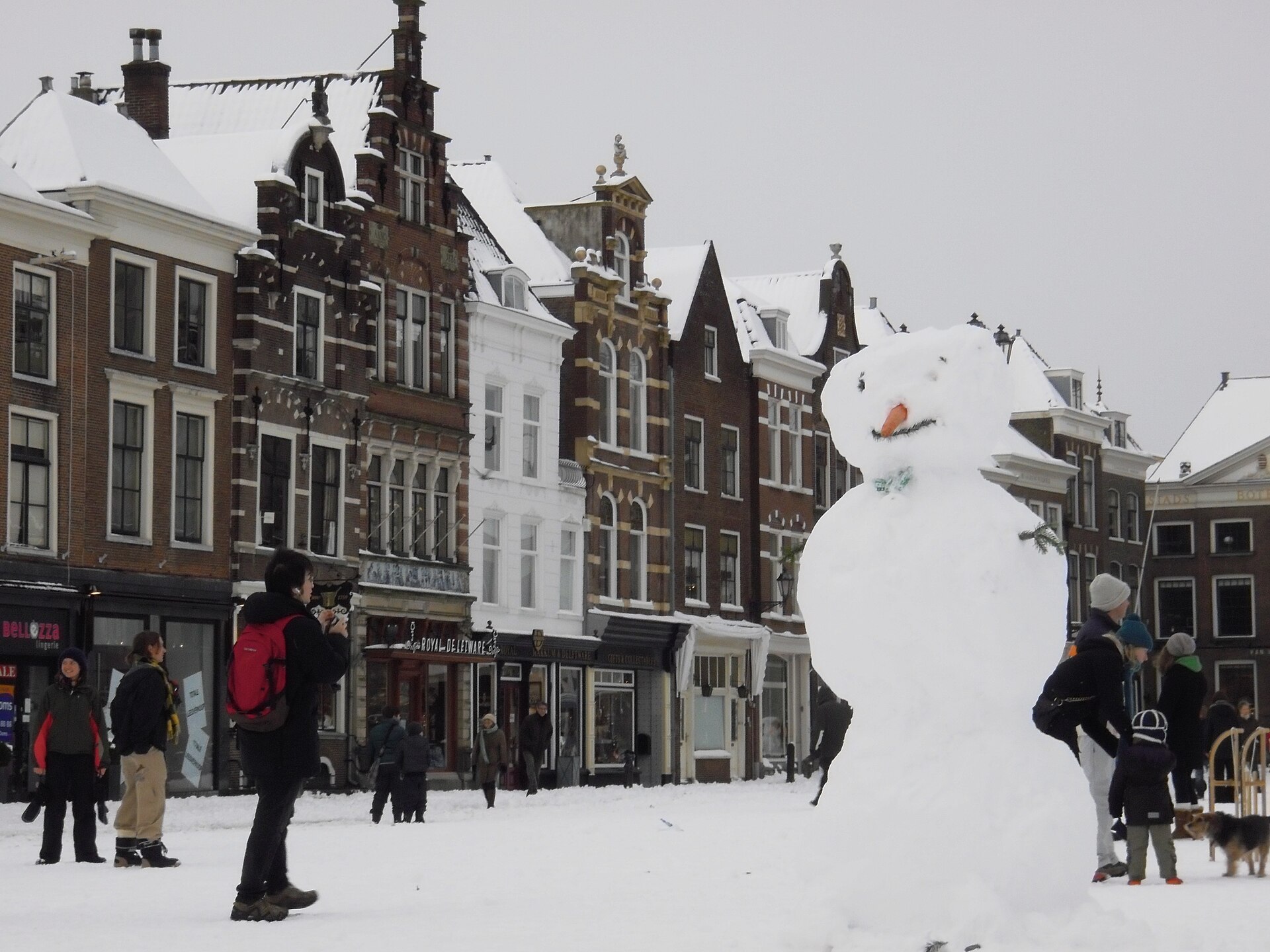
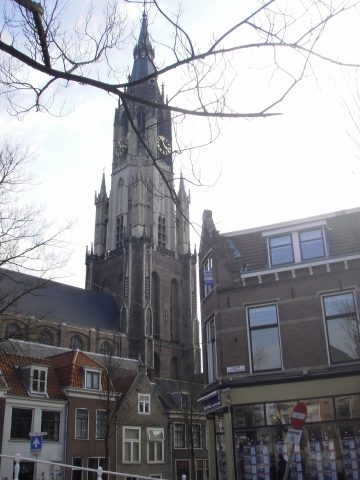
Delft’s Markt is where the city reveals itself in all its quiet, unassuming charm—a place that feels both timeless and deeply alive. Unlike the bustling squares of Amsterdam or the modern energy of Rotterdam, this is a space where the pace slows just enough to notice the details that make Delft special. The square is framed by narrow, gabled houses, their brick facades worn smooth by centuries of wind and rain. Each building seems to hold a story, from the merchant homes with their stepped roofs to the small shops and cafés tucked into their ground floors. At the center stands the towering Nieuwe Kerk, its spire piercing the sky, while bicycles lean against lampposts and the scent of coffee drifts from open doorways. This isn’t just a square; it’s the living heart of a city that has beaten steadily for over seven hundred years.
The Markt’s history stretches back to the Middle Ages, when Delft was a thriving hub of trade and craftsmanship. Back then, the square was the city’s economic and social core, where merchants haggled over goods, artisans displayed their wares, and public life unfolded in full view. It was here that proclamations were read, festivals celebrated, and, in darker times, justice meted out. Over the centuries, the square evolved—wooden stalls gave way to stone buildings, fires and reconstructions altered its face—but its essence remained. Walking across the cobblestones today, it’s easy to imagine the clatter of hooves, the shouts of vendors, and the rumble of carts laden with cheese, cloth, and herring.
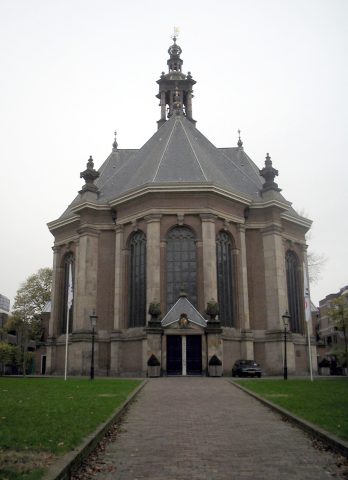
Architecturally, the Markt is a lesson in Dutch history. The most imposing presence is the Nieuwe Kerk, a fifteenth-century Gothic masterpiece with soaring pointed arches and delicate tracery. Inside lies the tomb of William of Orange, the father of the Dutch nation, a figure so central to the country’s identity that his resting place draws quiet reverence. Across the square, the Town Hall stands as a counterpoint, its Renaissance facade a riot of statues, gables, and ornate stonework. Rebuilt in the seventeenth century after a fire, it now serves as a reminder of Delft’s golden age, when the city was a center of art, science, and trade. Together, these two buildings anchor the square, their grandeur softened by the humbler homes and shops that surround them.
Yet the Markt is far more than a collection of historic buildings. It’s a place where the city’s daily rhythms play out in full view. On market days, the square transforms into a vibrant tableau of color and scent. Stalls overflow with fresh produce—bright orange carrots, wheels of aged Gouda, bunches of tulips still damp with morning dew—and the air fills with the buttery aroma of stroopwafels being cooked on hot irons. Locals chat with vendors, tourists snap photos, and children dart between the displays. On weekends, the energy swells: street musicians set up near the church, artists hang their paintings on temporary stands, and the square becomes a stage for impromptu performances. In summer, open-air concerts draw crowds, while winter brings an ice rink and twinkling lights, turning the Markt into a festive gathering place.
What makes the square so endearing is its scale. Unlike the vast, imposing plazas of other European cities, Delft’s Markt feels intimate, almost human-sized. There’s no sense of being overwhelmed by grandeur; instead, it invites you to linger, to become part of the scene. You can grab a seat at one of the outdoor cafés, order a coffee or a local beer, and watch the world go by. Cyclists weave between pedestrians, students laugh over shared fries, and elderly couples stroll arm in arm. It’s a place where the past and present coexist effortlessly—where a medieval church tower looms over a modern bike lane, and a seventeenth-century town hall stands beside a shop selling phone cases.
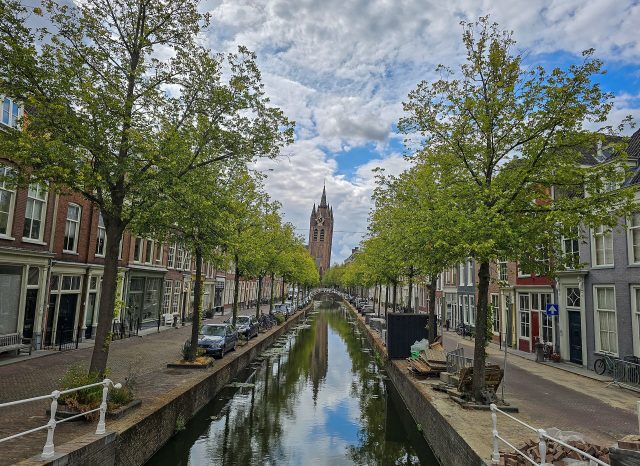
The Markt also serves as a gateway to the rest of Delft. From here, it’s a short walk to the Oude Kerk, with its famously leaning tower, or to the Royal Delft pottery factory, where the city’s iconic blue-and-white ceramics have been made for centuries. The canals, too, are just steps away, their quiet waters reflecting the gabled houses that line their edges. But even if you never leave the square, there’s plenty to discover. The facades of the surrounding buildings are a treasure trove of details—carved stone reliefs, faded family crests, and the occasional date etched into a lintel. Some homes retain their original medieval layouts, while others bear the marks of later renovations, but together they create a patchwork of styles that feels uniquely Delft.
As evening falls, the square takes on a different character. The golden light of sunset softens the brickwork, and the glow from windows spills onto the cobblestones. The crowds thin, but the square never feels empty. Couples sit on benches, sharing a bottle of wine, while groups of friends gather outside bars. The sound of laughter mixes with the distant chime of the Nieuwe Kerk’s bells, and the scent of dinner—perhaps a hearty stamppot or a plate of bitterballen—drifts from nearby restaurants. It’s a time when the city feels at its most relaxed, when the day’s hustle gives way to quiet conversation and the simple pleasure of being in a place that has seen centuries of such moments.
What sets Delft’s Markt apart is its authenticity. There’s no pretense here, no attempt to manufacture charm for tourists. Instead, it’s a place where life unfolds naturally, where the past is not preserved in amber but woven into the fabric of everyday existence. You might spend an hour here, or an entire afternoon, and still feel like you’ve only scratched the surface. It’s the kind of square that lingers in your memory—not because it’s grand or flashy, but because it feels real. That’s why Delft remains one of the Netherlands’ most beloved cities, a place where locals and visitors alike can find a sense of belonging in the quiet rhythm of its oldest square.