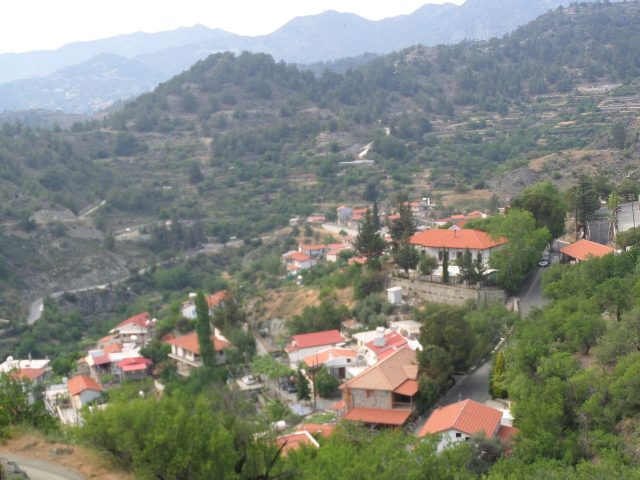
Lambousa lingers on a hillside, its stones holding stories older than memory. What survives are the remnants of a city that once thrived here—walls, columns, and foundations that have weathered centuries. Unlike Paphos or Salamis, Lambousa sees few visitors, so you can walk its paths without the hum of tour groups or the glare of selfie sticks.
The city sits near modern Lapithos, overlooking the northern coast. Its position made it a crossroads for trade between Cyprus, Asia Minor, and the Levant. Founded in the Late Bronze Age, Lambousa flourished during the Classical and Hellenistic periods. It minted coins, built temples, and hosted civic life. For generations, people lived, worked, and gathered here, leaving behind traces of their world.
Now, only fragments remain. The defensive walls, though broken, still mark the city’s boundaries. Foundations suggest where the agora once stood. The Temple of Apollo—one of Cyprus’s most worshipped deities—is reduced to a few scattered stones, but you can almost hear the echoes of rituals performed here. Nearby, a small theater’s ruins hint at performances and assemblies that once drew crowds.
Earthquakes shook Lambousa. Invasions reshaped it. Trade routes shifted, and its importance faded. By the Byzantine era, it was a shadow of its former self. Over time, the city was abandoned, its stones reused in nearby villages. Even today, farmers plowing their fields sometimes uncover pottery shards or coins—small pieces of a lost world. Some end up in museums; others stay in private hands, kept as quiet reminders of the past.
Visiting Lambousa isn’t about checking off a landmark. There are no reconstructed buildings or polished signs. Just the land, the ruins, and the silence. Without crowds, you can take your time—trace the old streets, sit on a crumbling wall, and let the weight of history settle in. The light changes everything. Morning and evening turn the stones warm, softening the edges of time.
The site lies in northern Cyprus, an area under Turkish Cypriot administration since 1974. Crossing the border means navigating a different currency and infrastructure. For those who come, though, these details matter less than the history. The nearby villages are quiet, and locals may share stories if you ask. A car is the easiest way to reach Lambousa—public transport is scarce.
Lambousa isn’t for everyone. There’s no spectacle, no grand reveal. Just the quiet persistence of the past. If you’re tired of crowded ruins and scripted tours, this is a place to wander, to wonder, and to listen to the stories the stones still hold.