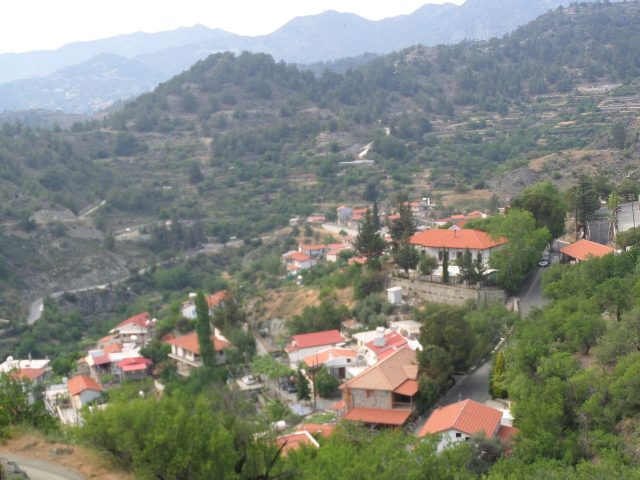
Lapitos Square is where the town quietly reveals itself. Tucked into the old quarter, it moves at its own pace. The hum of passing cars fades, replaced by the rhythm of life that has unfolded here for centuries. Lapitos is one of Cyprus’s oldest settlements, a crossroads where Greeks, Romans, Byzantines, Venetians, and Ottomans all left their mark. The square is where these layers of history converge in daily life.
Low stone houses with sun-bleached wooden shutters line the square. Their walls bear the marks of generations of builders who worked without blueprints. Some facades feature carved balconies; others retain heavy wooden doors with wrought-iron hinges. These details make the square feel alive in a way polished tourist spots do not.
At the center stands a simple fountain, its water trickling softly. Around it, cafés set out chairs and tables under umbrellas. In the mornings, locals gather for coffee; by evening, visitors take their place. The coffee is strong, and the conversation flows easily. In summer, someone brings a guitar, another a bouzouki, and the notes drift through the warm air as day gives way to night.
Lapitos doesn’t announce itself. It lacks the gloss of tourist hubs with souvenir shops and crowds. What it has: old women sitting on benches with prayer beads, children kicking a ball between the houses, men playing backgammon in the shade of an ancient tree. The square breathes with the people who call it home.
The history of Lapitos stretches back to the Bronze Age. The past isn’t gone but woven into the present. The town flourished under Byzantine rule, later becoming a Venetian stronghold. When the Ottomans arrived in the 16th century, they reshaped the streets and left behind mosques. One still stands on the edge of the square, a quiet reminder of coexistence.
During local festivals, the square comes alive. Stages are set up, lights hung, and the air fills with the scent of grilled meat and spices. People of all ages spill into the streets to dance and sing. For visitors, these moments show Cyprus beyond postcard images.
Winter changes the square. Rain washes the dust from the stones, and cool winds send fallen leaves skittering. The cafés close earlier, and the streets grow quiet. Yet even then, there’s charm here. You might stop by a bakery for fresh bread or linger over coffee in a dimly lit bar.
Lapitos doesn’t try to be trendy. It exists as it always has—weathered and unassuming. The square isn’t a backdrop for photos; it’s where you feel the pulse of real life. Maybe that’s why people return. Not for any attraction, but because it just feels right.