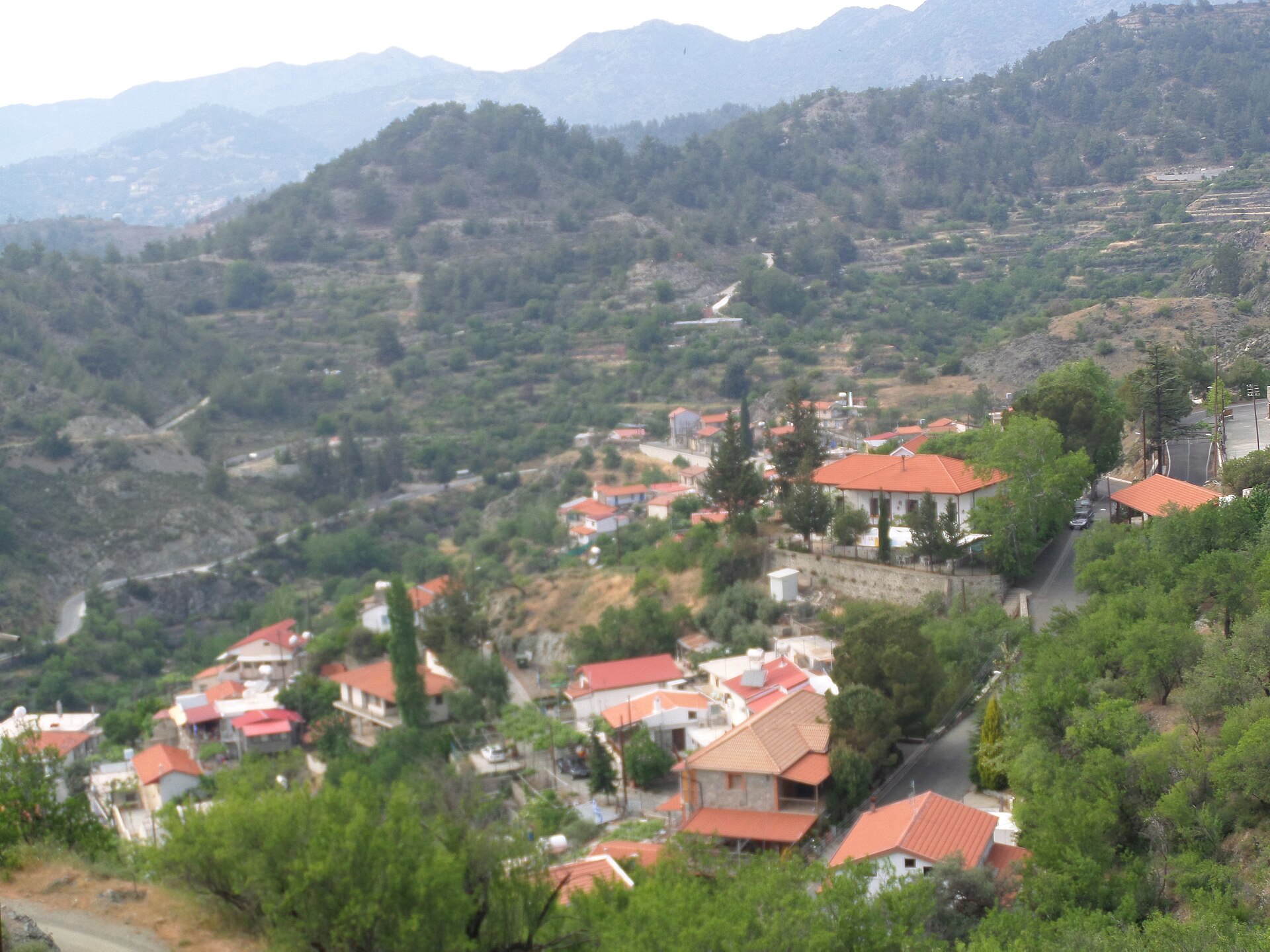
Perched on a gentle rise in the quiet town of Lapithos, the Church of Saint Theodore feels like a place where time has paused, leaving behind the quiet rhythms of medieval Cyprus. Unlike the island’s bustling coastal resorts, this small stone church doesn’t draw crowds, and that’s precisely what makes it special. The air here is still, broken only by the rustle of olive leaves in the breeze and the distant chime of a bell drifting across the hills. From its vantage point, the surrounding countryside unfolds in soft waves of vineyards and terraced slopes, a landscape that has changed little over the centuries. There’s a sense of slowness here, as if the world beyond moves at a different pace.
The church’s origins stretch back to the Byzantine era, when Cyprus was a cornerstone of the Eastern Roman Empire. While no exact records pinpoint its construction, the architecture suggests it was built sometime between the 11th and 12th centuries. Lapithos itself was no backwater—it sat along key trade routes linking the coast to the island’s interior, making it a hub of activity. The Church of Saint Theodore likely served as more than just a place of worship; it was a gathering point for the community, where local matters were discussed and decisions made. In an age when faith and daily life were deeply intertwined, such buildings were the heart of a town’s identity.
The structure follows the classic Byzantine style seen across Cyprus during the Middle Ages. Built from local limestone, it’s a modest single-nave church with a semicircular apse, its walls thick and unadorned except for a few decorative arches and niches that lend a subtle elegance. Inside, fragments of frescoes cling to the walls, their colors faded but their presence still powerful. The surviving scenes depict saints and biblical stories in the distinctive Byzantine manner—elongated figures with solemn expressions, their forms rigid yet expressive. Over the centuries, many of the paintings have been lost to time, but those that remain offer a glimpse into the artistic traditions of the era.
One of the church’s most striking features is its wooden iconostasis, a later addition likely crafted during the Ottoman period. Intricately carved and gilded, it stands in contrast to the simplicity of the stone walls, its rich details drawing the eye. The iconostasis houses several old icons, including one of Saint Theodore himself, the warrior-saint to whom the church is dedicated. Theodore Tyron, as he’s known in Orthodox tradition, was a Roman soldier who converted to Christianity and was martyred for his faith. His image appears frequently in Cypriot churches, particularly those built during periods of religious conflict, serving as both a spiritual symbol and a reminder of resilience.
Lapithos, the town that cradles the church, is a place where history lingers in the quiet streets and sun-bleached houses. Unlike the tourist-heavy resorts of Paphos or Ayia Napa, it moves to its own unhurried rhythm, and the locals still gather here for festivals and services, keeping traditions alive. The Church of Saint Theodore isn’t just a relic; it’s a living part of the community. On feast days, especially Easter, the church fills with worshippers, the scent of incense and candle wax mingling in the air. For a few hours, the past and present merge, and the building becomes what it has always been—a place of faith, connection, and continuity.
The countryside around Lapithos is just as compelling as the town itself. Rolling hills stretch out in every direction, covered in vineyards and olive groves that have sustained generations. A short drive away, the Troodos Mountains rise, their slopes dotted with ancient monasteries and churches, some even older than Saint Theodore’s. Nearby, the Monastery of Saint Herakleidios, founded in the 4th century, stands as one of the island’s oldest Christian sites. These places create a sense of depth, a reminder that Cyprus has been a crossroads of faith and culture for millennia.
Visiting the Church of Saint Theodore isn’t like ticking off another tourist attraction. There are no guided tours here, no scripted narratives—just the quiet hum of history. You can sit on a bench outside, watching the light shift over the hills, or step inside to study the faded frescoes and icons. The church stays cool in the summer heat, its thick walls offering respite, while in winter, the stone retains warmth, making it a cozy refuge. If you encounter locals, they’ll likely greet you with a nod or a smile, but they won’t intrude. This is a place for those who seek stillness, not spectacle.
What makes the Church of Saint Theodore remarkable is its endurance. It has weathered empires, wars, and earthquakes, yet it remains a place of worship, not just a museum piece. In an age where so many historic sites are repackaged for tourists, this church retains its original purpose. It’s a testament to the resilience of Cypriot culture, a quiet witness to the island’s layered past. For travelers tired of the usual itineraries, it offers something rare—a chance to see Cyprus not just as a sun-soaked destination, but as a land with deep roots and a story that’s still being told.