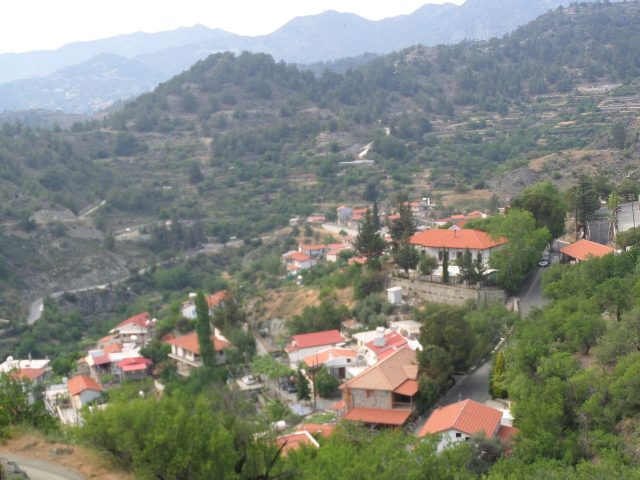
Nestled in the quiet hills near Lapithos, a small town on Cyprus’s northern coast, the Achiropoietos Monastery feels like a place where time moves differently. The name translates loosely as "not made by human hands," a nod to the legends that surround its origins. Yet beyond the stories, the monastery exudes a quiet authenticity—its weathered stone walls, the scent of incense lingering in the air, and the dry rustle of wild herbs underfoot all speak of something enduring. There’s no grand spectacle here, just the slow rhythm of a place that has seen centuries pass without hurry.
The architecture is modest, almost unassuming, but that’s where its charm lies. The small church, built from local stone, has low vaulted ceilings that seem to hug the space rather than dominate it. Inside, the frescoes have darkened with age, their details softened by time, yet they still carry the warmth of the hands that painted them. The most revered piece is an icon of the Virgin Mary, said to have been discovered miraculously on this very spot. Locals claim that attempts to move it to other churches always failed—it would somehow find its way back, as if the land itself refused to let it go.
The monastery hasn’t always been this peaceful. During the Byzantine era, it was a spiritual hub for the region, a place where pilgrims and travelers paused on their journeys. Under Frankish rule, it remained a point of refuge, though its influence waned over time. The Ottoman period brought decline, as it did for many Christian sites across Cyprus, but Achiropoietos was never entirely abandoned. Even in its lowest moments, someone always tended to it, keeping the flame alive in whatever small way they could.
Today, the monastery is a rare pocket of old Cyprus, untouched by the trappings of modern tourism. There are no crowds, no souvenir stalls, no guided tours rushing through with rehearsed facts. Just the quiet hum of the wind through the olive groves, the occasional creak of an old wooden bench, and the distant echo of the single bell in the belfry. In summer, the heat presses down, and the shade of the ancient trees offers a welcome respite. Winter brings a stark beauty, the bare hills and stone walls standing in quiet defiance of the elements.
Visiting Achiropoietos isn’t about ticking off a landmark or capturing the perfect photo. It’s about stepping into a Cyprus that exists beyond the resorts and palm-lined promenades—a place where the land feels closer, the past more tangible. If you’re lucky, you might arrive during a service, where the chanting of the monks blends seamlessly with the stillness, as if the stones themselves are singing.
The surrounding area is crisscrossed with footpaths that lead to abandoned villages and forgotten chapels. Locals sometimes come here not just to pray, but to sit in silence, to think, or simply to be. For travelers, it’s a chance to see the island as it once was—unhurried, unpolished, living by its own pace. There’s no need to rush, no script to follow. You can wander the grounds, sit on a bench, and watch the light shift over the distant mountains.
Achiropoietos doesn’t compete with Cyprus’s more famous monasteries, like Kykkos or Trooditissa, and that’s precisely why it feels special. There’s no pressure to perform, no expectations to meet. You don’t need to know the history or understand the legends to appreciate its quiet presence. Sometimes, all it takes is a few old stones, a stretch of open sky, and the sense that this place has been waiting for you to find it. Not every sacred site needs to be grand—some are sacred simply because they’ve endured.