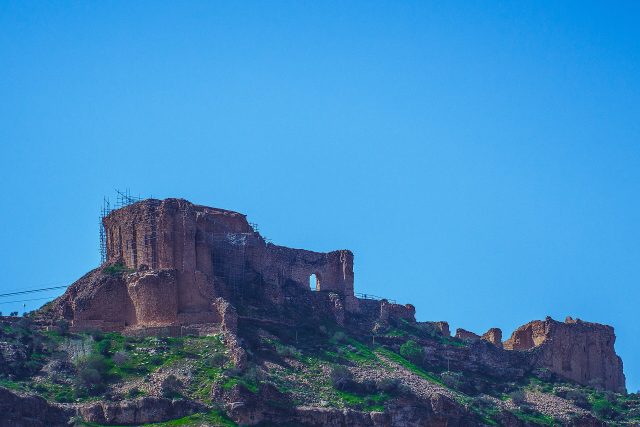
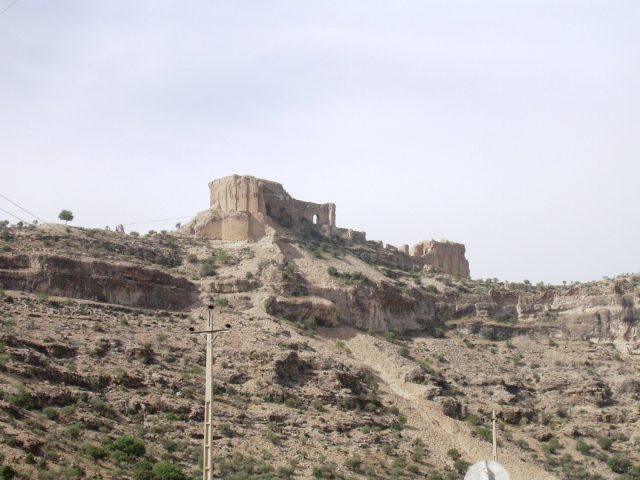
Firuzabad sits quietly in southern Iran, a place where the weight of history lingers in the dry heat and the silence of the hills. Here, the ruins of Gor rise from the earth like the bones of an ancient world, a city that once thrived under the rule of empires and dynasties long faded into memory. Founded during the Achaemenid era, Gor witnessed the rise and fall of Persian power, serving as a capital for local rulers and a crossroads for cultures that shaped the region. Today, its crumbling walls and scattered stones tell a story not just of kings and conquests, but of everyday lives lived in the shadow of greatness.
The first thing that strikes you about Gor is the scale of its ambition. The remnants of its massive defensive walls stretch across the landscape, their weathered stones still bearing the marks of time and human hands. Inside these walls, the outlines of palaces, temples, and residential quarters emerge from the dust, though little remains beyond foundations and the occasional column. The most imposing structure was once the royal palace, its layout a testament to the geometric precision of ancient Persian architecture, where every line and angle carried meaning. Even in decay, the symmetry of the design is unmistakable, a reminder of an empire that valued order as much as power.
One of Gor’s most intriguing features is the circular city known as Ardashir-Khwarrah, built by Ardashir I, the founder of the Sassanian dynasty. More than just an urban plan, this design was a statement of ideology—a city shaped like the sun, with the ruler’s palace at its heart and concentric rings of homes, markets, and temples radiating outward. The layout symbolized the centralized authority of the Sassanian state, where every aspect of life revolved around the king. Today, only the faint traces of streets and building foundations remain, but they offer a glimpse into the grand vision behind the city’s creation.
Water was the lifeblood of Gor, and the engineers of the time devised an intricate system to sustain the city in this arid land. Channels carved into the hillsides captured rainwater and directed it into reservoirs, ensuring that the population had enough to drink, to irrigate crops, and to maintain the lush gardens that once flourished here. Some of these channels still exist, though they are now cracked and overgrown, a testament to the ingenuity of a civilization that thrived where others might have perished. The remnants of the waterworks are a quiet reminder of how deeply the people of Gor understood their environment.
Religion played a central role in the city’s life, and the fire temple was one of its most sacred sites. During the Sassanian era, fire was a divine symbol in Zoroastrianism, and temples where eternal flames burned were places of pilgrimage and ceremony. Though little of the original structure survives, the temple’s elevated position and the remains of its altar hint at the rituals that once took place here. For the people of Firuzabad, Gor retains a spiritual significance, and some traditions tied to the worship of fire endure to this day. The temple’s ruins, though modest, carry a weight that transcends their physical state.
What makes Gor different from other historical sites in Iran is its atmosphere. There are no crowds here, no guided tours rushing from one monument to the next, no vendors hawking trinkets. Instead, there is silence—broken only by the wind sweeping across the plains—and a sense of solitude that allows the past to feel almost tangible. The few locals you might encounter are likely to be reserved, but their quiet respect for the ruins speaks volumes. Many of them are descendants of the people who once lived in Gor, and their stories about the city have been passed down through generations, keeping its memory alive in ways that no museum could.
Walking through Gor is like stepping into a different time. The heat of the sun, the rough texture of the stones underfoot, the way the light shifts across the landscape—all of it conspires to make the past feel present. It’s easy to imagine the city as it once was: the bustle of the markets, the murmur of prayers in the temples, the clatter of hooves on the paved streets. But the ruins also serve as a reminder of impermanence. Empires rise and fall, cities are built and abandoned, and what remains are only fragments, echoes of a world that once was.
For those who seek out Gor, it offers something rare: a connection to history that feels personal rather than curated. Unlike the more famous sites of Persepolis or Isfahan, Gor hasn’t been polished for tourists. It exists as it has for centuries, a place where the past isn’t just remembered—it’s still alive in the land itself. There’s a beauty in that, in the way the ruins stand as both a monument to human achievement and a testament to the relentless march of time. To visit Gor is to walk among the ghosts of an empire, to feel the weight of history not as something distant, but as something that lingers in the air, in the stones, in the very earth beneath your feet.