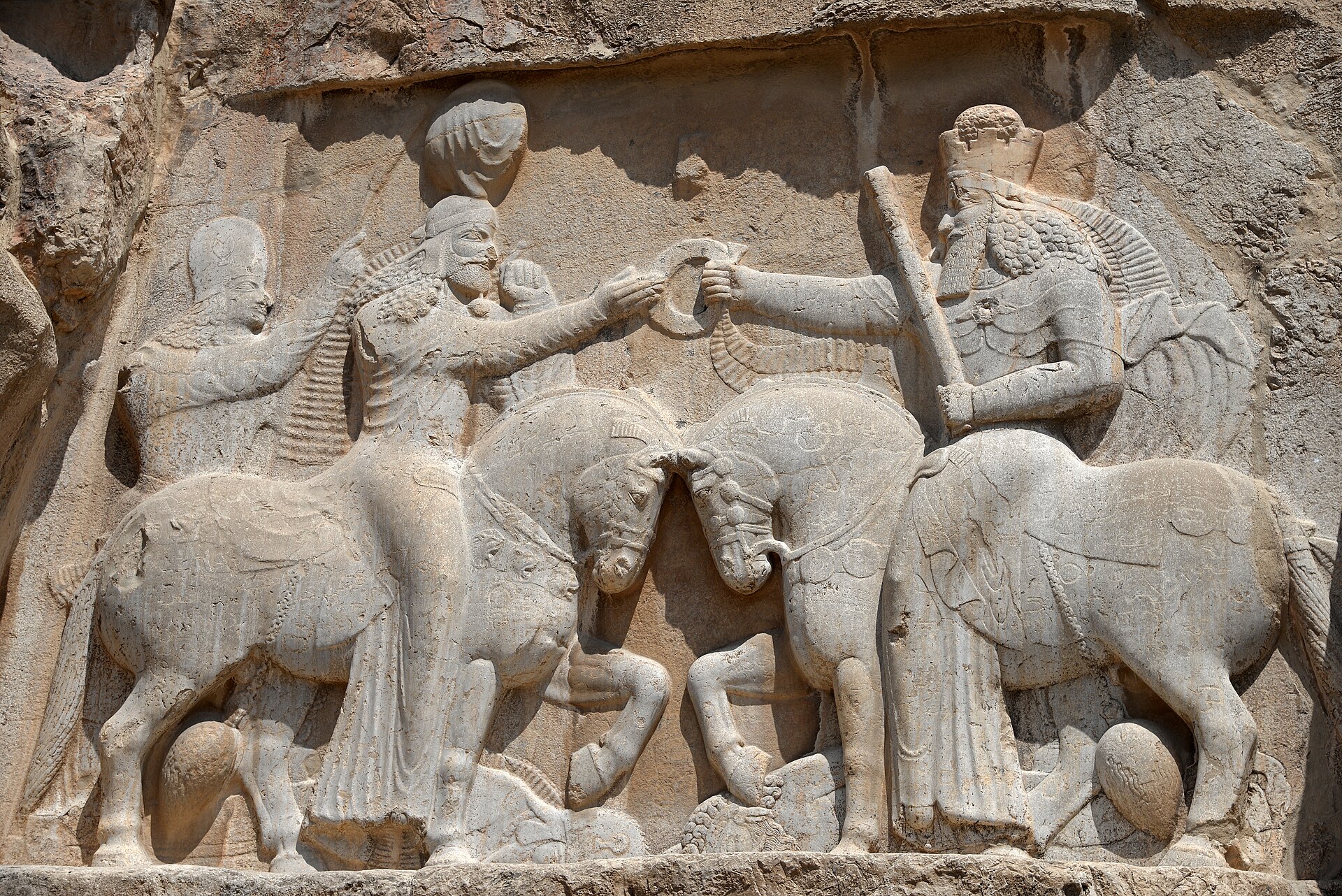
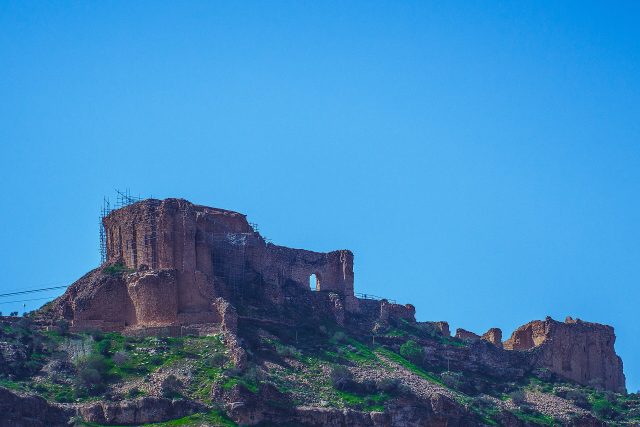
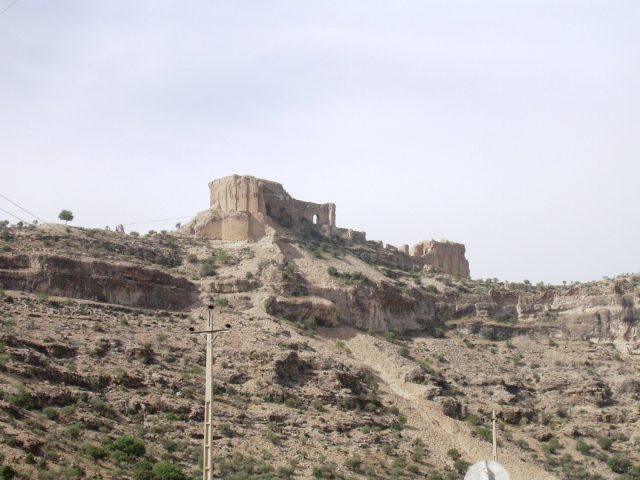
Perched in a quiet valley near the modern town of Firuzabad, the ruins of Ardashir’s Palace feel like a place where time has paused rather than faded. The low mountains that frame the horizon once shielded this spot from the outside world, and even now, the thick stone walls seem to hold the echoes of a distant past. Built in the early third century by Ardashir I, the founder of the Sasanian Empire, the palace was more than a royal residence—it was a statement. After centuries of Parthian rule, Ardashir sought to revive Persian sovereignty, and this complex became a symbol of that ambition. Walking through its empty halls, it’s easy to imagine the murmur of officials gathering in the courtyards, the flicker of torchlight along the corridors, and the weight of decisions made within these walls that would shape an empire.
The architecture of the palace is a striking blend of strength and elegance. The main structure rises from a raised platform, approached by broad staircases—a hallmark of Sasanian design, though here it takes on a particularly imposing presence. The thick walls, built from stone and gypsum, support vaulted ceilings and massive iwans, the open-air halls that define much of Persian architecture. The grandest of these iwans faces south, its partially collapsed vault still hinting at the skill of the builders who understood how to manipulate light and space. These were not just functional spaces; they were designed to impress, to convey power and permanence. Even in ruin, the scale of the palace suggests the confidence of a dynasty that saw itself as the heir to Persia’s ancient glory.
What makes Ardashir’s Palace unusual is its multifaceted role. It wasn’t merely a home for the ruler but a hub of administration, ceremony, and possibly even worship. Some scholars believe it included a fire temple, a common feature in Sasanian architecture, where the sacred flame would have burned as a symbol of divine favor. Others argue that the thick walls and elevated position hint at a defensive purpose, allowing guards to survey the surrounding plains. The truth is likely a mix of both—this was a place where politics, religion, and military strategy intersected. Yet much of its original function remains debated, as few written records from the time have survived. The palace stands as a silent witness to an era we can only partially reconstruct.
Little remains of the palace’s original decoration, but the fragments that survive offer glimpses of its former splendor. The walls were once covered in intricate stucco reliefs, their patterns a mix of geometric precision and flowing botanical motifs, typical of Sasanian art. Some rooms still bear traces of these designs, their delicate curves softened by time. Small niches in the walls, possibly used for lamps or storage, add a human touch to the grandeur, reminding visitors that this was not just a seat of power but a lived-in space. The floors, though now bare, may once have been covered in carpets or mosaics, their colors lost to the centuries. What endures is the sense of craftsmanship—a culture that valued beauty as much as strength.
The palace doesn’t stand in isolation. Just a short distance away lie the ruins of Gor, the ancient city that served as Ardashir’s first capital before he moved his court to the more strategically located Ctesiphon. Today, Gor is little more than scattered stones, but in its time, it was a thriving center of trade, religion, and daily life. Ardashir chose this valley deliberately. The land was fertile, fed by mountain streams, and the surrounding peaks provided natural protection. Trade routes passed nearby, connecting the region to the wider world. The palace, then, was part of a larger network—a focal point for the city, the countryside, and the empire beyond. Its location wasn’t just practical; it was symbolic, a declaration that this was the heart of a new Persia.
Visiting Ardashir’s Palace is less about ticking off a historical site and more about stepping into a story. The quiet of the ruins makes it easy to lose yourself in the past. Early mornings and late afternoons are particularly atmospheric, when the sun casts long shadows across the stone and the air is still. There’s a sense of harmony here, as if the palace was always meant to exist in this valley, framed by mountains and open sky. It’s the kind of place where you can sit on a crumbling ledge and imagine the conversations that once filled these halls—the debates of generals, the whispers of courtiers, the everyday sounds of a world long gone.
Unlike more famous Iranian landmarks like Persepolis or Isfahan, Ardashir’s Palace sees few visitors. There are no crowds, no guided tours rushing from one highlight to the next. The lack of foot traffic only adds to its charm, allowing you to explore at your own pace. If you’re lucky, you might encounter a local farmer or shepherd, their curiosity piqued by a rare foreigner. Few speak English, but a smile and a shared interest in the ruins often bridge the gap. The stories here aren’t written in guidebooks; they’re etched into the stone itself. The palace doesn’t need grand explanations—it speaks through its weathered arches and silent courtyards, telling of an empire that rose, flourished, and eventually faded, leaving behind only traces of its former self.
What makes Ardashir’s Palace enduring is its ability to make history feel tangible. It has survived wars, earthquakes, and the rise and fall of dynasties, yet it still stands, even if only as a shadow of its original form. There’s something humbling about that. The palace reminds us that civilizations are fragile, that the grandest monuments can crumble, and that what lasts is often not what was intended. Yet it also offers a connection to the past, a way to touch the lives of people who walked these same paths centuries ago. If you find yourself in Iran, take the time to visit this quiet corner of the country. It’s not just a ruin; it’s a place where the past feels alive, if only for a moment.