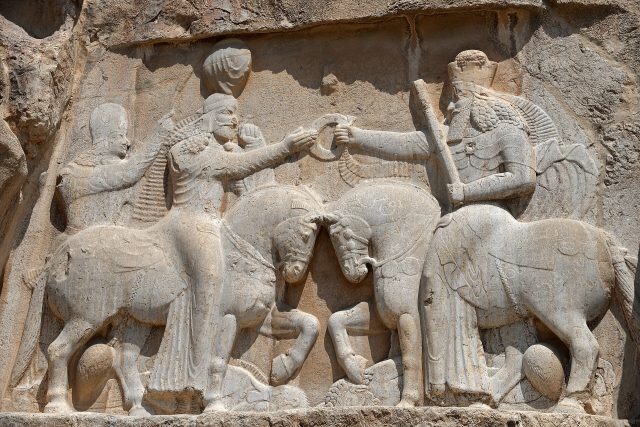
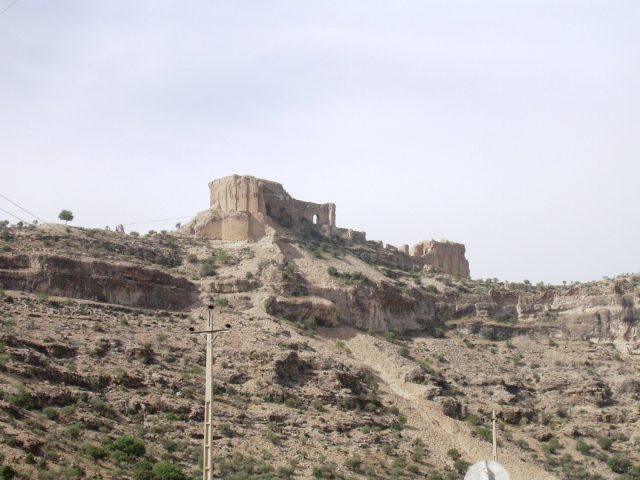
Galeh-Dokhtar stands on a rocky outcrop above the Firuabad Valley, its weathered walls and towers rising like a silent sentinel from another age. Built in the early third century under the orders of Ardashir Papakan, founder of the Sasanian dynasty, the fortress was more than just a military stronghold—it was a declaration of power, a challenge to the crumbling Parthian Empire. From its heights, the view stretches across vast plains crisscrossed by ancient trade routes, where caravans once carried goods between Persia, India, and Arabia. Beyond the valley, the distant mountains mark the borders of rival lands, a reminder of the strategic importance of this place.
The architecture of Galeh-Dokhtar is striking in its simplicity and strength. Constructed from massive stone blocks fitted together without mortar, the fortress has endured centuries of wind, war, and time. Its walls, several meters thick in places, were designed to withstand sieges, with narrow arrow slits and a labyrinth of staircases leading to upper levels. Inside, the remains of living quarters, storage rooms, and even a small temple hint at the daily life of those who once occupied it. The layout suggests a carefully planned military complex, where every detail served a purpose—whether for defense, supply, or communication.
The location of Galeh-Dokhtar was no accident. The Firuabad Valley had long been a crossroads of commerce and conflict, a place where control meant influence over the flow of goods and information. Ardashir, a seasoned commander, recognized its potential and chose this spot to consolidate his power. The fortress became one of the first steps toward the rise of the Sasanian Empire, which would shape the region for over four hundred years. Its construction marked the beginning of a new era, one that would leave an indelible mark on the history of the Middle East.
Today, Galeh-Dokhtar bears the scars of time. Parts of its walls have collapsed, towers stand half-ruined, and the interior is filled with dust and debris. Yet even in its decay, the fortress retains a sense of grandeur. Climbing the steep path to its gates, it’s impossible not to wonder about the countless people who have walked these same steps—soldiers, merchants, travelers—each leaving their own mark on its history. The stones themselves seem to whisper stories of battles fought and lives lived within these walls.
Firuabad is more than just the fortress. A short distance away lies Ardashir-Khwarrah, the ancient city founded by Ardashir, its ruins sprawling across the landscape. Among the remnants of palaces, temples, and public buildings, one can piece together what life might have been like during the early Sasanian period. Together with Galeh-Dokhtar, these sites form a rare historical ensemble, offering a glimpse into a time when this valley was the heart of an empire. There are no crowds here, no tourist traps—just the quiet rhythm of the wind and the occasional cry of a bird, allowing visitors to explore at their own pace.
Visiting Galeh-Dokhtar is not just about seeing an old ruin; it’s about stepping into history. Standing atop the fortress, looking out over the valley below, it’s easy to imagine the scene as it once was—warriors preparing for battle, blacksmiths forging weapons, rulers making decisions that would shape the future. The fortress was more than a military outpost; it was a center of political and cultural life, a place where the fate of an empire was decided. Though little remains of that era, the stones still tell their story to those who listen.
Modern Firuabad is one of those places in Iran where travelers come not for beaches or shopping, but for something deeper. There are no luxury hotels or bustling restaurants, just the quiet hum of a town that has seen centuries pass. The locals, often warm and welcoming, share stories of their ancestors and traditions, adding another layer to the experience. As the sun sets behind the mountains, casting a golden glow over the fortress, it’s clear why this place still holds a kind of magic. Galeh-Dokhtar is more than a monument—it’s a living piece of history, one that continues to captivate those who venture here.