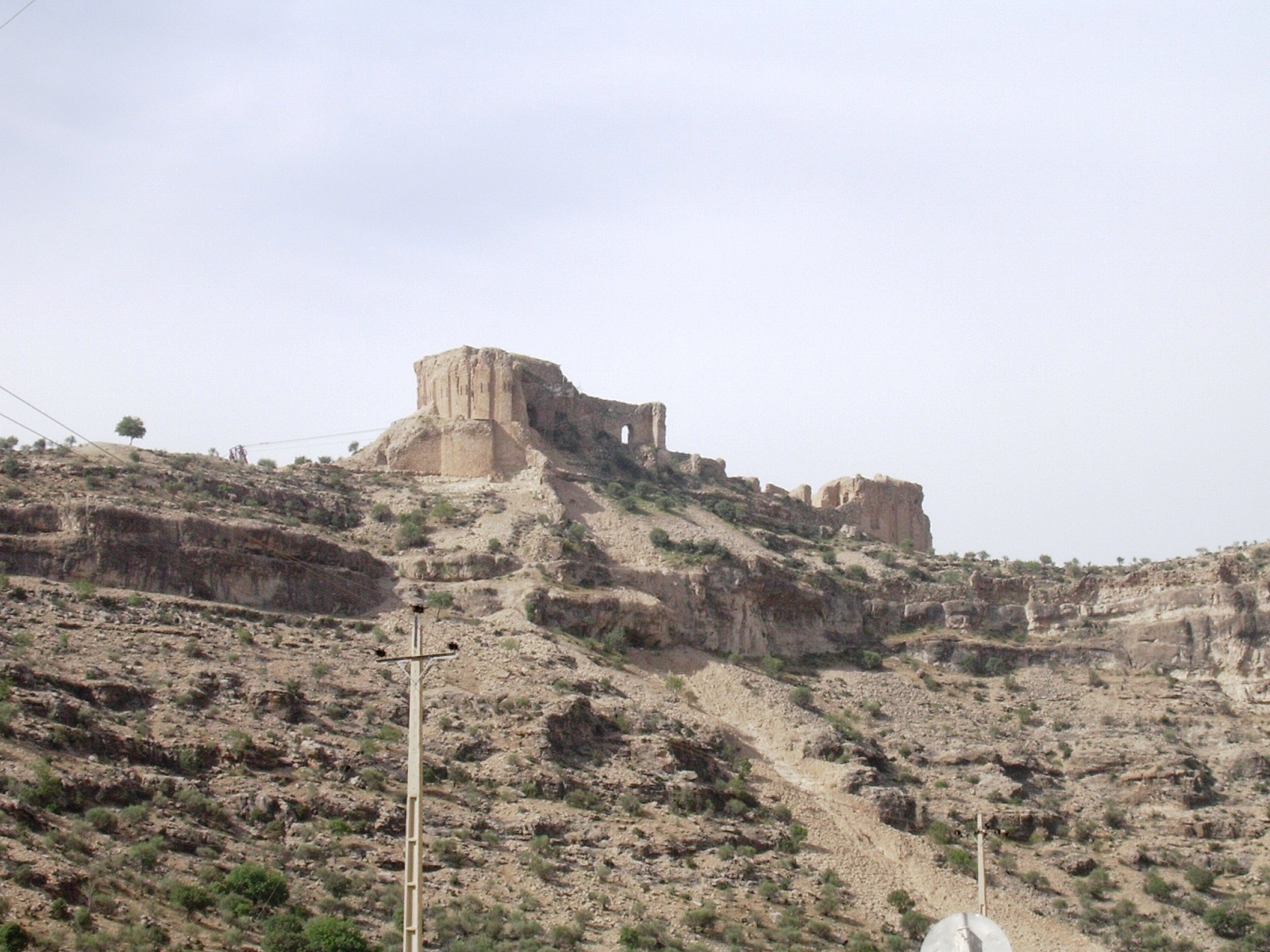
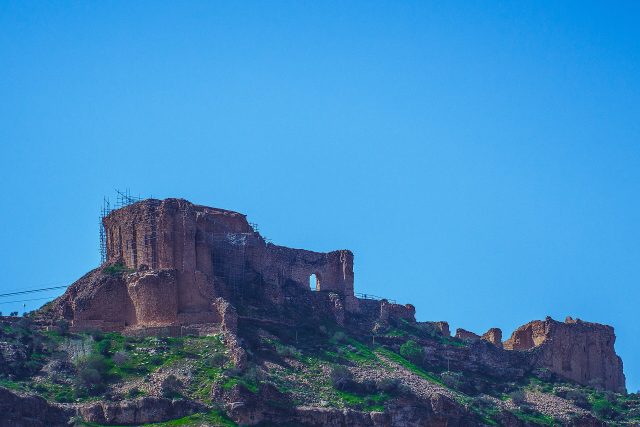
Perched on a rocky hill overlooking the arid plains near Firuzabad, the fortress of Galeh-Dokhtar feels like a place where time has paused to catch its breath. This is not just another ruin in Iran’s vast historical landscape—it’s a quiet witness to the birth of an empire. Built in the early third century, it was here that Ardashir Papakan, the founder of the Sassanian dynasty, laid the groundwork for his rise to power. The fortress wasn’t merely a military stronghold; it was the first tangible step toward reshaping the political map of the region. From these walls, Ardashir plotted his campaigns, consolidated his forces, and eventually toppled the Parthian Empire, ushering in a new era for Persia. The stones of Galeh-Dokhtar still hold the echoes of those decisive moments, when a single man’s ambition changed the course of history.
The architecture of the fortress is a study in practicality and endurance. Constructed from massive stone blocks fitted together without mortar, the walls rise nearly twenty meters in places, their thickness a testament to the need for defense in an era of constant conflict. Inside, the remnants of living quarters, water cisterns, and even a small fire temple hint at a community that once thrived here. The most impressive feature, however, is the water system—rainwater was channeled into rock-cut reservoirs, ensuring the garrison could withstand prolonged sieges. Today, those cisterns are empty, but their scale speaks to the ingenuity of Sassanian engineers. The fortress was designed to be self-sufficient, a necessity in a land where control over resources often meant the difference between survival and defeat.
From the highest point of the fortress, the view stretches across the valley where the ancient city of Gor once stood. Now, the landscape is a patchwork of dust and sparse vegetation, but in its prime, Gor was a marvel of urban planning. It was Iran’s first circular city, its streets radiating outward from a central square like spokes on a wheel. Galeh-Dokhtar loomed over it, a symbol of authority and protection. The city’s design was so advanced that it later served as a model for Baghdad. Today, little remains of Gor beyond scattered ruins, but the fortress still stands as a reminder of the ambition that once shaped this corner of the world. It’s easy to imagine the bustle of life below—merchants haggling in the marketplace, soldiers drilling in the training grounds, and messengers hurrying along the roads with news from distant provinces.
Walking through Galeh-Dokhtar is like stepping into a story where every stone has a voice. The silence inside the fortress is almost tangible, broken only by the wind whispering through the empty halls. Some sections of the walls have crumbled, revealing glimpses of the surrounding landscape, but the structure’s presence is undiminished. Climbing to the upper levels, you can see how the valley gives way to the distant mountains, the horizon blurring into the heat haze. It’s a view that hasn’t changed much in seventeen hundred years. Here, the past feels close enough to touch—you can almost hear the clatter of hooves on the old trade routes or the distant shouts of soldiers preparing for battle.
The fortress is deeply tied to Ardashir’s legacy. After his victory over the Parthians, he became Ardashir I, the first shahanshah of the Sassanian Empire. Legends say it was within these walls that he planned his final campaigns, the ones that would secure his rule. In Iranian history, this period is seen as a renaissance of Persian statehood, and Galeh-Dokhtar is one of its most enduring symbols. Even after Ardashir’s rise to power, the fortress retained its importance, serving as both a military outpost and an administrative center. It was a place where decisions were made, where messengers arrived with news from the frontiers, and where the machinery of empire first began to turn.
What makes Galeh-Dokhtar special today is its lack of pretense. There are no crowds, no guided tours with loudspeakers, no souvenir stalls hawking trinkets. Just the wind, the sun, and the weight of history pressing down on you. It’s the kind of place where you can sit on a crumbling wall and lose track of time, where the past doesn’t feel like a distant abstraction but something alive and breathing. The fortress doesn’t overwhelm you with grandeur; instead, it invites you to reflect on the passage of time, on how fleeting even the mightiest empires can be. Nearly two thousand years have passed since these walls were built, yet they still stand, a silent testament to the enduring power of human ambition.
Firuzabad itself is a quiet town, far removed from the tourist circuits of Isfahan or Shiraz. But for those willing to venture off the beaten path, it offers a glimpse into a different side of Iran—one where history isn’t polished for display but left raw and unfiltered. Just a few kilometers from Galeh-Dokhtar lie the ruins of Ardashir’s palace, known as Qal’eh-ye Dokhtar, and the remnants of ancient Gor. Together, they form a historical triptych that tells the story of a region that was once the heart of an empire. There are no grand mosques or bustling bazaars here, just the quiet dignity of a landscape shaped by time. It’s a place where you can walk in the footsteps of kings and commoners alike, where the past isn’t just remembered—it’s felt.
Visiting Galeh-Dokhtar is less about ticking a box on a travel itinerary and more about connecting with something deeper. It’s a place that doesn’t just tell a story; it makes you part of it. As you wander through its corridors, you can’t help but wonder about the people who once called this place home—the soldiers who stood guard on these walls, the servants who carried water from the cisterns, the messengers who rode out with orders from the shah. Their lives were ordinary in the grand scheme of things, but they were part of something extraordinary. And in a way, standing here, you become part of that story too.
The fortress doesn’t demand your awe; it earns it. It’s not the kind of place that leaves you breathless with its beauty, but it does leave you thoughtful. There’s a humility in its weathered stones, a reminder that even the greatest empires began with small, determined steps. If you ever find yourself in this part of Iran, take the time to climb the hill, sit on one of those ancient stones, and listen. The wind has been whispering here for centuries, and if you’re quiet enough, it might just tell you something worth hearing.