Firuzabad is one of those Iranian towns that feel suspended in time, where the weight of history lingers in every stone. Nestled in the sun-scorched plains of Fars province, it carries the echoes of an era when these lands were the heart of vast empires. Among its scattered ruins and half-forgotten monuments, the Mizan Tower stands as one of the most enigmatic structures—a silent witness to a past that still puzzles historians.
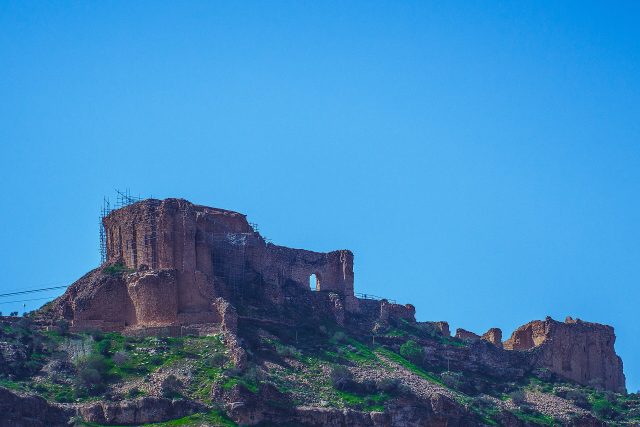
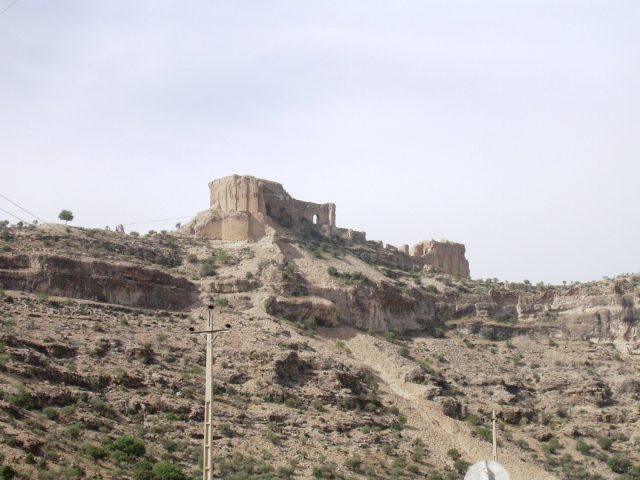
The tower rises on the outskirts of Firuzabad, away from the usual tourist paths. Its low but solid form dominates the landscape, a solitary sentinel overlooking the centuries. Built from large stone blocks, it appears both imposing and unassuming, stripped of unnecessary ornamentation but clearly designed to endure. From the outside, it looks like a simple cylindrical structure, yet its interior reveals something far more intricate.
Little is known for certain about the tower’s origins, though most scholars agree it dates back to the Sasanian period, between the 3rd and 7th centuries AD. This was a time when the Persian Empire flourished, and Firuzabad—then known as Gur—served as one of its key cities. Founded by Ardashir I, the first Sasanian king, Gur quickly became a political and cultural hub. The tower likely played some role in this system, though its exact purpose remains a matter of debate.
One of the most persistent theories suggests the Mizan Tower functioned as an astronomical observatory or solar clock. Its design supports this idea: narrow vertical slits in the walls could have tracked the sun’s movement, while a spiral staircase inside leads to an upper platform with sweeping views of the surroundings. Astronomy held great significance in Sasanian governance, often intertwined with ritual and statecraft, so such a structure would have had both practical and symbolic value.
Another possibility is that the tower was part of the city’s defenses. Firuzabad’s strategic location made it a frequent target for invasions, and the thick walls and narrow openings do resemble fortifications. Its elevated position would have provided a vantage point over the plains. Yet this theory has its flaws—there are no clear signs of surrounding military structures, and if the tower were part of a defensive system, one might expect it to stand closer to the city’s edge rather than in relative isolation.
The architecture of the Mizan Tower is quintessentially Sasanian: straightforward, functional, and built to last. Unlike the ornate Islamic structures that came later, it relies on the precision of its stonework rather than decoration. The blocks fit together seamlessly, a testament to the skill of its builders. Inside, remnants of the staircase remain, though much of it has collapsed or been dismantled over the centuries.
Today, the tower is less a tourist attraction than a place for quiet reflection. Visitors are rare, and the only sounds are the wind sweeping across the plains. Locals regard it with respect but not reverence—it’s simply part of the landscape, another relic of the past that doesn’t demand explanation. Perhaps that’s why it retains its atmosphere: there’s no pressure to commercialize it, no attempt to turn it into an open-air museum. It exists as naturally as the distant mountains or the ancient burial mounds scattered nearby.
A visit to the Mizan Tower is less about seeing a landmark and more about stepping into history. Firuzabad and its surroundings are rich with Sasanian remnants—the ruins of Ardashir’s palace, fragments of city walls, and remnants of ancient irrigation systems. Together, they paint a picture of life in one of antiquity’s most powerful empires. The tower, despite its mysteries, fits into this mosaic not as its centerpiece but as a subtle yet essential detail, offering a glimpse into how people lived, thought, and built over a thousand years ago.
Time moves differently here. The sun drifts slowly across the sky, shadows stretch, and for a moment, it feels as though the tower might finally speak. But like all ancient stones, it remains silent, leaving us to piece together its story. Maybe that’s its greatest value—not in the answers it provides, but in the questions it inspires.