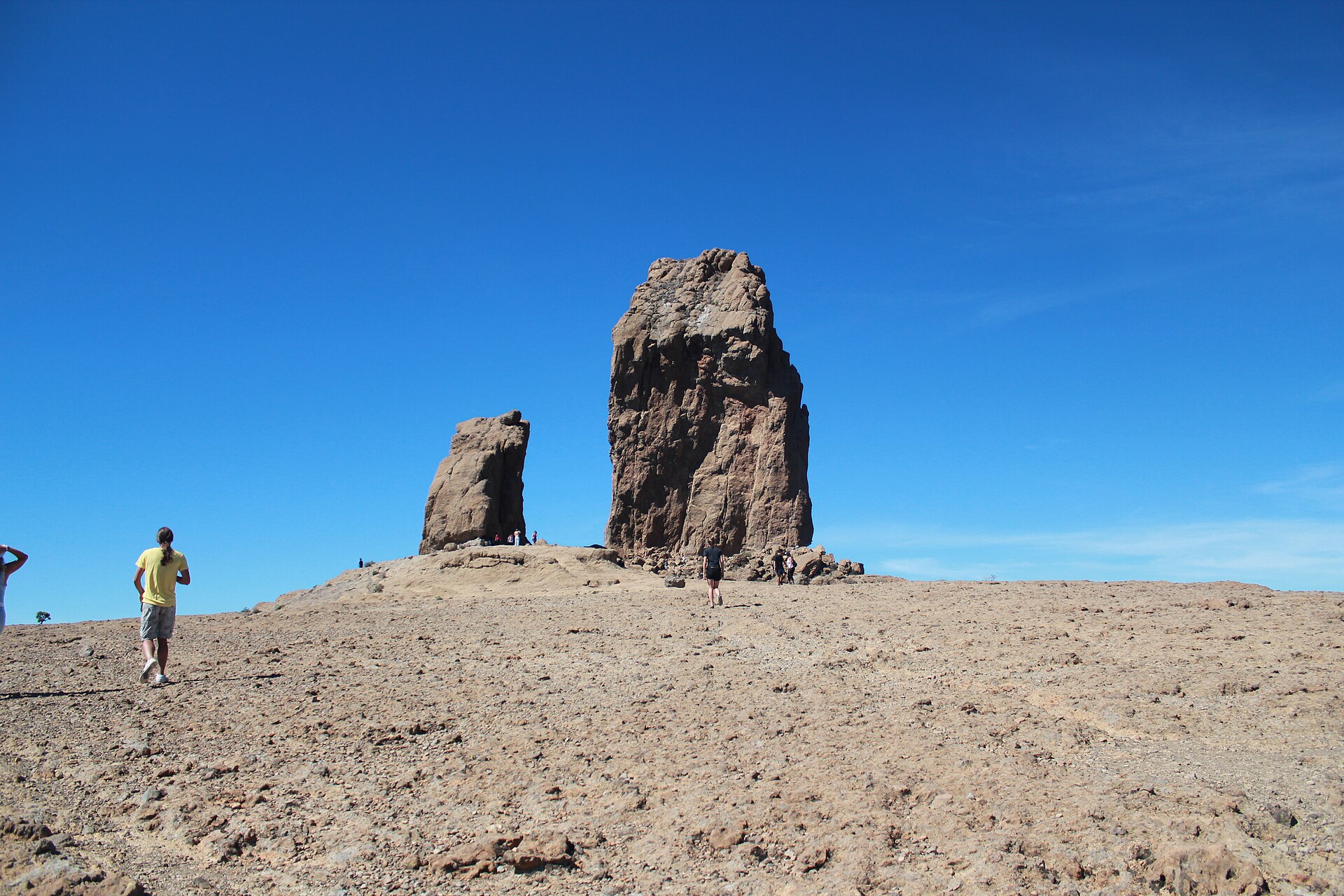
Roque Nublo isn’t just a rock rising above Gran Canaria—it’s a symbol woven into the island’s history and myths. From a distance, its jagged silhouette cuts through the sky, a sharp pinnacle that seems almost carved by some ancient force. The locals call it the Devil’s Rock or the Cloud Rock, names that hint at its mystery and the way it often vanishes into the mist. For the island’s original inhabitants, the Guanches, it was a sacred place, and today it remains one of the most striking natural landmarks in the Canary Islands.
Geologically, Roque Nublo is what’s left of an ancient volcanic vent, a remnant of the forces that shaped Gran Canaria millions of years ago. Over time, erosion wore away the softer surrounding rock, leaving this 80-meter monolith standing alone. Perched at nearly 1,800 meters above sea level, it offers views that stretch across deep ravines, lush valleys, and distant peaks. On clear days, you can even make out the outlines of neighboring islands. The area around the rock is part of a nature reserve, home to rare plants and birds like the Canary Islands chiffchaff, a place where the island’s wild beauty feels untouched.
For the Guanches, Roque Nublo was more than just a geological feature—it was a place of power. They believed it was a dwelling of the gods, a site for rituals and ceremonies. Archaeologists have uncovered traces of ancient settlements and shrines nearby, and local legends speak of the rock’s connection to sun worship. When the Spanish arrived in the 15th century, much of the Guanche culture was lost, but Roque Nublo retained its sacred significance. Even now, it’s treated with respect, not just as a natural wonder but as a piece of the island’s heritage.
The most common way to reach Roque Nublo is on foot from the village of Tejeda. The hike starts at the Degaña viewpoint, where the rock first comes into view. The trail winds through pine and juniper forests, taking about an hour and a half each way. Along the path, signs explain the area’s history and ecology. For those who prefer not to walk, there’s a viewpoint near the base of the rock accessible by car, but the hike offers a chance to soak in the atmosphere of the place.
The rock itself is fenced off to protect it from erosion and overuse. Getting too close isn’t recommended—not just because of park rules, but because the terrain can be unstable. Still, even from a distance, Roque Nublo is imposing. It’s especially striking at sunset, when the light turns it golden and red, or in the early morning, when the mist slowly lifts to reveal its full grandeur.
Tejeda, the nearest village, is worth a visit in its own right. This small settlement, with its whitewashed houses and narrow streets, is often called one of the most beautiful on the island. The traditional Canarian architecture is still intact here, and local cafés serve dishes made with almonds, cheese, and honey—products the region is known for. There’s also a small museum dedicated to Guanche history, where you can learn more about the rock’s significance to the island’s original inhabitants.
Roque Nublo is a place where nature and history feel inseparable. Unlike typical tourist spots, it hasn’t been polished for convenience. There are no souvenir shops or cafés, just silence, mountain air, and the sense that you’ve stepped into a landscape that has remained unchanged for centuries. For many travelers, it’s not just a stop on the way somewhere else—it’s a chance to see a side of Gran Canaria that’s far removed from the beaches of Maspalomas.
If you decide to visit, keep in mind that the weather in the mountains can shift quickly. Even if it’s warm and sunny on the coast, it might be cool and windy up here. It’s best to bring layers, water, and sturdy shoes. It’s also worth checking ahead to see if the trails are open—sometimes they’re closed due to weather or conservation work. But if conditions are right, you’ll find one of the island’s most unforgettable sights, a place where time seems to stand still.