Nestled in the heart of Gran Canaria, the small town of Tejeda feels like a place where time has settled into the rhythm of the mountains. The Church of Saint Sebastian stands at its center, a quiet witness to centuries of life shaped by the island’s rugged landscape. Built in the seventeenth century, it’s one of those rare buildings that hasn’t just survived but has become part of the land itself, its dark volcanic stone and whitewashed walls blending into the steep slopes and terraced fields that surround the town.
The church’s architecture is unassuming yet striking, a perfect example of Canarian Baroque as it developed in rural areas. The facade, made from local stone, contrasts with the smooth plaster, while the wooden door, carved with simple patterns, leads into an interior that feels intimate rather than grand. Inside, the light filters softly through small windows, illuminating the old wooden pews and the carved altar. The bell tower, modest in height, still manages to stand out against the backdrop of the mountains, its silhouette familiar to anyone who has wandered through the town’s narrow streets.
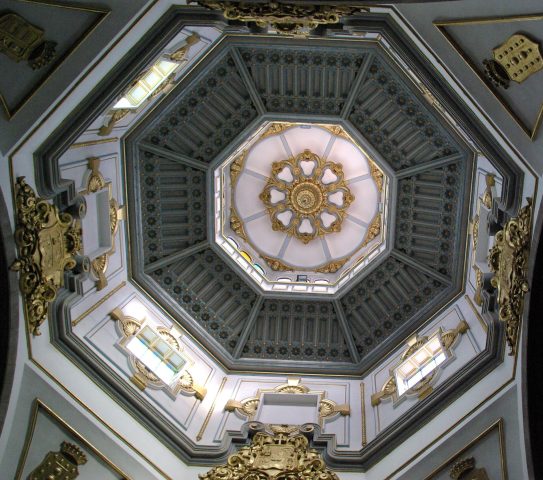
What makes the church particularly special is its ceiling, painted with traditional Canarian motifs—geometric patterns and floral designs that speak to a time when art was woven into everyday life. These hand-painted details have been carefully preserved, a reminder of how the church has always been more than just a place of worship. Over the years, it has been restored and rebuilt, but its essence remains unchanged, a constant in a community that has seen its share of change. On Sundays, it still draws people from the surrounding villages, not just for prayer but for the sense of connection that comes from gathering in a place that has been part of their lives for generations.
Tejeda itself is a town with deep roots, its history intertwined with that of the island’s original inhabitants, the Guanches. Before the Spanish arrived in the fifteenth century, these lands were part of their world, and even after the conquest, traces of their culture remained. The Church of Saint Sebastian, named after the town’s patron saint, became a meeting point of sorts, where the traditions of the old world and the new coexisted. Saint Sebastian, revered as a protector against plagues and illness, held particular significance in an era when disease could devastate entire communities.
Today, the church remains an active part of Tejeda’s life, though it sees far fewer visitors than the island’s coastal resorts. Those who do find their way here are often looking for something different—a place where the past isn’t just preserved but still alive. Inside, the air is cool and quiet, the only sounds the occasional murmur of a prayer or the creak of old floorboards. In the summer, when the sun beats down on the mountains, the church offers a welcome respite from the heat. In winter, when mist rolls through the valleys, it becomes a refuge, a place where people come not just to pray but to sit in silence, surrounded by the weight of history.
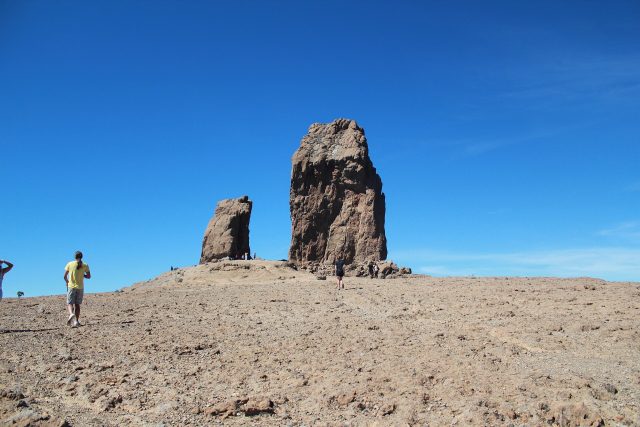
The landscape around Tejeda is some of the most dramatic on the island, with deep ravines, jagged rock formations, and valleys where almond trees and fruit orchards still thrive. The church seems to grow out of this terrain, as if it were always meant to stand here, a quiet anchor in a place shaped by wind and time. Walking through the town’s narrow streets, past houses with carved wooden balconies and hidden courtyards bursting with flowers, you eventually arrive at the small square in front of the church. There’s a bench where you can sit and watch the town go about its day, the mountains looming in the distance like silent guardians.
Though modest in size, the church plays a central role in Tejeda’s cultural life. It’s the heart of local festivals, including the feast day of Saint Sebastian, when the streets fill with music, dancing, and the scent of traditional food. On these days, the church isn’t just a place of worship but a gathering point for the entire community, its doors open to anyone who wants to join in. These celebrations aren’t just religious events; they’re a living tradition, passed down through generations, a way of keeping the past alive in the present.
For visitors, the Church of Saint Sebastian offers more than just a glimpse into the island’s history. It’s a chance to step into a different rhythm, one that moves to the pace of the mountains rather than the clock. There’s no rush here, no crowds, just the quiet hum of life unfolding as it always has. Maybe that’s why the place lingers in the memory—it doesn’t try to impress with grandeur or spectacle. Instead, it simply exists, as it always has, a reminder that some of the most meaningful experiences come not from the extraordinary but from the quiet, enduring beauty of ordinary things.