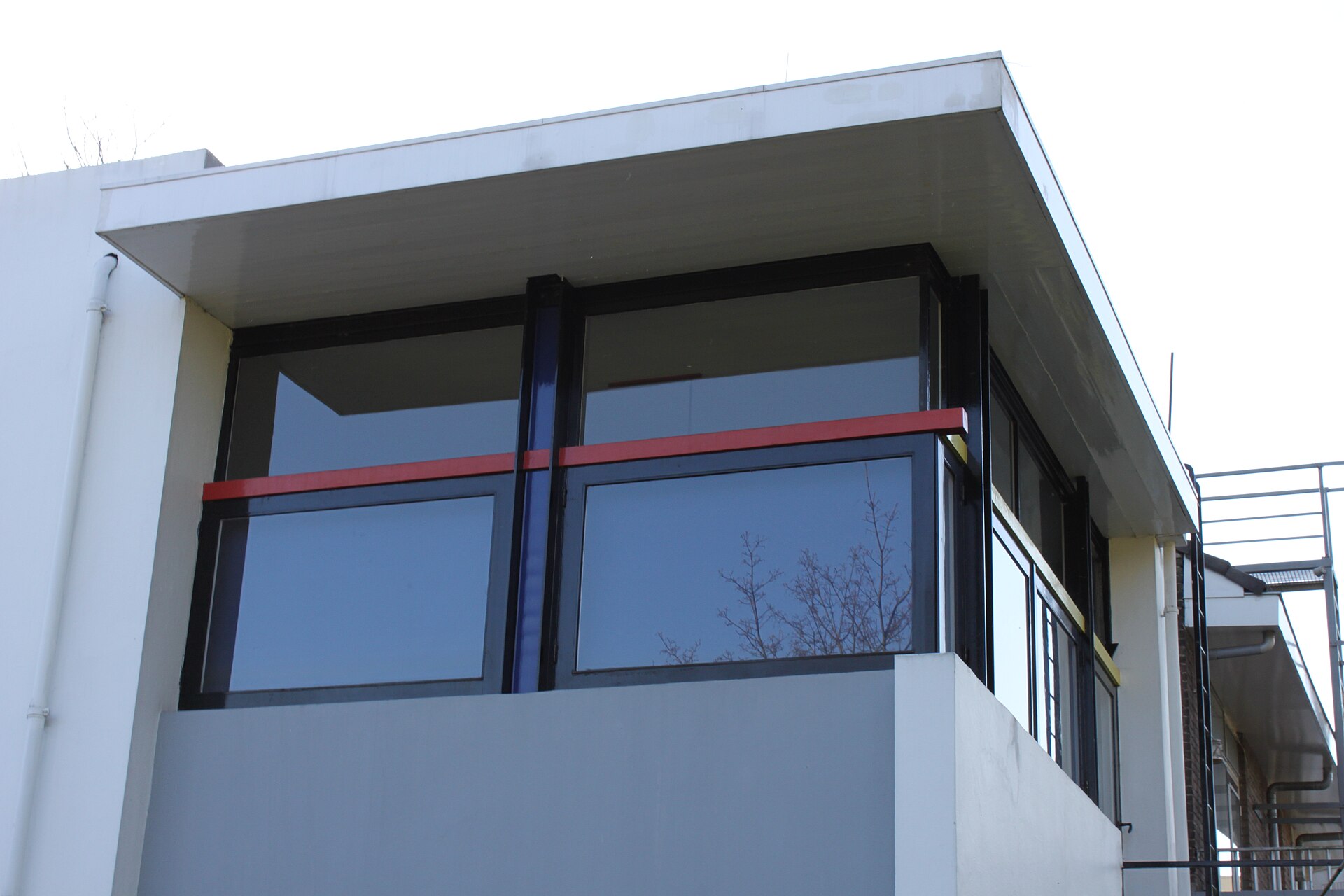
The Rietveld Schröder House in Utrecht is a declaration. Designed in 1924 by Gerrit Rietveld for Truus Schröder, this townhouse became one of the most radical expressions of the De Stijl movement. Europe in the 1920s was experimenting with form and space, and this house stood at the forefront. Straight lines intersect at sharp angles, planes shift and overlap, and primary colors—red, blue, yellow—contrast with the monochrome facade. It resembles a child’s construction set, yet that simplicity defines its power.
Inside, the house breaks from tradition. Rietveld and Schröder avoided rigid room divisions, choosing a flexible layout where walls could be moved. In the 1920s, this challenged convention. The house wasn’t just shelter; it was a new way of living. Sliding panels and lightweight partitions let you imagine the people who once lived here, for whom the future was part of daily life.
The architecture is functional. Windows flood the interior with natural light. Open terraces blur the line between inside and out. Furniture, like Rietveld’s Red and Blue Chair, was designed specifically for this space. It wasn’t decor—it was a statement.
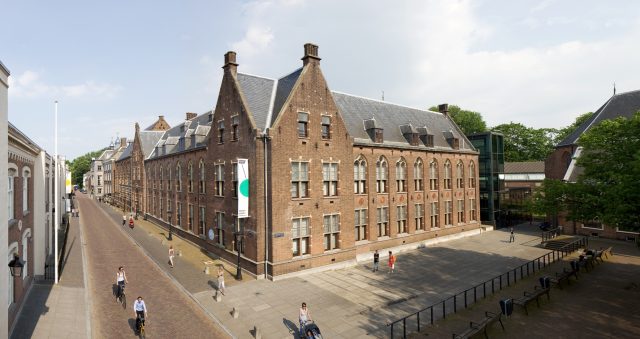
When built, the house puzzled Utrecht. The city in the 1920s was conservative, and this geometric structure clashed with its brick neighbors. Locals wondered why anyone would build something so different. But Truus Schröder had a vision—open, dynamic, free from excess. Rietveld made it real.
Today, the Schröder House is a museum that doesn’t feel like one. No velvet ropes or "do not touch" signs. You can walk through the rooms, open cabinets, sit on Rietveld’s chairs, and slide the partitions. The house isn’t a static exhibit; it’s alive. Listen, and you might hear Truus Schröder’s footsteps or the creak of movable walls.
The house’s influence on modern architecture is immense. Its ideas about flexible space, minimalism, and the unity of form and function shaped 20th-century design. Open-plan living and clean lines now feel ordinary, but this house was groundbreaking.
Visiting the Schröder House is an experience. It sits on Utrecht’s edge, in a quiet neighborhood where time slows. Around it, bicycles lean against doorways, and small cafés invite you to linger. The house is unassuming—a two-story building with a flat roof. But as you approach, it reveals itself. This is no ordinary home. It’s a symbol of change.
The Schröder House is where the past meets the future. There’s no grandeur, just an idea. The idea that space can be free, that a home can adapt, that architecture can inspire. That’s why this small house in Utrecht draws visitors from all over. It’s not just a museum piece; it’s a reminder that change often starts small.