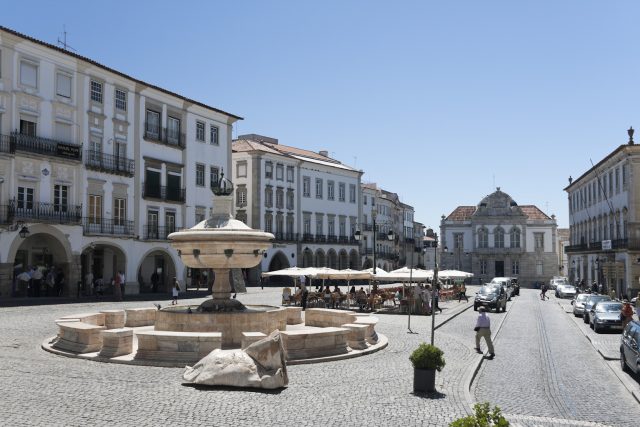
Standing quietly in the heart of Évora, the Roman Temple is one of those rare places where the past feels almost tangible. You might not notice it at first—it doesn’t dominate the square with grand gestures, but rather reveals itself gradually, like an old book left open on a café table. Surrounded by whitewashed houses and terracotta roofs, the temple blends into the city’s rhythm, yet it carries the weight of centuries in its weathered stones.
Built in the 2nd century AD, when Évora was known as Ebora Cerealis, the temple was originally dedicated to Emperor Augustus, a common practice in Roman provinces. Over time, however, local legend recast it as the Temple of Diana, the goddess of the hunt. This shift in identity likely came from the temple’s later surroundings—gardens and fountains that evoked the mythical groves where Diana was said to wander. Historians agree that the imperial cult was its true purpose, but the romantic association with the goddess has endured, adding a layer of mystery to the ruins.
The temple’s architecture follows classical Roman design: a rectangular platform framed by a colonnade of Corinthian columns. Fourteen once stood here; today, only six remain, their fluted shafts carved from local granite. The capitals, adorned with delicate acanthus leaves, soften the stone’s heaviness, hinting at the craftsmanship of the builders. Originally clad in marble, the temple now wears its age openly, the rough texture of the granite telling its own story. Unlike many ancient structures, it was never completely destroyed. Instead, its stones were repurposed over the centuries—first as building material, later as part of a medieval fortress.
Évora’s history is written in layers, and the temple has witnessed them all. After the fall of Rome, it fell into disrepair, its stones scavenged for other projects. By the 12th century, when the city became a key center of the Portuguese kingdom, the temple was incorporated into the bishop’s palace. Centuries later, it served as a slaughterhouse—a pragmatic, if jarring, use for a monument of antiquity. It wasn’t until the 19th century, when Europe rediscovered its classical roots, that efforts began to restore the temple to something resembling its original form. Today, it stands on a low plinth, enclosed by a simple fence, as much a part of Évora’s fabric as the cobblestone streets or the nearby cathedral.
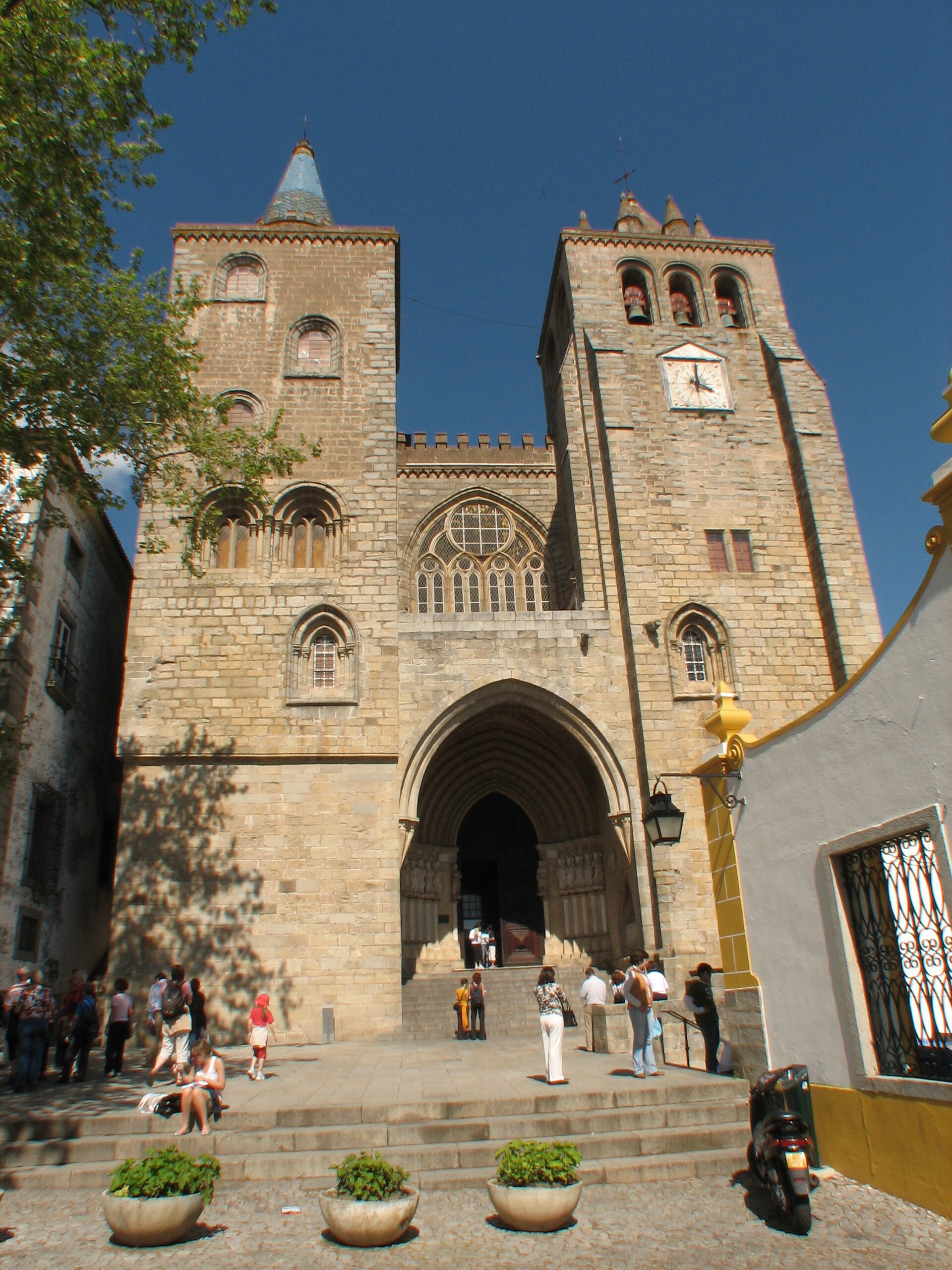
The temple sits on what was once the forum, the bustling heart of Roman Évora. Nearby, you can still see the remnants of ancient baths, while just beyond lie the medieval cathedral and the Palace of the Dukes of Cadaval. The city’s past is so densely packed that the boundaries between eras blur. The temple isn’t just a relic; it’s a crossroads where Roman engineering meets medieval pragmatism, where Portugal’s own history intertwines with the legacy of an empire long gone.
Visiting the temple doesn’t require any special preparation. It’s open to anyone who wants to step into the past, and the best times to go are early morning or late afternoon, when the light is soft and the shadows stretch long across the pavement. The square is often quiet then, giving you space to trace the cracks in the stone, to imagine the hands that shaped these columns, or to listen to the occasional musician playing fado or folk tunes nearby. The music doesn’t feel out of place—it’s as if the temple itself is still humming with the echoes of the people who once gathered here.
What makes the Roman Temple in Évora special isn’t its size or grandeur, but its ability to make time feel fluid. It’s a reminder that civilizations rise and fall, that stones outlast empires, and that something as simple as a column can carry the weight of human ambition across millennia. The temple doesn’t demand admiration; it earns it quietly, through its endurance and the stories etched into its surface. In a city where history lingers in every corner, it remains one of the most understated yet powerful testaments to the past.