The Chapel of Bones in Évora is one of those places that lingers in the mind long after you’ve left. It isn’t like other churches or museums, where you expect to find paintings, statues, or gilded altars. Here, the walls, columns, and even the ceiling are lined with human bones—around five thousand of them. Each skull, each femur once belonged to a living person. The chapel doesn’t unsettle so much as it invites reflection, a quiet confrontation with the fragility of life and the weight of time.
Built in the late 16th century by Franciscan monks, the chapel was conceived as a memento mori, a reminder of life’s transience. Europe at the time was ravaged by plagues, wars, and high mortality rates, and the idea of a space dedicated to mortality wasn’t so much macabre as it was instructive. The bones were sourced from overcrowded city cemeteries, where space for new burials had run out. The monks didn’t just gather the remains—they arranged them deliberately, forming patterns and even inscriptions. Above the entrance, a Latin phrase still reads: *We bones that here are, for yours await.*
The architecture of the chapel is simple and unadorned—a small rectangular room with a low vaulted ceiling supported by columns. What makes it extraordinary is the decoration. The bones aren’t merely attached to the walls; they’re embedded in plaster, laid out in neat rows. Skulls stare with hollow sockets, while long bones are arranged into geometric designs. At the center of the chapel, two skeletons hang from chains—one of an adult, the other of a child. Their origins are unknown, but they serve as a stark reminder that death comes for everyone, regardless of age or station.
Évora was once a major religious center in Portugal, home to monasteries, churches, and scholarly institutions. Yet the Chapel of Bones stands out, perhaps because it defies expectation. Unlike grand cathedrals or the ornate tombs of the nobility, this place is stripped of luxury. There’s no gold, no precious stones, no elaborate frescoes—just bones, plaster, and a few wooden benches for those who wish to sit and contemplate.
Today, the chapel remains an active place of worship, though not in the conventional sense. It draws tourists, pilgrims, and the curious—those seeking history, or simply something out of the ordinary. Inside, it’s always quiet, even when crowded. There’s a sense of stillness, almost meditation, as if the bones themselves encourage introspection. They don’t speak, but their presence is a silent testament to the fact that we all, eventually, become part of something larger.
Adjacent to the chapel is a small museum where visitors can learn more about its history and the lives of the monks who built it. The exhibits include old books, religious artifacts, and everyday objects from the time. But the real story lies within the chapel itself. It doesn’t tell its history through words; it shows it through symbols, through what remains when all else fades.
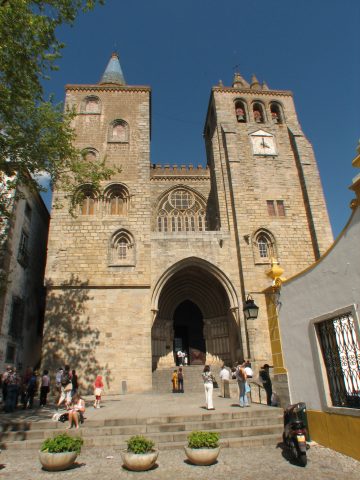
Évora is a city steeped in history—Roman ruins, medieval walls, Gothic cathedrals all contribute to its atmosphere. Yet the Chapel of Bones stands apart. It isn’t just a monument to the past; it’s a reminder of the eternal. That might be why, centuries later, people still come. They don’t arrive in search of fear, but of understanding—that life is brief, and memory can take the most unexpected forms.