Jericho has long been called one of the oldest continuously inhabited cities in the world, with traces of human settlement stretching back nearly ten thousand years. Yet even against this backdrop of ancient history, the Roman oasis stands apart—a place where time seems to linger in a different rhythm. It isn’t just an archaeological site but a living landscape where layers of history intertwine so closely that they become inseparable. Here, among palm groves and the remnants of old structures, you can almost feel the presence of the Roman province of Judea, once a crossroads of trade and culture in the heart of the desert.
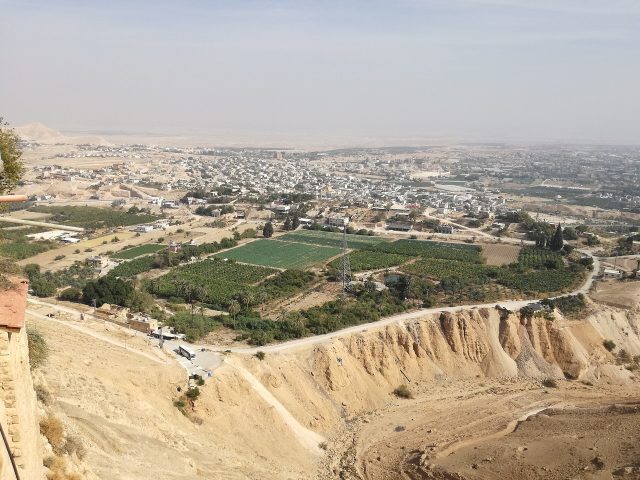
The Romans arrived in Jericho during their conquest of Judea in the first century BCE, and for them, this city was more than just a strategic outpost. It was a true oasis in an otherwise harsh landscape. Nestled in the lowlands near the Dead Sea, Jericho enjoyed a milder climate than the surrounding regions, with fertile soil and abundant water sources that made it ideal for agriculture. The Romans quickly recognized its potential, transforming it into one of the province’s key centers. They built villas, laid out gardens, and constructed roads and aqueducts to sustain the city. Some of these structures still stand today, half-buried among modern palm plantations, their stones whispering stories of a distant past.
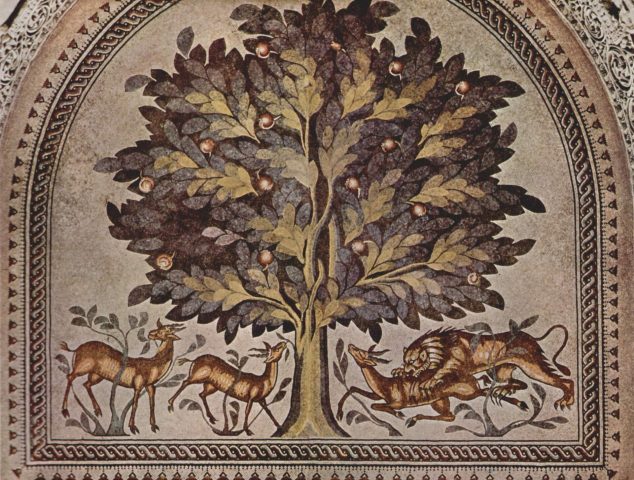
The most striking remnant of this era is the ruins of Herod the Great’s palace. Herod, who ruled Judea as a Roman vassal, chose Jericho as the site for one of his grand residences. This wasn’t merely a lavish villa but a sprawling complex that included living quarters, baths, pools, and even a small theater. What remains today are mostly foundations and fragments of walls, yet even these give a sense of the palace’s former grandeur. The most captivating details are the mosaic floors, their intricate patterns still visible after centuries. Crafted in the distinctive Roman style, they hint at the luxury that once filled these halls.
Nearby lie the ruins of the Hasmonean winter palace, built long before Herod’s time. This dynasty ruled Judea before the Romans, and their residence in Jericho was a center of power in its own right. The remains include baths, pools, and an early heating system known as a hypocaust—a Roman innovation that warmed rooms from beneath the floors. Walking among these ruins, it’s impossible not to wonder about the lives that unfolded here: the conversations, the decisions, the intrigues that shaped history.
Yet the Roman oasis is more than just ruins. It’s a place where nature has remained largely unchanged for centuries. The palm groves that surround the archaeological site still offer shade and coolness, their fronds rustling in the breeze. The same water that once flowed through Roman aqueducts still nourishes the land, irrigating fields and gardens as it has for millennia. Local farmers continue to cultivate dates, pomegranates, and citrus fruits, just as their ancestors did. In this way, the oasis feels like a living organism, enduring through the ages despite the upheavals of history.
Visiting the Roman oasis is less like a typical tourist stop and more like stepping into another time. There are no crowds, no souvenir stands, just the quiet rustle of palm leaves and the distant murmur of voices. As you wander the paths between the ruins, it’s easy to imagine Roman legionaries marching past, merchants haggling in the markets, or the murmur of Latin in the air. The place seems to hold the echoes of that era, when Jericho was not just a city but a thriving hub of civilization.
For many, the oasis also carries deep religious significance. According to the Bible, this is where Jesus healed a blind man and later passed through Jericho on his way to Jerusalem. Pilgrims often come here to reflect on these events, and even those who aren’t religious can sense the weight of history in the air. It’s a place where the past feels tangible, where the boundaries between faith, nature, and history blur into something greater.
Today, the Roman oasis is part of Jericho’s national park, protected and studied by archaeologists. Each year, new discoveries emerge, shedding light on the layers of history buried beneath the sand. But even without these findings, the site remains one of Palestine’s most compelling places. It isn’t a static museum but a living piece of history, evolving with each visitor who comes to walk its paths. Perhaps that’s why it feels so magnetic—it doesn’t just tell stories of the past but invites you to consider what they mean for the future.