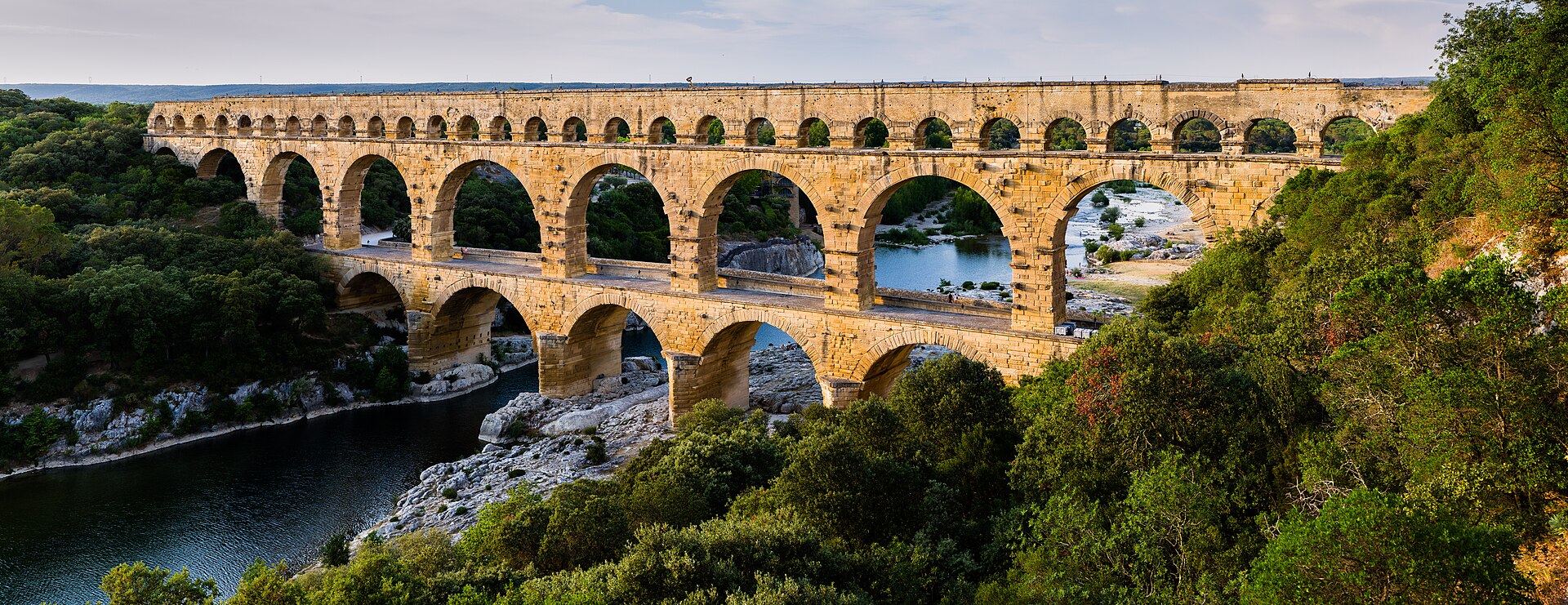
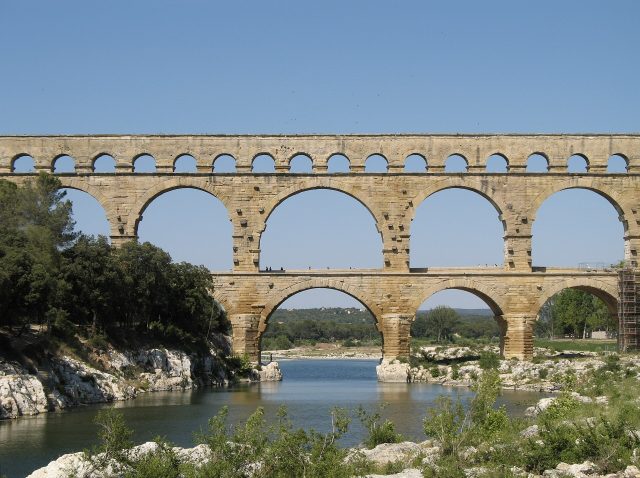
The Pont du Gard is one of those rare places where the past doesn’t just linger—it feels alive. This ancient Roman aqueduct, spanning the Gardon River in southern France, isn’t merely a relic of engineering; it’s a testament to the ambition and precision of a civilization that shaped the world two thousand years ago. What was once a practical solution to a logistical problem—delivering water to the city of Nemausus, now Nîmes—has endured as a monument to human ingenuity, its three tiers of arches standing as effortlessly today as they did in the first century.
Built in the mid-50s AD, the aqueduct was part of a fifty-kilometer system that carried water from the springs of Uzès to Nîmes. The Romans were masters of durability, and the Pont du Gard is their most striking achievement in this region. The entire structure was designed with an almost obsessive attention to detail: the gradient of the channel was so precise that water flowed by gravity alone, dropping just thirty-four centimeters per kilometer over its entire length. The bridge itself, the most dramatic segment of the aqueduct, rises nearly fifty meters above the river, its length stretching over two hundred and seventy meters. The stones, cut with such exactness that they lock together without mortar, have withstood floods, wars, and the slow creep of time.
For centuries, the aqueduct served its original purpose, but by the sixth century, the water system fell into disuse. What remained was repurposed by the people who lived in its shadow. In the Middle Ages, the lower level became a toll bridge, a crossing for merchants and travelers moving between the Mediterranean and the French interior. Later, in the 18th century, the top tier was widened and fitted with parapets, turning it into a pedestrian walkway. It wasn’t until the 19th century that the Pont du Gard was recognized as a historical treasure, prompting restorations that aimed to preserve its original form while making it accessible to visitors.
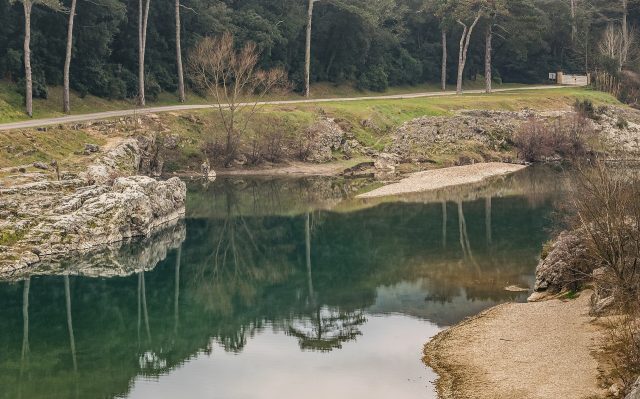
Today, the aqueduct is surrounded by a natural park, a quiet contrast to the crowds that gather at its base. Trails wind along the riverbanks, leading to viewpoints where the structure appears at its most majestic—especially at dawn, when mist clings to the valley, or at dusk, when the setting sun turns the limestone golden. The area is busiest in summer, but those who venture beyond the main paths will find secluded spots where the only sounds are the rush of the river and the rustle of leaves. The Gardon itself is one of the cleanest rivers in the region, its clear waters inviting swimmers and kayakers to glide beneath the arches.
For those curious about the aqueduct’s history, a nearby museum offers a deeper look into its construction and significance. Exhibits include models of the water system, artifacts from Roman times, and interactive displays that explain how the engineers calculated the gradient needed to keep water flowing. It’s a reminder of how advanced Roman technology was—how they could move mountains, quite literally, to solve a problem. The museum also explores the broader role of water in ancient life, from public baths to private villas, and how something as simple as an aqueduct could shape the growth of a city.
Standing on the bridge, it’s impossible not to feel the weight of history beneath your feet. Over the centuries, countless travelers have crossed here—traders, pilgrims, soldiers, and ordinary people making their way through the landscape. During the Middle Ages, the Pont du Gard was part of a vital trade route, a link between the Mediterranean and the heart of France. In World War II, German forces considered destroying it to slow the Allied advance, but fortunately, the plan was never carried out. The bridge has seen empires rise and fall, yet it remains, unchanged in its essential form.
The surrounding area is just as compelling as the aqueduct itself. The Gardon River, with its gentle current and crystalline waters, is a popular spot for swimming and kayaking, especially in the summer. The banks are lined with oak and pine trees, their roots digging into the limestone cliffs. Wildflowers, including rare orchids, bloom in the undergrowth, and if you’re lucky, you might spot an otter or a beaver along the river’s edge. The landscape feels untouched, as if the modern world has barely intruded.
What makes the Pont du Gard so remarkable is its simplicity. There are no grand decorations, no ornate carvings—just the clean lines of a structure built to last. It was never meant to be a monument, yet that’s exactly what it became. The aqueduct is a reminder that some of the most enduring achievements are those that serve a purpose, not just those that aim to impress. It has inspired architects, artists, and engineers for centuries, not because it’s flashy, but because it works—still standing, still functional in spirit, long after the empire that built it faded into history.
Visiting the Pont du Gard isn’t just about seeing an ancient ruin; it’s about stepping into a story that spans millennia. It’s a place where you can touch the past, where the air carries the echoes of voices long gone. Whether you come for the history, the architecture, or simply the chance to stand in the presence of something timeless, the aqueduct leaves an impression that lingers long after you’ve left.