Bath is a city where the past lingers in the stones beneath your feet, where the echoes of Roman footsteps still seem to resonate through the streets. At its heart lie the Roman Baths, a remarkable survival from antiquity that offers more than just a glimpse into Britain’s layered history. This is a place where the ancient world feels tangible, where the warm mineral waters that once drew pilgrims from across the empire still flow just as they did two thousand years ago.
The story of the baths begins in the first century AD, when the Romans established the settlement of Aquae Sulis, naming it after Sulis, a Celtic goddess they equated with Minerva. The natural hot springs here were sacred long before the Romans arrived, and they quickly became the focal point of a grand complex designed not just for bathing but for socialising, worship, and even political dealings. The water, rising from depths of over two kilometres with a steady temperature of around forty-six degrees Celsius, was believed to possess healing properties, a belief that persisted long after the Romans left. The baths were more than a public amenity—they were a place where the divine and the everyday intersected, where people came to cleanse their bodies and seek favour from the gods.
The architecture of the baths reflects both Roman engineering prowess and their reverence for the natural world. The Great Bath, the centrepiece of the complex, is a vast rectangular pool lined with local limestone, its surface shimmering under the open sky. The water here is not stagnant; it’s constantly replenished by the same underground springs that have fed it for millennia. Surrounding the bath are chambers of varying temperatures, from the steam-filled caldarium to the frigidarium, where bathers would cool down after the heat. The floors were warmed by a hypocaust system, an early form of underfloor heating where hot air circulated beneath the stone slabs. Fragments of the original mosaic floors remain, their intricate patterns a testament to the craftsmanship of the time, while the walls and columns bear the marks of centuries of use and restoration.
After the Romans departed, the baths fell into disrepair, but the springs themselves never lost their allure. By the medieval period, they were still considered sacred, and by the eighteenth century, Bath had reinvented itself as a fashionable spa town. It was during this revival that the ruins of the Roman baths were rediscovered, excavated, and eventually opened to the public. Today, the site is a blend of museum and archaeological wonder, where visitors can wander through the remains of the ancient complex and explore the artefacts unearthed over the centuries. Among the most intriguing finds are the lead curse tablets, small sheets of metal inscribed with pleas or grievances and tossed into the sacred waters in the hope that the gods would intervene. There are also offerings to Sulis Minerva—tiny figurines, coins, and other tokens left by those seeking her favour.
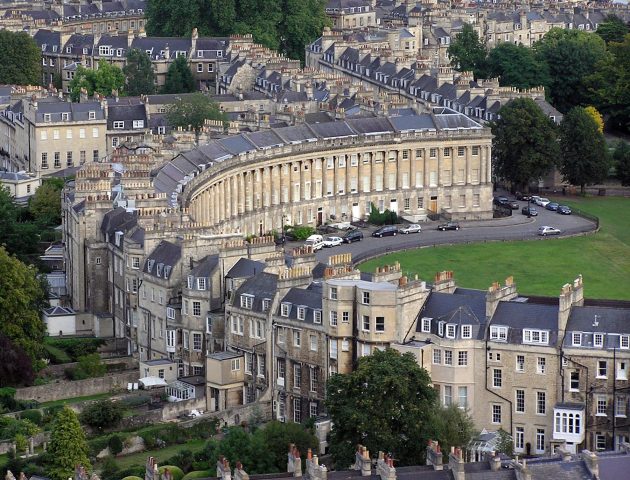
What makes the Roman Baths so compelling is their connection to the city itself. Bath is a place where history isn’t confined to museums; it’s woven into the fabric of everyday life. The ancient ruins sit alongside Georgian terraces and honey-coloured stone buildings, while the same springs that once drew Roman soldiers and Celtic pilgrims now feed a modern thermal spa. Though swimming in the Great Bath is no longer permitted, the nearby Thermae Bath Spa offers a chance to experience the waters much as people have for centuries. It’s a reminder that some things endure, even as the world around them changes.
The atmosphere of the baths is one of quiet reverence, as if the weight of history has settled into the very air. Standing at the edge of the Great Bath, watching the steam rise from the water, it’s easy to forget the modern city just beyond the walls. The rough texture of the stones underfoot, the way sound carries through the vaulted chambers, the faint mineral scent in the air—all of it feels like a direct link to the past. There’s a stillness here, too, a sense that time moves differently within these walls. It’s no wonder that the baths continue to draw not just tourists but locals who come to pause, to reflect on the generations that have walked these same paths before them.
The Roman Baths are far from a static monument. They remain an active site of discovery, where ongoing research and restoration work uncover new details about their history. In recent years, archaeologists have identified the remains of a Roman temple dedicated to Sulis Minerva, further confirming the site’s religious significance. The baths are also a centre for studying ancient engineering, architecture, and daily life, offering insights into how the Romans adapted their technologies to the local environment. For many visitors, this is part of the fascination—the realisation that the Romans were not just conquerors but innovators, whose legacy still shapes the world today.
Visiting the Roman Baths isn’t about stepping into a reconstructed past. It’s about encountering something real, something that has survived the centuries with its authenticity intact. There’s no need for grand theatrics here; the baths speak for themselves. They are a rare example of a place that has retained its essence despite the passage of time, a site where the ancient and the modern coexist without tension. Perhaps that’s why they feel so alive—because they are not just a relic of history, but a living part of Bath, a city that has always been defined by its relationship with water, with time, and with the stories that endure.