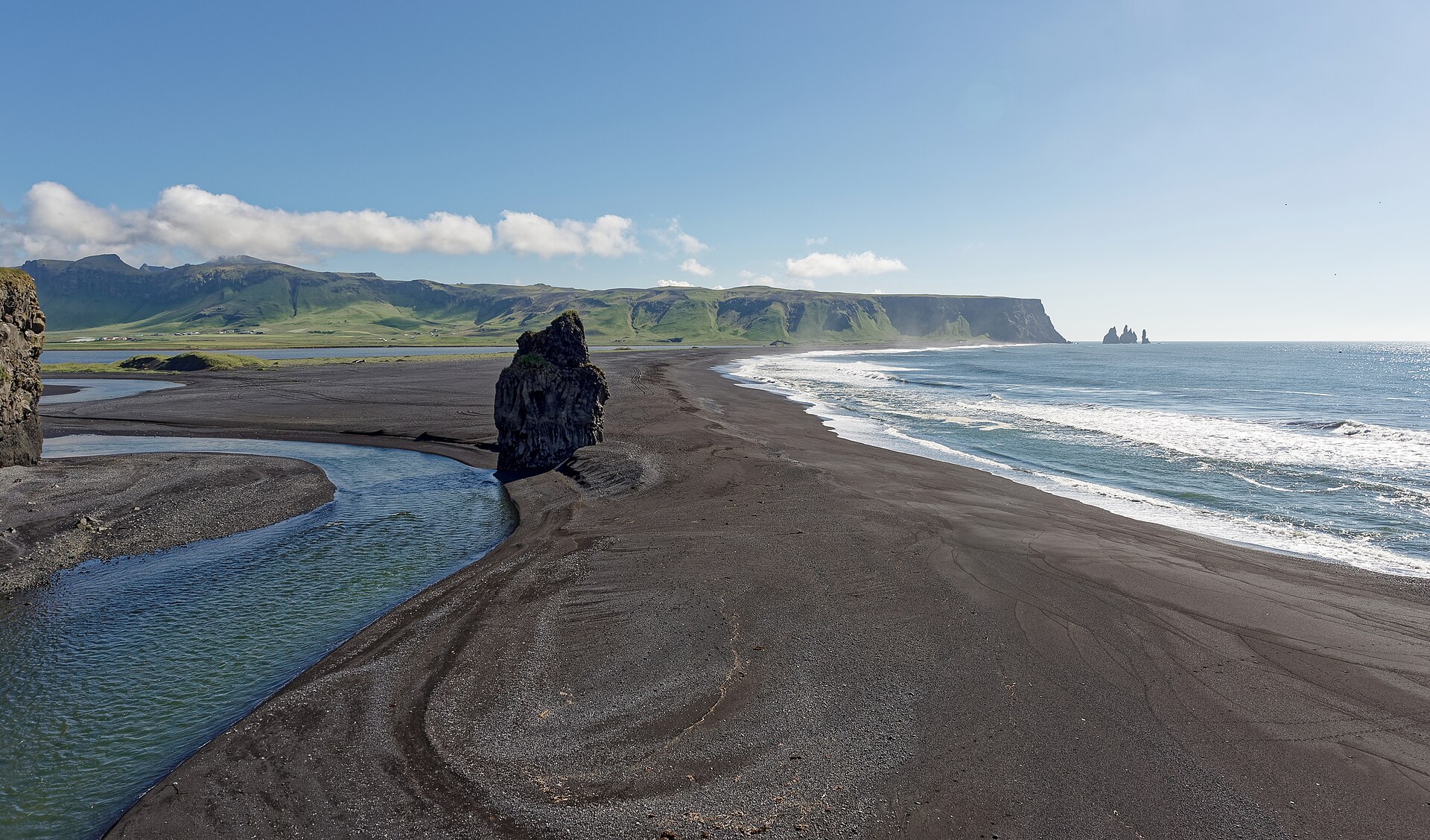
Reynisfjara is a place where the raw power of nature feels almost tangible. This black sand beach on Iceland’s southern coast, just a short drive from the village of Vík, is unlike anywhere else. The moment you step onto its dark expanse, the contrast hits you—the smooth, jet-black sand stretching toward the horizon, the jagged basalt columns rising like ancient ruins, and the relentless Atlantic waves crashing against the shore with a force that commands respect. There’s no softness here, no gentle lapping of water against sun-warmed stones. Instead, the landscape feels primal, as if it hasn’t changed since the island first emerged from the sea.
The beach’s striking appearance is the result of centuries of volcanic activity. Molten lava from nearby eruptions once flowed into the ocean, cooling rapidly and fracturing into the hexagonal columns that now line the shore. Over time, the relentless waves ground the hardened lava into fine black sand, creating the stark, monochrome palette that defines Reynisfjara. The basalt formations, some stacked like organ pipes, others sprawling in chaotic patterns, add a surreal quality to the scene. It’s easy to imagine this place as the setting of an old Icelandic saga, where the land itself is a character, indifferent to the humans who wander its edges.
What makes Reynisfjara truly unforgettable, though, is its atmosphere. There are no beachside cafés, no sunbathers lounging under umbrellas, no children building sandcastles. Instead, there’s an almost eerie silence, broken only by the roar of the waves and the cry of seabirds circling overhead. The ocean here is deceptive—calm one moment, then suddenly surging forward in a wall of water that can drag the unwary out to sea. The danger is part of the allure, a reminder that this is a place where nature still holds the upper hand. The wind carries the scent of salt and damp stone, and the light, even on a clear day, feels diffused, as if filtered through layers of mist and time.
Just offshore, the Reynisdrangar sea stacks rise like sentinels from the water. These three sharp, basalt pinnacles are steeped in local folklore—said to be trolls turned to stone after being caught by the dawn while trying to drag their ship ashore. Whether you believe the legend or not, the stacks add a sense of mystery to the landscape, especially when low clouds drift between them, obscuring their peaks. They’ve become one of Iceland’s most photographed landmarks, a symbol of the country’s untamed beauty. On a stormy day, when the waves crash against their base, they look almost alive, as if the trolls might still be struggling beneath the surface.
Reynisfjara is part of a larger nature reserve, and the area teems with wildlife. Puffins nest in the cliffs during the summer, their colorful beaks and clumsy landings a stark contrast to the otherwise somber surroundings. Gulls wheel overhead, their cries blending with the sound of the surf, while seals occasionally pop up in the water, watching visitors with curious eyes. In winter, the beach takes on an even more dramatic appearance, with snow dusting the black sand and the waves growing wilder under the leaden sky. Summer brings nearly 24 hours of daylight, and the midnight sun casts a golden glow over the ocean, turning the scene into something almost dreamlike.
Getting here is straightforward—Reynisfjara lies just off the Ring Road, the main highway that circles Iceland. A short walk from the parking lot leads down to the beach, where the only signs are warnings about the dangerous waves. There are no fences, no barriers, just the open expanse of sand and sea. This isn’t a place for those seeking comfort or convenience. There are no facilities, no shelters, just the elements in their purest form. It’s a reminder that Iceland isn’t a destination for the faint of heart, but for those willing to embrace its wildness.
Many have called Reynisfjara one of the most beautiful beaches in the world, but that description doesn’t quite capture it. Beauty here isn’t about postcard-perfect scenery or idyllic relaxation. It’s about the way the wind howls through the basalt columns, the way the sand shifts underfoot like something alive, the way the ocean’s power makes you feel small in the best possible way. Standing here, it’s easy to understand why Iceland has such a hold on travelers. This isn’t just a beach—it’s a place where the earth feels young, where every gust of wind and every crashing wave tells a story millions of years in the making. And for a little while, you’re part of it.