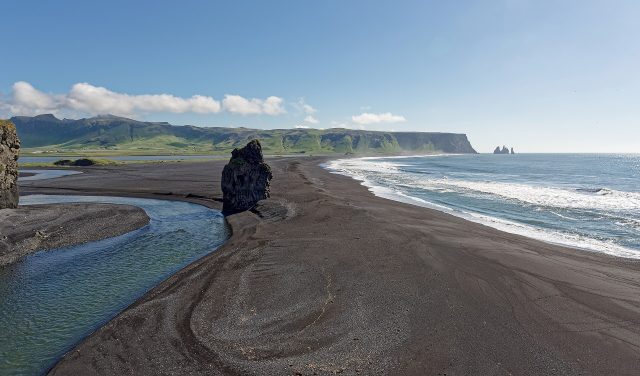
Vík í Mýrdal shows Iceland at its most raw. No city lights, no crowds—just open space and an ocean that never stops moving. The black sand beach here stacks contrasts deliberately: inky sand underfoot, white waves crashing, jagged cliffs, wind that shifts from a whisper to a shove. This isn’t a beach for sunbathing or swimming. The water’s too cold, the weather too unpredictable, the currents too dangerous. That’s why it draws people.
The black sand is volcanic basalt, broken down by waves and wind over millions of years. Walking here feels like stepping through Earth’s history. On clear days, Reynisdrangar sea stacks rise from the ocean like dark teeth. Local folklore says they’re trolls turned to stone by sunlight. Geologists call them remnants of an ancient volcanic crater. The myths stick because the land feels alive with stories.
The ocean here is powerful. Waves crash so hard that spray reaches the road. During storms, rip currents can drag even strong swimmers under. Few attempt to swim—the water rarely warms beyond ten degrees Celsius. The real draw is the energy. You feel the wind tugging, hear the surf, watch the waves roll in.
It’s for those who prefer untamed over comfortable.
The wooden church on the hill above the beach is one of Iceland’s most photographed. Small, white, with a red roof, it looks like a postcard. Built in the early 20th century, its simple design fits the landscape. From the churchyard, the view stretches across the village and coastline. Sunset turns the sky orange and pink. In those moments, time feels paused.
Vík is a gateway to Iceland’s dramatic natural wonders. Mýrdalsjökull glacier looms over the village, hiding Katla, one of the country’s most active volcanoes. The last major eruption was in the 20th century. Geologists warn another could happen anytime. This tension adds to the atmosphere—nature is in control. Locals live with this power daily, treating glaciers and volcanoes as part of life.
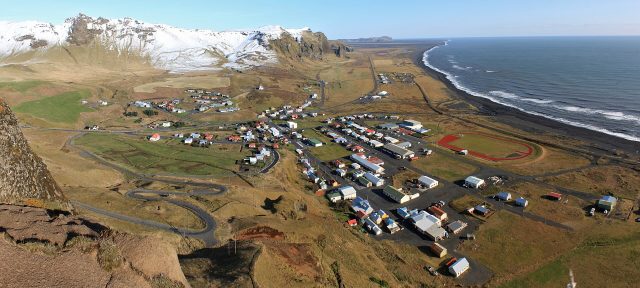
The village is tiny, home to a few hundred people. There are hotels, cafés serving coffee and hot dogs, souvenir shops with woolen sweaters and volcanic rock trinkets. The real appeal isn’t the amenities. It’s the solitude. Even in peak season, it never feels crowded like Reykjavík or the Blue Lagoon. Most visitors stop briefly, take photos, then move on. Those who linger sense Iceland’s true spirit—harsh, beautiful, mysterious.
Winter changes Vík. Snow covers the black sand, the sea turns steely gray, the wind bites harder. This is also when the northern lights sometimes appear. On clear, cold nights, the beach becomes one of the best spots to see the aurora borealis—green and violet ribbons dancing over Reynisdrangar. The cold and wait are worth it.
Vík isn’t for those seeking luxury. No Michelin-starred restaurants, no nightclubs, no malls. What it offers is silence, space, and the feeling of standing at the edge of the Earth. Here, you’re alone with your thoughts. The ocean and glaciers put human life into perspective. That’s Vík’s pull—it reminds you the world is bigger, wilder, and more mysterious than it seems.