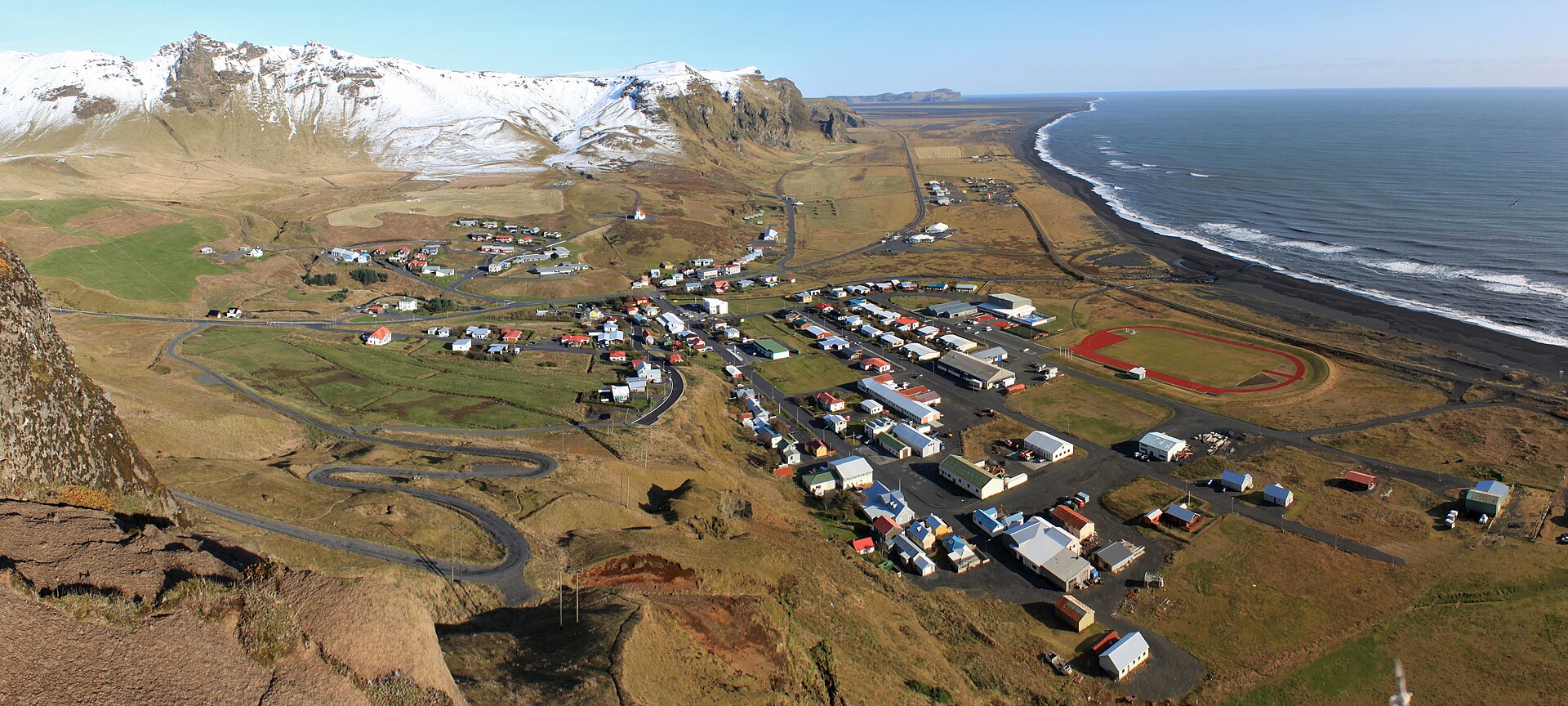
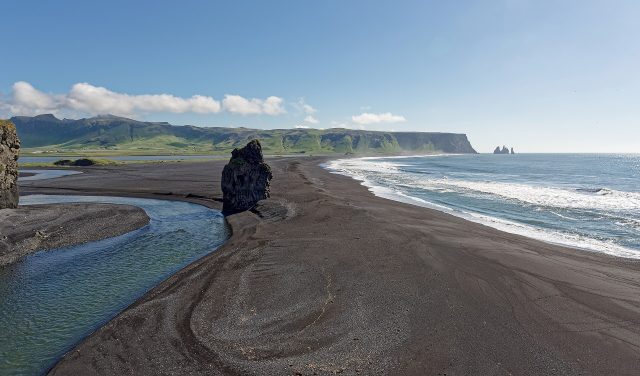
Perched on a gentle rise above the village of Vík, the little white church with its red roof and slender spire feels like a quiet sentinel. From this vantage point, it overlooks the black sands of Reynisfjara, the jagged basalt columns of Reynisdrangar, and the restless North Atlantic stretching toward the horizon. The church isn’t just a landmark—it’s a living part of the community, a place where the rhythms of daily life and the vastness of the Icelandic landscape intersect.
Built in the early 20th century, when Iceland was still finding its footing as an independent nation, the church reflects the simplicity and resilience of the people who call this rugged coast home. Its design is unassuming: clean white walls, a bright red roof, and a steeple that stands out against the often overcast sky. Churches like this dot the Icelandic countryside, but few are as perfectly placed as this one. From its hilltop perch, the view encompasses the village below, the surrounding farmland, and, on clear days, the distant glint of glaciers. It’s a reminder of how small human settlements can feel in a land shaped by fire and ice.
Inside, the church is warm and understated. Wooden pews line the nave, sunlight filters through modest stained glass, and the air carries the scent of aged timber. There’s no grandeur here, just a sense of quiet welcome. Locals come not only for services but also to sit in stillness, especially during the long winter nights when the wind howls outside. In summer, when daylight lingers until midnight, the church becomes a place for travelers to pause, to catch their breath after hours on the road.
Vík itself is a village of contrasts. It’s tiny—just a handful of houses, a few guesthouses, and a couple of cafés—but it looms large in the imagination of those who visit. The surrounding landscape is dramatic: black sand beaches, towering cliffs, and the ever-present roar of the ocean. Yet the church on the hill feels like an anchor, a place where the raw power of nature meets something gentler. It’s where weddings are held, where children are baptized, where the community gathers to mark the passage of time.
The church hasn’t always stood in this exact spot. An earlier version, built in the 19th century, was eventually replaced, and the new structure was positioned slightly higher on the hill. Some say it was moved to make it more visible from the coast road, a beacon for those traveling along the southern shore. Today, its steeple is one of the first things visitors see as they approach Vík, a familiar landmark in a landscape that can feel both breathtaking and disorienting.
What makes this church special isn’t its size or its architectural flourishes—it’s the way it fits into the land and the lives of those who live here. In a country where the elements are always present—wind, rain, the endless cycle of light and dark—the church offers a moment of stillness. It’s a place where the outside world feels distant, where the only sounds are the creak of wooden floors, the murmur of voices, and, if you listen closely, the distant crash of waves.
Winter transforms the church into a refuge. When snow blankets the ground and the ocean turns a steely gray, the warmth inside feels even more precious. The scent of candles mixes with the faint tang of salt in the air, and the windows frame a world that seems both wild and intimate. In summer, the church is bathed in golden light, even at midnight, and the benches outside become a place to sit and watch the sky. The village below hums with the quiet activity of tourists, but up here, time moves differently.
There’s no fanfare at the church in Vík, no grand claims about its importance. It doesn’t need them. It’s simply a place where people—locals and travelers alike—can step out of the rush of the world and into something slower, something more human. Whether you come for a service, for a moment of quiet, or just to take in the view, the church offers a reminder of what matters: the land, the community, and the quiet spaces in between. If you ever find yourself on Iceland’s south coast, it’s worth the short climb up the hill. Just to stand there, to look out at the ocean, and to let the silence settle in.